.png) 3 months ago
86
3 months ago
86
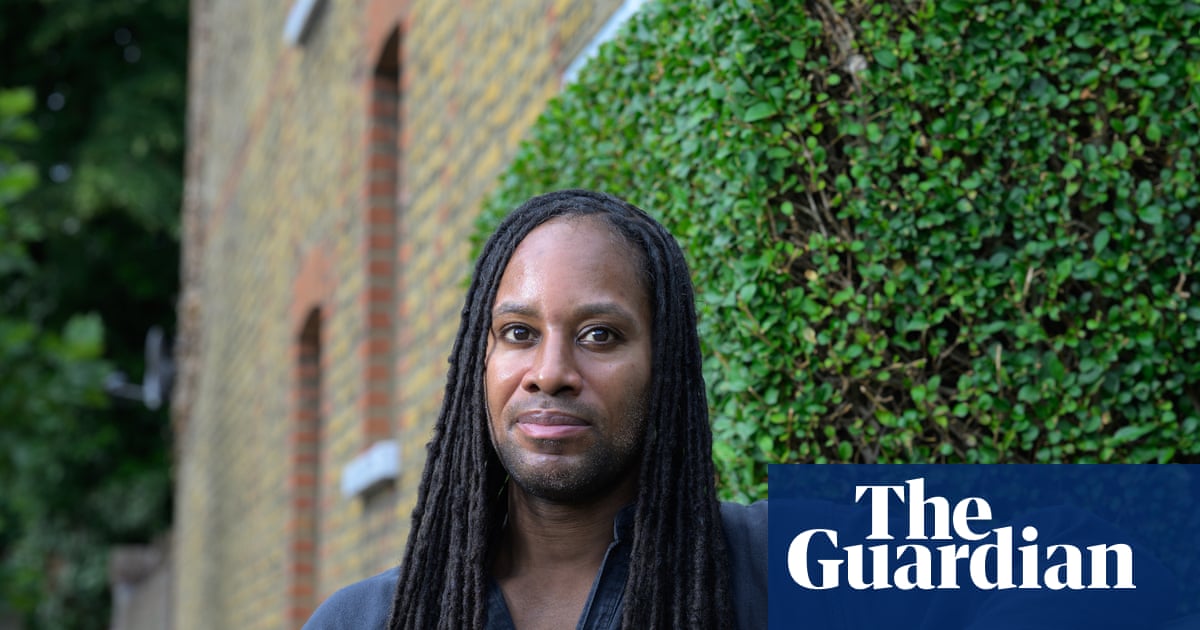
In the summer of 2023, the American writer and journalist Patrick Radden Keefe was in London for the filming of Say Nothing, the television adaptation of his much-lauded, much-awarded account of a Troubles murder. It was there, on set, that Keefe got talking to a visitor, a friend of the director, who happened to tell Keefe about friends of his, the Brettlers, a London family who had experienced something tragic, strange and terrible.
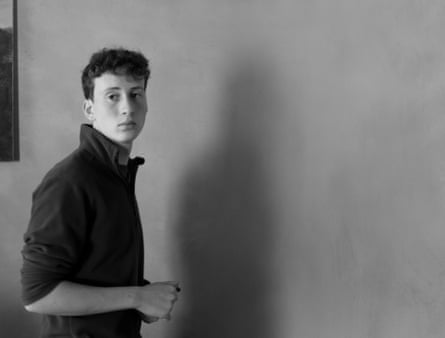
Rachelle and Matthew Brettler’s 19-year-old son, Zac, had died in November 2019 when he jumped from the fifth-floor balcony of a luxury apartment overlooking the Thames. There had been no reason to believe he was suicidal – but plenty to suggest that he was very afraid. Zac had spent his last few months in the orbit of two men who believed him to be the son of a Russian oligarch, heir to a £200m legacy. Both men had been with Zac on the night he died – one had been in the apartment at the time – and gave varying accounts in police interviews. The family believed that the Met response had been full of holes – key witnesses hadn’t been formally interviewed, bloodstains on the apartment walls hadn’t been tested – and the investigation concluded in 2021 with the Crown Prosecution Service deciding there was insufficient evidence to bring charges for murder and perverting the course of justice. The inquest in 2022 ended in an open verdict. “I can’t fill in the gaps; I can’t speculate,” the coroner concluded. “I don’t know what happened.”
The Brettlers were still looking for answers. They didn’t know where to go next.
“I’m always on the lookout for stories,” says Keefe, whose subjects have been wildly varied. In Empire of Pain, he told the sweeping history of pharmaceutical dynasty the Sackler family and their role in the US opioid crisis. (It won the 2021 Baillie Gifford prize and later became the Netflix series Painkiller.) In his podcast Wind of Change, Keefe investigated whether the song by that name, a rock power ballad by the Scorpions, was in fact written by the CIA as cold war propaganda (the band deny this). His New Yorker pieces have told of drug smuggling, arms dealing and the tragic history of a mass shooter.
“I have a website, I’m very easy to find and I get loads of emails from strangers telling me stories,” Keefe says. “Most of the time, I know right away that, for one reason or another, it’s not a story for me.” This chance encounter in London was different. “I’d already been thinking about the way Russian oligarchs and their money had reshaped the city,” he says, “and I’m always interested in stories about families. This was that rare case where, within minutes, I knew that if this family was ready to talk, this would be how I’d spend the next year of my life.”
In fact, Keefe has been unravelling this mystery for far longer. In February 2024, his initial investigation was published in the New Yorker. Now, he has written a book, London Falling, which looks closer still.
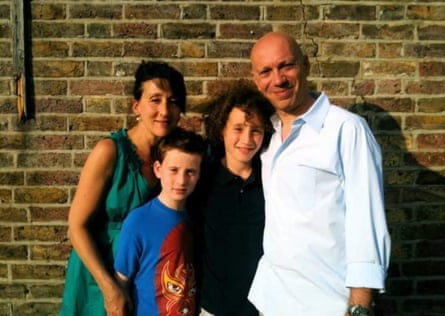
It tells how Zac Brettler changed while attending a private secondary school that had been transformed by the global super-rich. (Once the school of Evgeny Lebedev, son of oligarch Alexander Lebedev, it was now educating the next generation of foreign plutocrats.) These pupils were separated from their merely “wealthy” British classmates by millions. Zac was there simply because he had been rejected by more academic schools, including the one his brother attended, and for him, this real life Rich Kids of Instagram proved a powerful cocktail. He became obsessed with status symbols, money and power. In his teens, he launched various entrepreneurial schemes, and also experimented with a kind of fantasy self. He told friends that his dad was an arms dealer who drove two Range Rovers (in fact, Matthew Brettler worked in financial services and their car was a Mazda). Their home, he claimed, was in the luxury residential block One Hyde Park (in truth, it was a flat in St John’s Wood).
His parents had become increasingly concerned. When Zac pestered them to upgrade their car or move to a bigger, better property, he was told that he was acting like a “spoilt brat”. They found him a psychiatrist, did their best to steer him towards activities and careers that matched his talents, and hoped this was just a phase.
By 19, though, Zac had become increasingly secretive. Impatient to start his adult life of business and deal-making, he blagged a path through Mayfair’s clubs and casinos, introducing himself as “Zac Ismailov”, son of an oligarch. (Rachelle and Matthew had no idea.) In this guise, he was invited to stay in Riverwalk, an apartment block on the Thames, as the guest of a gangster, Verinder “Dave” Sharma. (Sharma himself was there as the guest of entrepreneur and investor Nick Gold, who in turn rented it from a Saudi princess.) Zac loved movies such as The Wolf of Wall Street and War Dogs, where young hustlers fake it till they make it – at times, he watched them on a loop. If this had been made in Hollywood, perhaps he would have ended up buying that apartment from the Saudi princess (or marrying her). Instead, he jumped from it.
Keefe understands that, for some readers, Zac will be a complicated figure to get behind. “For a certain kind of reader looking for an ‘emotional off-ramp’, you can say: ‘OK, this is just a story about privileged people,’ or ‘This is just a story about bad parents,’” he says. “From the outset, I didn’t see it that way.”

As a father himself – Keefe lives in Westchester, New York, with his wife and teenage sons – he felt an instant connection when he met the Brettlers. “I think Matthew and Rachelle are extraordinary people, and that comes through quite clearly,” he says. “My two boys are close in age and competitive, the way Zac and his brother were. I’m raising kids who are digital natives, growing up with social media and smartphones. I remember when my little guy, who is now 13, was about six years old and said something about Elon Musk. We had this strange moment where I said: ‘How do you even know who Elon Musk is?’ When I was six, I couldn’t have told you the richest person in the world – it just didn’t penetrate my consciousness. I think there are some pretty malign forces, particularly affecting boys, in adolescence. In all my dealings with the Brettlers, I’ve felt a really profound sense of: ‘There but for the grace of God, go I.’”
Pulling Zac forward through every page of this story is London itself. The city Keefe describes is one reshaped by oligarchs, by unfathomable, untraceable wealth, and a whole new ecosystem of hustlers and hangers-on. Keefe spent a year in London in 2000 as a graduate student at the London School of Economics, and has been back and forth ever since. He has become acutely aware of the city’s transformation.
“So many of my friends from London don’t live in London any more. There was a moment when they were priced out,” he says. “I love London. This was written from a place of huge affection, but maybe it is a little bit like the frog in boiling water. When you go away for a while and come back, you see it more clearly – the consumer culture, the omnipresence of luxury, the cars when you walk around Mayfair. For a 19-year-old who’s still trying to figure out who he is and what matters in the world, I think that kind of fantasy land can be quite disorienting.”
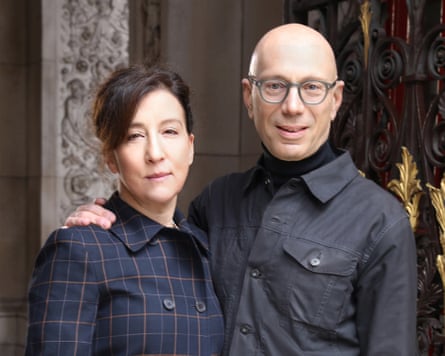
The Brettlers felt failed by police and the authorities, but in Keefe they could not have asked for a more meticulous detective. Keefe wanted to be a writer from the age of about 16 and pitched to the New Yorker all through college and law school before getting his first commission. (By then, he had a job lined up with a law firm, which he never had to take.) He admits that, even now, 20 years later, at weekends, during “downtime”, he will “sneak away to work” – and that shows. London Falling is staggering in its depth and detail. Much is focused on the two men who spent a great deal of time with Zac through 2019 and in his final hours.
Sharma is one: a gangland enforcer. An associate tells Keefe that Sharma’s favourite thing had been to theatrically heat up a knife in a victim’s presence – the fear of what might come next was usually enough to make them “cooperate”. The other figure is Akbar Shamji, an “entrepreneur” with a colourful history of collapsed businesses. He had declared bankruptcy in 2019, the year he met Zac.
In the days before Zac’s death, messages between Sharma and Shamji suggest they were losing patience with Zac and his fortune. “I’m highly sceptical about this £205m. Is anything fucking real?” Shamji asks Sharma. “Fuck this little kid,” says Sharma. “He’s not allowed to run away now.” In another message, he tells Shamji that the two of them should be entitled to “50% of everything he owns”. (In truth, Zac had £4 in his bank account.)
On the evening of 28 November 2019, all three were gathered at the apartment. What happened inside is impossible to know, but there are many alarming indicators. At one point, Shamji texted a friend saying he’d been “heating up knives and clearing up blood”. At another, Zac did an internet search on “what to do with skin burns”. At 2.24am, CCTV footage shows him on the balcony, moving from one corner to the other, before jumping from its centre, where it curves closest to the river, which he only narrowly missed. Many readers will reach the end of London Falling convinced that Zac was jumping not to die, but to live – a last effort to escape.

Where does this leave his parents? Sharma, who had always claimed he’d been asleep when Zac jumped, died a year later from a drug overdose. Shamji did not agree to an interview with Keefe, nor respond to any factchecking. To police, and at the inquest, he maintained that Zac was suicidal, a heroin addict, and they were trying to help him. Shamji was asked at the inquest why he texted a friend on the night in question saying he’d been heating up knives and clearing up blood. He said he was tired and a bit drunk. When he was asked again what he meant specifically, he said: “I could’ve meant a hundred things while we were drinking.” CCTV footage shows that Shamji wasn’t in the apartment when Zac jumped – but he was minutes later, then he went down to the river and peered at the spot where Zac fell. (Shamji told detectives it was a random smoke break.)
From the start, Keefe has been careful not to promise the Brettlers too much from his involvement. “I had to say at the very beginning: ‘Don’t do this because there’s some unspoken sense that I will bring you justice, or get an apology out of the Met police, or get the investigation reopened,’” says Keefe. “All I could promise was that I would chase down the truth as aggressively as possible and tell it in a manner that feels true and hopefully places blame where blame should be placed. Anything beyond that is up to the fates.”
A book, though, can be a kind of accountability in itself, and he hopes this one works that way. “It’s a physical object, between two covers, and when it’s out there in the world, there’s no expunging it,” says Keefe. “It won’t go away. It’s going to sit there on library shelves long after all of us are dead. It tells Zac’s story in quite a full way. It may not answer every question – but I don’t think that the questions which remain will ever be answered.”
In response to the points raised in the book, a Met police spokesperson said: “The Met carried out an extensive investigation into the circumstances surrounding Zac’s death. Our investigation lasted a number of years and saw detectives conduct a number of both criminal and witness interviews, carry out detailed forensic inquiries and review a significant amount of CCTV footage. Our investigation concluded there was no evidence that Zac’s death was suspicious. The investigation was subject to a detailed review by specialist homicide detectives, who concluded that every reasonable line of inquiry was pursued.”
Keefe is following another story now, something completely different – a fraud conspiracy in New Orleans. Have the years he spent immersed in Zac’s life and death left a personal impact as a father of boys? Has this changed his parenting?
“It’s interesting,” he replies. “On the one hand, it has made me want to be vigilant and have more conversations with my kids to try to understand what they are going through, and how they perceive the world. I’ve talked to them about this story.
“On the flip side, spending the last few years with the Brettlers, I think I’ve come out with a bit more humility as a parent,” he continues. “It’s a fantasy to believe that our kids are clay and we can just shape them. The reality is that there’s a degree of serendipity, and there’s stimuli that we can’t control. We can steer our kids in the right direction, but at the same time, they’re going to be who they’re going to be. You can do all the right things – and it may not be enough.”