.png) 3 months ago
86
3 months ago
86
The US and Israel have announced the beginning of an unprecedented joint operation against Iran, beginning with a wide-ranging bombing campaign aimed at regime change.
Israeli jets and US missiles struck hundreds of targets across Iran, sending residents fleeing in panic from major urban centres. Among the targets were Iran’s supreme leader, Ayatollah Ali Khameini, and Iran’s president, Masoud Pezeshkian, as well as weapons facilities across the country.
Israel announced the beginning of what it called Operation Lion’s Roar in tandem with Trump, which an Israeli military official said was aimed at “degrading the regime’s capabilities”. The Israeli official added that operations would continue for “as long as necessary”.
Before Trump even announced the start of the campaign against Iran, a swarm of Tomahawk missiles and F-16s were flying towards hundreds of targets. The barrage of US and Israeli missiles and bombs landed across the country, hitting key security and political targets in Tehran, including the residence of Iran’s supreme leader, and ballistic missile caches on the peripheries of the country. Satellite footage shows destruction and black smoke coming from the secure compound of Khamenei.
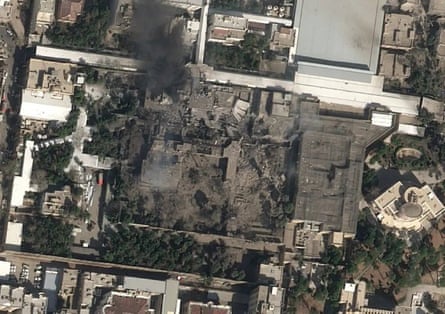
Hundreds of strikes hit at least 14 cities across Iran in what an Israeli military official said was a much more wide-ranging campaign than the previous US-Israeli attack on Iran in the 12-day war last summer. Strikes were aimed at intelligence and security headquarters, homes of Iranian officials, as well as ballistic missile launchers and caches – a tactic intended to limit Iran’s ability to respond to the US and Israeli attacks.
At least 51 people were killed and more than 60 wounded in a strike on a girls’ school in Minab in the southern Hormozgan province, according to state media. The attack was verified by Reuters. There is an Islamic Revolutionary Guard Corps base in the same city.
Reuters said it had also verified the footage as being from the school.
Iran’s retaliation to the military campaign was swift. It launched waves of missiles at Israel, while striking US military bases in five Gulf countries – pushing past previous red lines that had excluded the Gulf from the Washington-Tehran conflict.
Within hours, the conflict consumed much of the Middle East. People in Damascus, south Lebanon and Amman were shaken by explosions above their heads as Israel intercepted incoming Iranian missiles in the sky.
Iran also targeted US military bases in Qatar, Kuwait, UAE and Bahrain, as well as a strike in Riyadh, Saudi Arabia. The Gulf states reacted with outrage, condemning the attacks and saying that they reserved the right to respond.
The US also carried out strikes on Popular Mobilization Forces (PMF) in Iraq, injuring several members of the Iranian-backed group.
The speed at which the conflict turned regional was dizzying. The geographical scope of the conflict exceeded that of the 12-day war within just a few hours.
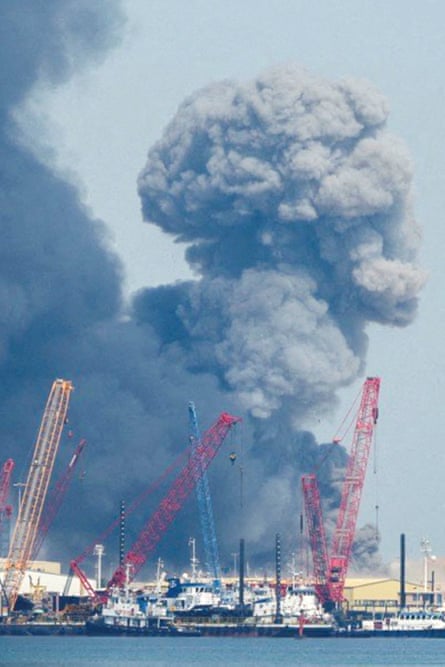
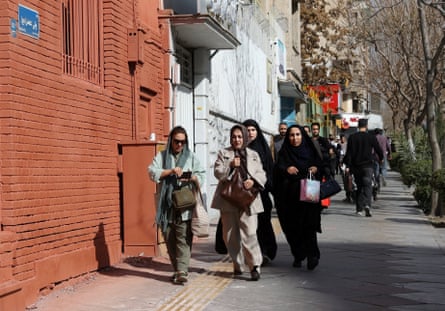
Panic consumed the streets of Tehran as explosions rocked the densely packed city. Israeli military spokespeople told Iranians to distance themselves from military and industrial facilities. Iranian authorities instructed citizens to flee big cities for safety in scenes reminiscent of the mass exodus of Iranians from Tehran this summer, when Israeli bombs rained down upon them.
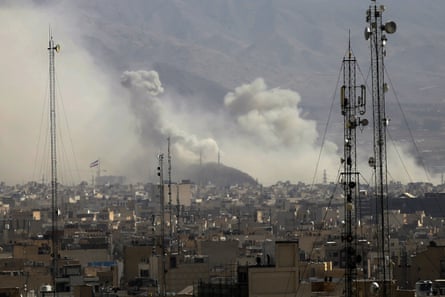
Smoke rose above Tehran’s skyline as people ran for cover as strikes continued to pound the capital. The city is densely populated. Many security institutions and officials are located in residential areas, making civilian casualties likely as large airdropped bombs hit targets nestled between apartment buildings.
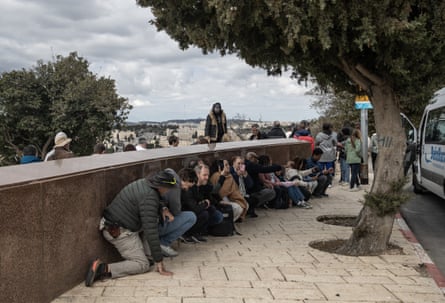
Israelis spent much of the day on Saturday in blast shelters as the sound of air-raid sirens were near constant. Israel’s home command instructed its citizens to take shelter as Iran launched wave after wave of ballistic missiles at the country. Most of them were intercepted by Israel’s Iron Dome missile defence system, which hits projectiles heading towards populated areas in mid-air.