.png) 3 months ago
80
3 months ago
80
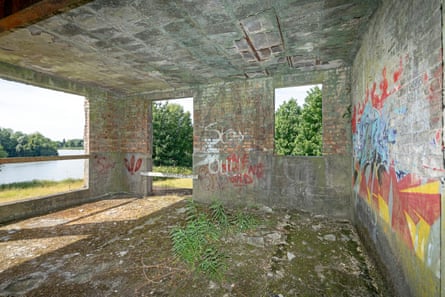
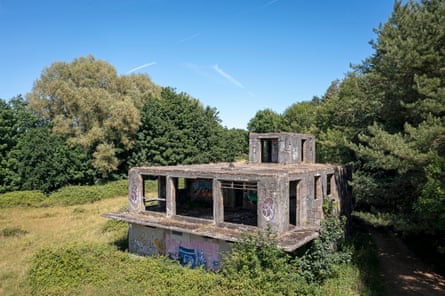
A unique RAF watch office that has been crumbling for decades is to be turned into a smart hideaway home to be shared by holidaymakers – and the bats that already use it.
The Landmark Trust, which rescues at-risk buildings, has been given permission to convert the ruined property in Hampshire into a holiday retreat with four bedrooms and a roof terrace.
A key condition is that its old teleprinter and forecast rooms will be maintained as roosts for the bats that have lived there for years, apparently not minding the decaying and damp concrete.
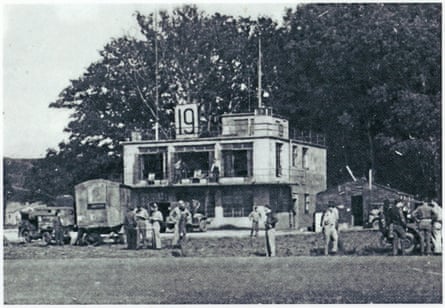
During the second world war, British and US personnel were stationed at RAF Ibsley in the New Forest, with Hurricane and Spitfire planes fuelling there, ready to fly out over the Channel to protect ships and intercept hostile aircraft.
The actors Leslie Howard and David Niven had a spell on the base to make The First of the Few, a war film aimed at boosting British morale.
Hastily but tastefully built at the start of the war, the base’s watch office, or control tower, is considered a fine example of its type.
According to a report drawn up by Jessica Cooke, a New Forest council planning officer, the building is “of significant local interest by reason of its architectural, artistic and historic interest” and has “high conservation significance for bats and supports six species of roosting bats”.
She added: “The building has been derelict for some time and is in a very poor state of repair, with decay being evident.”
Natural England, the government’s adviser on the environment, initially objected to the scheme because of the possible impact on the bats but the Landmark Trust has given assurances that it will make sure there is still room for them.
While most of the building will be light and airy – good for holidaymakers – part will be set aside for bats and kept suitably dark. There are also plans to convert a wartime blast shelter into another bat roost.
The Airfield Research Group, a charity, backed the plans, saying a sympathetic conversion would be a “lasting testament to the air and ground crew who fought so valiantly at Ibsley”.
Councillors gave permission for the conversion with a string of conditions including making sure bats were not harmed.
The Landmark Trust has raised almost £700,000 to convert the building. It said its proposals would save the building from collapse or demolition and represented “a fine balance between preserving the heritage of the structure and protecting the delicate ecology of the surrounding woodland and wetlands”.
The conservation charity said work would start on site at Ibsley later this year. A spokesperson said: “This is a real milestone and a demonstration of how close working with all parties can enable historical rescue and restoration in a way that is wholly respectful of significant ecological and environmental constraint.”
It added: “Many young men flew sorties from here during the Battle of Britain, some never to return. The strength of public feeling in favour of the scheme is very strong.”
Caroline Stanford, the trust’s historian, said the building had a modernist feel and it was astonishing it had survived so long.