.png) 2 months ago
47
2 months ago
47
Last week, I spent an hour in a makeshift theatre in the middle of a park, watching Garry Starr’s comedy clown show Classic Penguins. The next day, I spent eight and a half hours in one of Adelaide’s oldest theatres watching Elevator Repair Service’s Gatz – a play where The Great Gatsby is read aloud in full.
Both times, there was nowhere I’d rather be. They both adhere to my golden rule: all theatre should be less than two hours, or more than five hours.
The former is the perfect excursion. If it’s a bad show, you’re not held hostage for long; if it’s a good show, you get to bookend the night with a meal and a drink – or else go home and still have an early night. Is there anything worse than “two hours and 10 minutes including a 20-minute interval”? Just make it 110 minutes and run it straight through.
Three and a half hours is the danger zone: the length of many an unabridged classic. The artists, too often, haven’t thought of the way time sits on our bodies and our minds. This is the play you’re most likely to feel restless in, like it has taken up too much of your day, like it has outstayed its welcome.
But stretch longer – five hours and beyond – and the entire shape of a work changes. Time is no longer outside of the theatrical space: time becomes an essential artistic element. Our attention spans are confronted; the time exhausts the performers.
When the only thing to do with your day is sit in the theatre, you can feel your whole life rearranging itself around the work. Even in intervals or dinner breaks, the play is the most significant thing in your day.
An alchemy happens between the audience and the actors in this incredible feat of endurance; between the strangers in the audience who have committed to spend the day together. You are gloriously untethered from time’s demands.
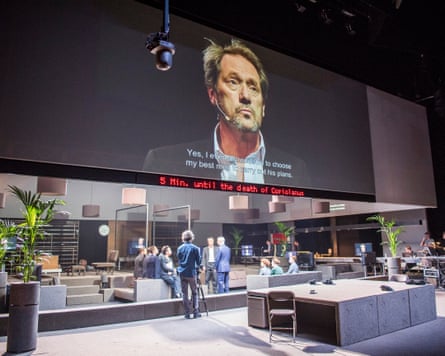
I recall Nature Theater of Oklahoma’s 10-hour Life and Times: Episodes 1–4 feeling increasingly like a fever dream, the work disintegrating into madness. I remember the magic of sunset during the dinner break for Belvoir’s seven-hour Angels in America – our brains half in the local pub, half in the fantastical New York City of the 80s. In Ivo van Hove’s six-hour Roman Tragedies, an onstage timer counted down to the next death, a feat of tension. In Gatz, a small desk clock is constantly picked up and placed down. Are the actors keeping time, or the characters? The audience is not let in on this secret.
Then there was Nat Randall and Anna Breckon’s 24-hour The Second Woman, where Randall repeated the one scene 100 times with 100 volunteers. I stayed for nine hours over five visits – and it sat front of mind for the whole 24.
Audiences often see a long run time and feel daunted. I don’t think you should. It’s high risk and high reward: you will rarely feel as taken care of in the theatre, rarely as fully embraced by art, as in a long play.
The play that is less than two hours long is the perfect snack to incorporate into your everyday life. The play that is more than five hours long is a feast. May we all have room in our diets for both.