.png) 6 hours ago
6
6 hours ago
6
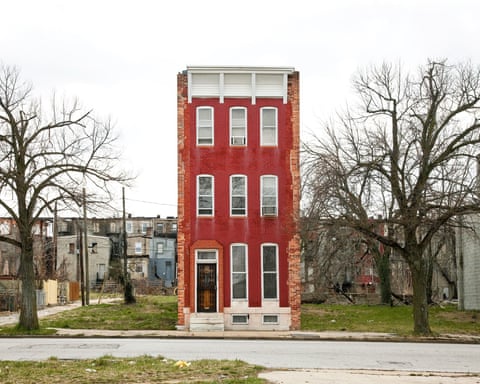
Ben Marcin’s stunning photographs show lone houses, derelict homes and makeshift camps that stand as epitaphs to past lives and offer insight into how Americans on the margins live
Wed 26 Aug 2026 08.00 CEST
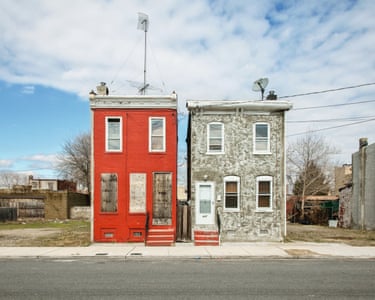
Camden, New Jersey, 2011
The Holdouts is the debut book by US photographer Ben Marcin. It offers a unique view of the city of Baltimore and its surrounding areas. The former occupants of these homes came from vastly different walks of life: farmers who settled across the eastern shore, some tracing their lineage back to the American revolution; Black Americans who moved north during the great migration of the last century; and present-day people experiencing homelessness and addiction, who avoid city-run shelters. The Holdouts is published by Gost. All photographs: Ben Marcin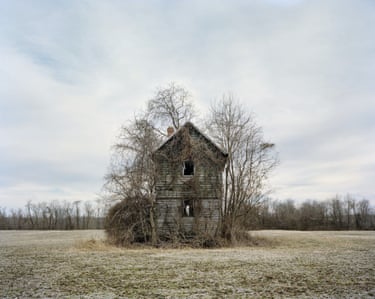
Anne Arundel County, Maryland 2019
Marcin’s photographic essays explore the idea of home and the passing of time and this latest work is about his home state. Marcin shows us solo terraced ‘row’ houses in the inner city that have somehow survived the wrecking ball; abandoned houses on the Eastern Shore, where the last generations of families either passed away or moved on after decades of farming the land; and temporary homeless camps in the city, none of which have ever survived for more than a year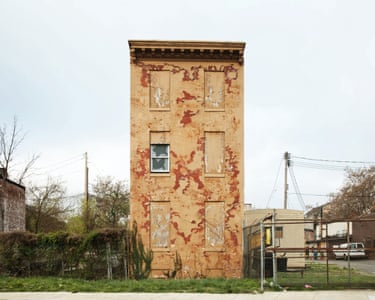
Baltimore, Maryland, 2010
The title for the book comes from the term ‘holdout’, a common real-estate term that describes a property owner who refuses to sell a building or lot to a developer, thus greatly hindering the completion of a larger, community-based project. Sometimes eminent domain is invoked to force an owner to vacate a property for the common good but, in other cases, the larger project is simply built around the house. Many of Marcin’s houses have become abandoned over the course of time but others are still surprisingly occupied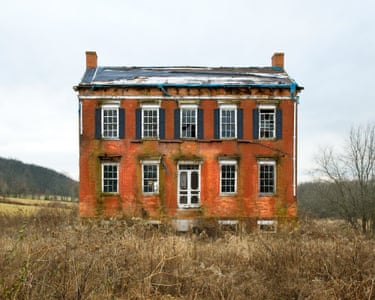
Carroll County, Maryland, 2009
Marcin says: ‘There is no available public information on this house but it certainly dates back to at least the American civil war. I first photographed it in 2009. A decade later, I noticed scaffolding across the front; the brick exterior was being refaced and it looked like somebody might actually move in. This never came about and all of the restoration equipment out front has long since vanished’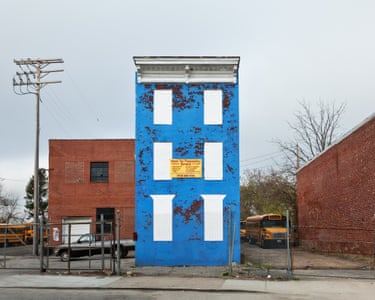
Baltimore, Maryland, 2010
‘Baltimore, early spring of 2010. This was the first row house I shot for Last House Standing. There were people milling about on the street or ordering fried chicken and lake trout from the takeout store behind me. Nobody paid any attention to the building with six eyes staring at them’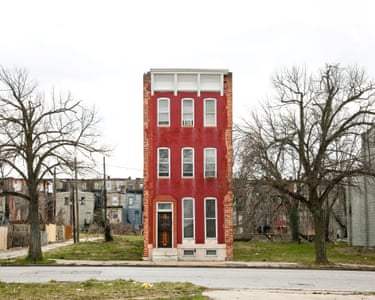
Baltimore, Maryland, 2011
Standing in defiance of the laws of nature and social upheaval, this redbrick row house remains virtually unchanged from the days when it was connected to an entire block of identical row houses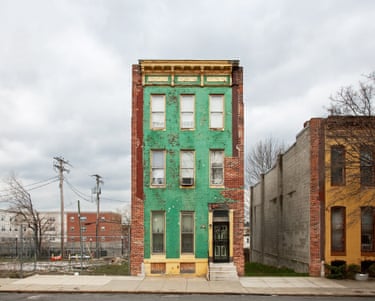
Baltimore, Maryland, 2011
Situated in front of homes built over 120 years after it, this survivor is still lived in and going strong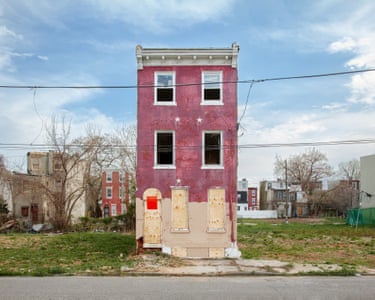
Philadelphia, Pennsylvania, 2013
In a devastated section of north Philadelphia, this row house, like so many others, has been sealed off from dealers and squatters. The current plan in many of these neighbourhoods is to turn the vacant lots into community gardens, small parks and green spaces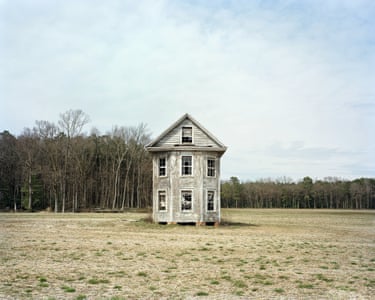
Worcester County, Maryland
, 2021‘Strictly speaking, none of my houses or campsites would be considered real estate holdouts. No shopping centre, highway overpass or gambling casino ever took their place. However, they do personify a more straightforward definition of what a holdout is, namely, the act of resisting something or refusing to accept what is offered’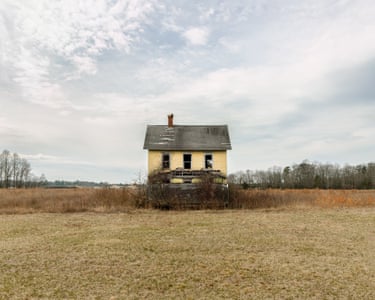
Sussex County, Delaware, 2021
‘I photographed this house on the eastern shore for many years. It is no longer there. The cleanup was so thorough that there is absolutely no indication that the house ever existed’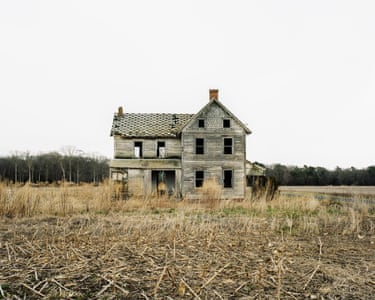
Sussex County, Delaware, 2018
‘This farm house disappeared about five years ago. The big resorts on the Atlantic Ocean are just three miles to the east’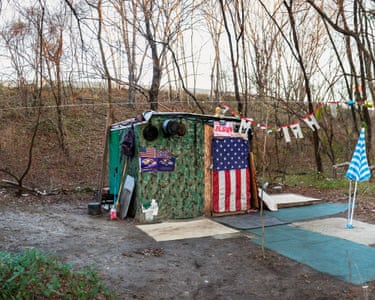
Baltimore, Maryland, 2011
‘The gentleman who owned this structure spent his days panhandling at a busy intersection 50 yards away. He was a gentle soul with yellowing skin and eyes. His camp was completely invisible from the highway but one couldn’t tune out the rush-hour traffic that bellowed outside. Inside, he had a solid bed, pots and pans that hung from the ceiling and a stove powered by a propane tank. When I returned a year later, the ground was levelled and charred black’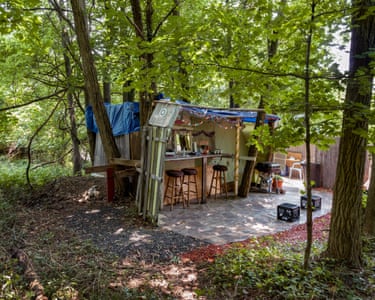
Baltimore, Maryland, 2015
‘This was the most hopeful homeless camp of all. The living quarters directly behind the bar came complete with a microwave oven, electric fan and a television set. The camp’s resident had run a set of extension cords underneath the leaves to a power outlet in the back of a warehouse just beyond the trees. It didn’t last a year’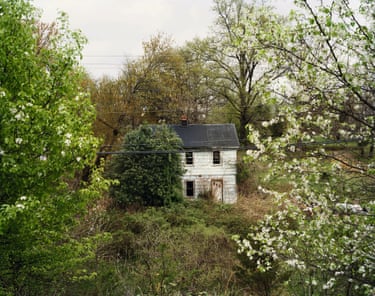
Anne Arundel County, Maryland, 2019
‘Many of the homes in this book were difficult to find, many no longer exist. All of the people who lived in these places played a role in making America what it is today and the remaining fragments of their homes raise mysterious questions about their ultimate fates. These photographs are not simply about abandoned buildings and encampments – they are about history, memory and marginalisation. They ask us to consider whose stories get preserved and whose disappear’Explore more on these topics