.png) 2 months ago
58
2 months ago
58
The seething Neapolitan melodrama È piccerella (1922), written and directed by Elvira Notari, follows the fraught relationship between the manipulative Margaretella and her morbidly besotted suitor, Tore, who steals from his elderly mother to buy expensive gifts for his reluctant inamorata, despite her roving eye.
The movie opens with documentary shots of middle-class pilgrims, including Margaretella and her shabbily genteel mother, arriving in carriages and cars at Naples’s Candelora festival – an “orgiastic pandemonium of Bacchantes,” notes an intertitle. Challenging the camera’s gaze as much as the smouldering femme fatale, an obese drinker quaffs exultantly from a pint glass of wine; in another scene, an unshaven little pauper gleefully drops his jaw to display his two remaining teeth.
“I think Notari had a desire to document how things actually were,” says Giuliana Bruno, whose 1992 book Streetwalking on a Ruined Map reconstructed the suppressed career and decimated work of Italy’s first and most prolific female film-maker.
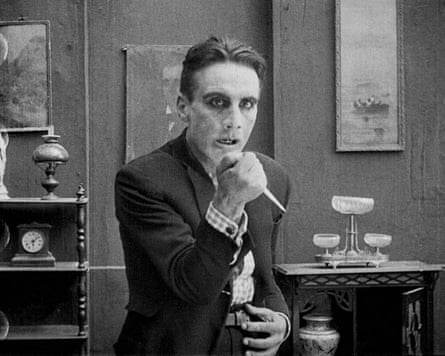
“The fascists didn’t want to see films about Neapolitan society in which a son takes money from his mother, but Notari didn’t hide it. She wanted to show that Italy isn’t this perfect place of white telephones [a motif of the glamorous escapist 1930s comedies fostered by the regime], but a place that has all kinds of sexual and social deviant behaviours and where people go to jail.”
Notari directed 60 feature films, many of them hand-coloured, and hundreds of documentaries and shorts for Dora Film, the company she ran with her cameraman husband, Nicola. Thanks to fascist censorship, only three of the features – ’A Santanotte (1922), È piccerella, and Fantasia ‘e surdato (1927) – and fragments of her other films survive.
Yet the DNA of Notari’s cinema lingers nonetheless in the films of Italian-American auteurs such as Francis Ford Coppola and Martin Scorsese, though they were more influenced by neorealism. Presaging later violence, Notari’s pullulating street festival scenes anticipate the deceptively joyful first-act wedding in The Godfather and the wedding in Goodfellas – and Taxi Driver’s heaving, sordid Times Square sequences, too.
Coppola’s Neapolitan emigrant grandfather Francesco Pennino, a film exhibitor, playwright and songwriter, imported silent melodramas made in the sceneggiata style, which meant they were accompanied by live musicians interacting with the emotional beats. When Vito Corleone and his future consigliere visit a Little Italy theatre during the 1917 flashback in The Godfather Part II, an actor sings songs written by Pennino that elicit the emigrant audience’s acute nostalgia as Notari’s exported sceneggiata films would have done.

The new documentary Elvira Notari: Beyond Silence, produced by Antonella Di Nocera and directed by Valerio Ciriaci, investigates Notari’s truncated career and honours her artisanal approach to film production by showing modern “artisans” – a photographer, a visual artist, a novelist and musicians who score silent films – drawing inspiration from her. The strategy was necessary, Ciriaci says, because Notari left no accounts of her career and never gave an interview. “This absence is what makes her story fascinating. Thanks to the emptiness and the silence, we found an opportunity to collaborate with people already making projects about her.”
De Nocera says: “Elvira speaks to us like a contemporary because of her films’ carnality and sensuality. The texture of silent film makes you feel so close to that sensuality.”
Having long made and exported dal vero panorama films, which scenically documented locations and landscapes, Notari brought an anthropologist’s attention to her melodramas. Cristina Jandelli, a member of the Elvira Notari National Committee established last year to celebrate the 150th anniversary of the director’s birth, says that “beyond Notari’s images and the empathy they convey toward the social reality she depicts, the intertitles of her sceneggiata films speak volumes: she likely possessed a class consciousness, as well as an awareness of the marginal and demeaning role of women in the society of her time. Yet, street life was not a picturesque or convenient backdrop for her stories; it was the life she knew.”
Notari’s Neapolitan dialect intertitles and evocations of Naples’ squalor and brutality weren’t tolerated by Mussolini’s gatekeepers, who promoted a wholesome vision of a unified Italy, supported propaganda films such as Mario Volpe’s Il grido dell’aquila and Mario Camerini’s Kif Tebbi – and centred the film industry in Rome. Bruno’s book cites a 1928 fascist censorship law that denied the approval of Neapolitan films depicting “stallholders, beggars, urchins, dirty alleyways, and people dedicated to dolce far niente [sweetly doing nothing]” – Notari’s movie milieu in a nutshell. She tried to conform by bowdlerising her earlier films, but the writing was on the wall. Further stymied by the prohibitive cost of shooting talkies, Dora Film folded in 1930. At the outbreak of the second world war, Notari retired to Cava de’ Tirreni near her birthplace of Salerno. A forgotten figure, she died there in 1946.
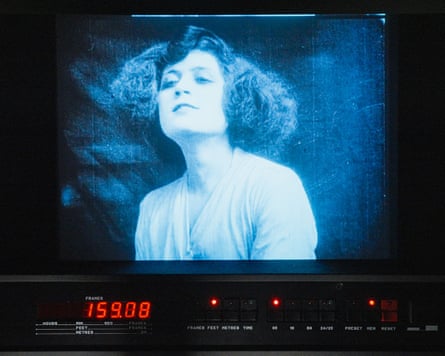
Researchers in women’s film studies parse Notari’s work for signs of a feminist consciousness. Bruno says: “There’s an unbelievable scene in ’A Santanotte where the girl sacrifices herself by marrying the man she suspects of killing her father, hoping to get the truth from him. Then the husband stabs her breast” – as Tore stabs Margaretella in È piccerella. Bruno likens these atrocities to sfregio, the 17th-century Neapolitan custom – related to the mutilation of the Christian martyr Saint Agnes – whereby “women who had gone against patriarchal laws had their faces cut, a crime that was looked upon leniently”.
Now Notari’s moment has come, Di Nocera says: “We need symbols, and she is a symbol of the right to memories. Notari was silenced by history. Making the documentary was meaningful because women are silenced now, and we don’t hear them even if they scream.”