.png) 6 hours ago
6
6 hours ago
6
“Ridiculous,” “offensively trivial”, “a complete disaster,” just some of the critical barbs hurled at Gustav Mahler’s First Symphony following its Budapest premiere in 1889. A babel of such invective echoed around the Albert Hall launching the ingenious theatrical presentation – in effect, a staged programme note – that preceded Aurora Orchestra’s performance of the work in all its maverick majesty. Over an hour, actors and musicians took us on a light touch, deep dive into the circumstances surrounding the genesis of a symphony that frankly baffled its first audience.
“For those that listen closely, everything about me is explained in this music,” declared a beguiling Jack Bardoe, perfectly encapsulating Mahler’s combination of frenetic energy and artistic neuroses (“A bomb encased in razorblades,” is how one-time friend Ferdinand Pfohl put it). The setting was a psychiatrist’s office, with Sarah Twomey a forthright Sigmund Freud (“Tell me about your mother”) linking the composer’s compulsion to write music with a need to re-enact childhood trauma. Paternal cruelty, eight siblings lost in infancy and a disastrous love affair fostered a deeper understanding of what made Mahler tick.
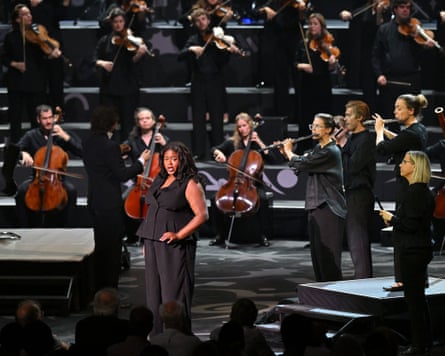
Jane Mitchell’s meticulously crafted script was interwoven with Nicholas Collon and the orchestra’s illuminating musical examples, including, I kid you not, crucial information on the breeding cycle of the cuckoo. Natalie Lewis, meanwhile, gave velvet voice to the earlier Songs of a Wayfarer, vital source material for Mahler’s symphonic odyssey.
Did it ultimately enhance the performance – by heart – of the symphony itself? Well, yes and no. On the one hand, much of the music arrived like a familiar friend. If the opening felt a touch brisk and the offstage brass sounded overly present, at its best – in the duelling ländlers of the second movement or the eerie tread of the third – Collon caught the music’s pioneering spirit. On the other hand, all those examples robbed us of a certain element of surprise, like the finale’s breathtaking modulation from C major to D (in the event, strangely rushed). The last five minutes, however, worked their usual magic, Mahler’s repurposed cuckoo calls ringing out on the horns to remind us of the engrossing music lesson that had come before.