.png) 2 months ago
45
2 months ago
45
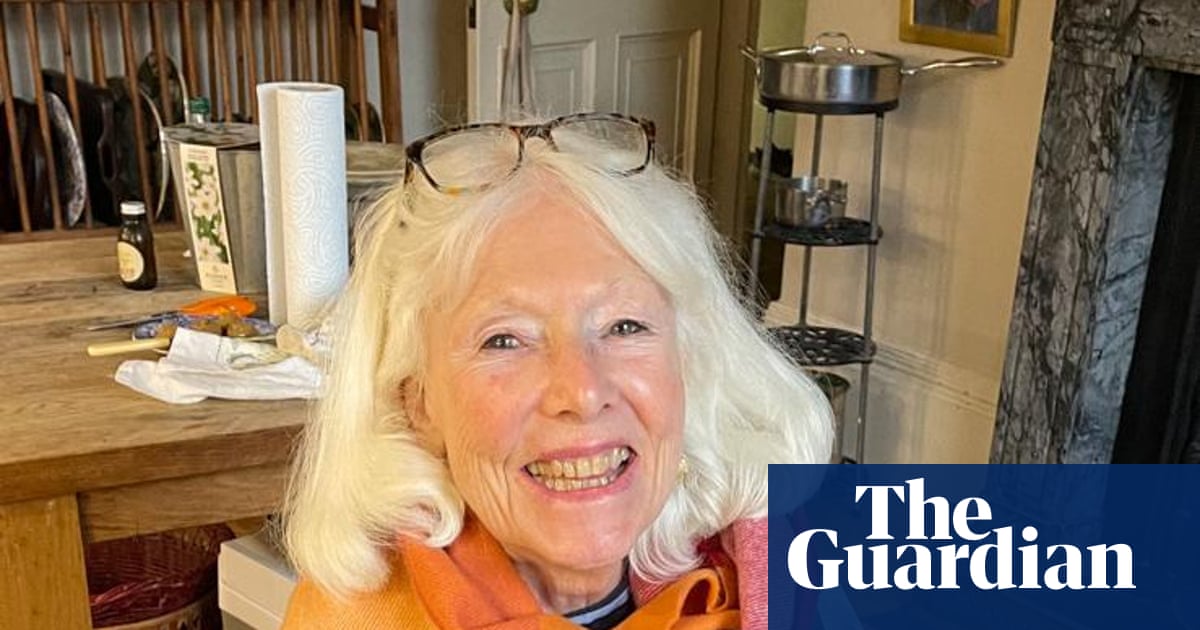
A woman strangled by an American fighter pilot at his home in an English city has come forward to criticise the handling of his prosecution via a US court martial, a process she described as “military first, justice second”.
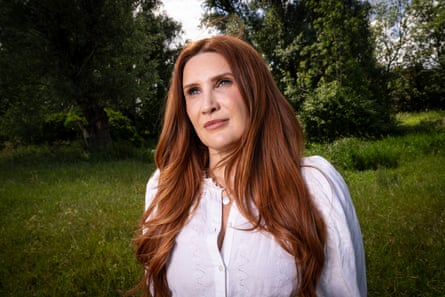
Sarah Steele, a British academic, has come forward to speak about the “distressing and degrading” experience she had with the US military justice system after she was assaulted by the airman in Cambridge.
Although Jacob Wulfson assaulted Steele on UK soil in late 2023, after the pair met on a dating app, American military police quickly took over the case and the pilot was tried by US air force prosecutors.
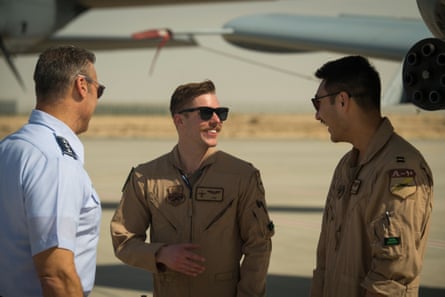
UK law enforcement have primary jurisdiction over crimes that occur outside of US bases while military personnel are off duty. However, Steele’s case has put a spotlight on how UK authorities cede authority to the US military.
In her interview with the Guardian, Steele also shed light on the process by which her case was claimed by American military prosecutors.
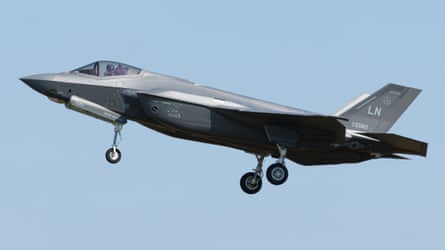
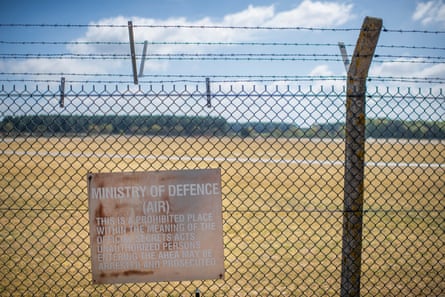
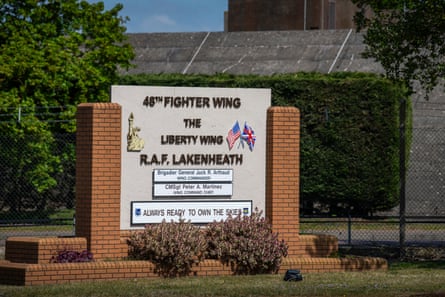
Wulfson’s court martial – details of which were revealed by the Guardian – was heard in April at the airman’s base, RAF Lakenheath in west Suffolk, the largest US military base in the UK.
The 32-year-old US captain was convicted of strangling an intimate partner but found not guilty of sexual assault. He received a sentence of six months in a corrections facility, handed to him by an all-male panel of air force officers who served as the equivalent of a jury.
Had his case been heard in the British criminal justice system, legal experts say, Wulfson would probably have been tried for rape. Any sentence would have been determined by a judge.


In an interview, Steele said the US military’s processes had been “confronting, and at times frustrating and distressing”. She said the court martial felt “archaic and bizarre”, adding: “It feels like you’ve been put in this absurd Netflix series kind of situation where you’re like, is this real?”
Steele, 42, said one reason for coming forward to the Guardian was that many people in the UK were unaware there were “little pockets of American jurisdiction” on British soil, where victims of crimes committed by US military personnel can find themselves caught in a foreign and outdated justice system.
She said decisions by UK police forces to cede responsibility of cases to the US military police and prosecutors needed to be “subject to scrutiny”, in particular when crimes committed by visiting American service personnel have affected British citizens.
“If we’re going to host these foreign forces here and they’re going to have an increasing presence in our country, I think there’s a necessity that we have a really clear, transparent, focused process by which constabularies hand over these cases,” she said.
Steele, who has a doctorate in law, has worked at several universities in the UK. Her research focuses on sexual safety and preventing violence against women and girls, providing her with an informed perspective on the case, though she said it had been deeply uncomfortable to be in the kind of situation she researches.
Wulfson assaulted Steele at their first face-to-face encounter. During the court martial, US air force prosecutors also accused him of drugging her and penetrating her vagina without her consent, an accusation he was acquitted of.
This was charged by the military prosecutors as sexual assault and “aggravated sexual contact”.
Wulfson’s lawyer said in the court martial the pilot had been “falsely accused” and was “unequivocally not guilty”. After he was convicted on the strangulation charge, Wulfson told the court martial that on the night he met Steele he had been drunk and “took things too far”.
His conviction is now subject to automatic appeal by a higher military court, which has the power to examine all the evidence and testimony heard in the court martial.
For legal reasons, Steele is unable to talk about the facts of the underlying case. However, she can discuss her experience of the US military system, which she said “picked me up, chewed me out”.
Across several days of the court martial, Steele was subjected to invasive and aggressive questioning. “I do not think that the contemporary British judiciary would have allowed some of the conduct that was experienced in that courtroom,” she said.
It was jarring to have “some of the worst things that have ever happened to you” scrutinised in a military court, she added. At several points during her testimony, she had to pause mid-sentence as fighter jets roared down a runway just a few hundred metres away, their engines rattling the courtroom.
“It felt like the shadowlands,” she said. “It felt like this alternative, weird world.”
Unfamiliar system
Born in Australia, Steele moved to the UK in 2007 for her doctorate at Oxford University, later becoming a British citizen and an expert in public health policy.
In September 2023, after separating from her partner earlier in the year, Steele started to explore online dating and began chatting with Wulfson on Tinder. “I’m a pilot up at Lakenheath,” he wrote to her in one early message.
They continued chatting for several months but it was not until early December 2023, after Steele had undergone surgery to correct an earlier mastectomy, that they met in person, at Wulfson’s apartment in Cambridge. At the time, Steele told the court martial, she was “trying to feel safe in a very different body”.
Air force prosecutors alleged that at Wulfson’s apartment, Steele was drugged with a potent, fast-acting drug several times stronger than Valium. They advanced several theories about how it was administered but could not say for certain, and Wulfson was ultimately acquitted of the drug-related charge of sexual assault.
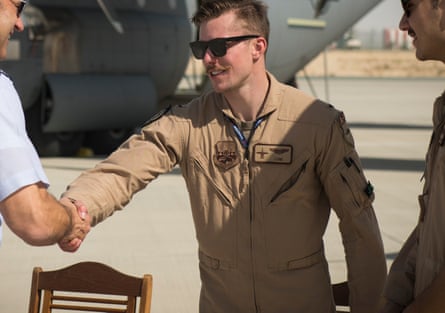
He was, however, convicted of the strangulation charge. Prosecutors alleged that in his bedroom Wulfson strangled Steele, despite her having told him not to touch her neck in a message sent before arriving in which she had set some “ground rules”. They alleged he continued to sexually assault her after she passed out, a charge he was acquitted of.
After she left Wulfson’s apartment the following day, Steele went to hospital, where she was treated for a series of injuries. The next day a friend, a US air force employee, took her to a sexual assault referral centre, where she was examined by a nurse and had an off-the-record conversation with a UK police officer.
Show more
The friend then took her to speak to military police officers on a nearby US base. Steele met officers from the air force’s office of special investigations (OSI) for what she thought would be a preliminary conversation about her options. At the time, she was trying to work out how she wanted the case to be handled.
Instead, she said, “I found myself being formally interviewed in a way that would be used across the whole case, without having slept properly.”
Within 24 hours, officers from OSI, a federal US law enforcement agency, appear to have rapidly launched an investigation, arrested Wulfson, and notified Cambridgeshire police it would be handling the matter.
A spokesperson for the US air force (USAF) police said it “negotiated jurisdiction” over the case with the local police. “Cambridgeshire constabulary agreed to let the USAF take the lead and was an active partner throughout the investigation,” they added.
A spokesperson for Cambridgeshire police confirmed it was agreed in December 2023 that the US military “would take investigative primacy” in the case.
However, Steele said that Cambridgeshire police did not contact her to discuss whether she wanted the case to be handed over to the US air force, or explain what that would entail. “No member of the British constabulary ever asked me what I wanted,” she added.
Once the US military police took over, she said, it felt like “the train left the station”.
When Cambridgeshire police officers contacted her several months later, Steele said, she was concerned that if OSI handed the case back to the British police the investigation would start again from scratch.
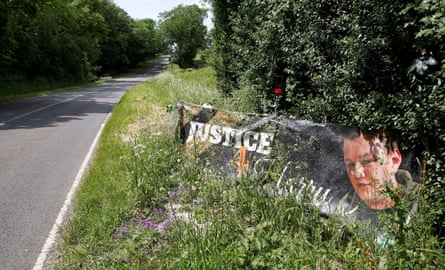
She also feared Wulfson might try to leave the UK if the US military dropped the case, recalling the case of Anne Sacoolas, the American intelligence official who killed a 19-year-old motorcyclist, Harry Dunn, in a road accident outside the US military base RAF Croughton in August 2019.
Sacoolas fled the UK, evading justice after the US asserted diplomatic immunity. It was only after a three-year campaign that Sacoolas pleaded guilty, via remote video link, to causing the teenager’s death by dangerous driving.
But Steele said she found herself in an unfamiliar system where the process was different from the British courts. There were no court-issued bail conditions imposed on Wulfson, nor was he remanded into custody. Instead, his commanders issued a military order days after he was arrested that prohibited any contact with Steele, which he subsequently violated.
When Steele later learned of this order, she wanted it to be extended to cover her child and protect other members of the public. This required her to go to Wulfson’s base and personally make the case to his commander. “I had to somehow figure that out [and] ask for the thing I wanted and needed to feel safe.”
‘It feels like you’re being ripped up’
At the court martial, Steele had to spend extended periods on the witness stand. While victims in sexual assault cases can give evidence from behind a screen in the English criminal courts, no equivalent protection exists in US courts martial. Steele had to sit just metres from Wulfson.
To her side sat a panel of eight uniformed US air force officers who were acting as the jury in the case. That they were all men was troubling, Steele said. “To say they weren’t representative of society at large would be an understatement.”
For Steele, the process felt strikingly foreign and in the hands of people with little appreciation of life in the UK, despite the assault having happened in an English city. “The American flag is there. Everybody is in American uniforms. Everybody, as you appreciate it, is American,” she said.
As an academic familiar with criminal procedure, Steele said she anticipated Wulfson’s lawyers would try to cast doubt on character and testimony. But the defence in the court martial felt “abnormal and in-your-face” and more aggressive than she would have expected in the British courts.
“I had to withstand extended periods of intrusion into things that you never thought would be publicly shared, into things that you never thought would be questioned,” she said. “It feels like you’re being ripped up.”
Wulfson did not give evidence in the court martial, relying instead on his lawyers’ attacks on Steele’s credibility.
While his conviction is appealed – a process that could take several years – Steele is unable to comment on Wulfson’s sentence. He is now serving six months of confinement in a facility at RAF Lakenheath, after which he can fly home to the US. His sentence does not include restrictions on contacting Steele after he is released.
Although the panel also decided to dismiss Wulfson from the air force, which is a severe punishment in the military, legal experts said a six-month prison sentence for a strangulation case such as this would be considered lenient had it been heard in the English criminal courts.
A spokesperson for US air force said: “The military justice process includes strict procedural safeguards by design to ensure proceedings are fair, transparent and thorough. Maintaining the trust that underpins our partnership, while ensuring accountability and the fair administration of discipline, remains our priority.”
Steele believes there needs to be greater scrutiny of how British police forces handle cases involving visiting forces, in particular when their victim is a British citizen or unconnected to the US military.
She said the police need to formally record and then account for decisions to hand over cases to the US, and to seek the views of the survivors before doing so.
This is critical, she said, because it was in the US military’s interest “to have their cases heard in their own settings, according to their own laws, because then they can control everything”. Its processes are “guided by the US military’s mission and what the US government wants, and that isn’t necessarily what’s best for British civilians”, she added.
Steele said “the system itself” had been bruising, but she hoped that by speaking out future victims of crimes by US military personnel stationed in the UK would have some insight from somebody who had “been through what’s inside that black box”.
“The only way I’ve been able to rationalise and kind of start to move forward is to do things like say, how could this have been better? How can we fix it? How can people in the future not go through what I’ve experienced?”