.png) 2 months ago
46
2 months ago
46
Bologna will be transformed into an open-air museum of cinema on Saturday as a nine-day festival dedicated to restored, rediscovered and overlooked films – some dating back more than a century – gets under way in the northern Italian city.
Now celebrating its 40th anniversary, Il Cinema Ritrovato, or “rediscovered cinema”, has evolved from its niche origins into an influential international gathering captivating a new generation of cinephiles.
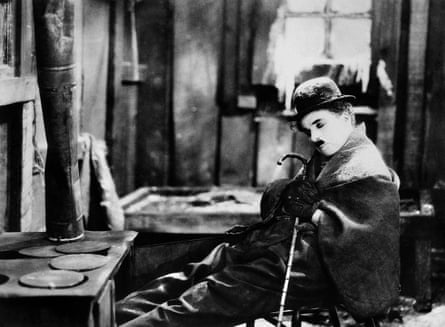
Last year’s edition, which included the resurrection of Charlie Chaplin’s 1925 film The Gold Rush, drew a record 140,000 people, who crowded into Bologna’s Renaissance square, Piazza Maggiore, and other locations in the city’s historical centre for screenings of film classics.
In an interview with the Guardian, Gian Luca Farinelli, who co-founded the festival and is now one of its four directors, compared the experience to “walking through the ruins of the past”.
A similar number of visitors is expected this year. But it was not always this way. Farinelli conceived the idea for the festival at 19 with two friends from his cinema club, Michele Canosa and Nicola Mazzanti, after being introduced to Bologna’s Cineteca, a film library formed in 1963 that today includes a laboratory regarded as one of the world’s most influential for the restoration of films and documentaries.
Delving through Cineteca’s archives, the three friends “began to discover many things that we did not know”, Farinelli said. “We wanted to find an audience to show these jewels to.”
They found that audience shortly before Christmas in 1986 when the debut edition joined forces with another film festival held at Cineteca’s Lumière cinema.
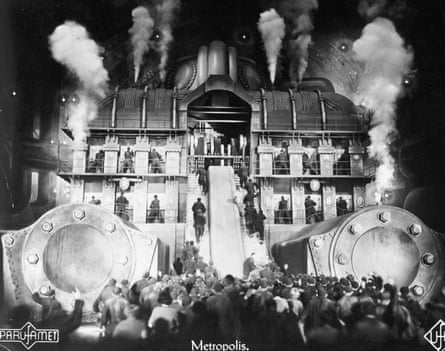
Enno Patalas, the German film historian and a pioneer of film restoration, brought the 1931 cinema classic M and Metropolis, both by the director Fritz Lang, to the event.
“From the outset it was clear that this was an extraordinary field,” said Farinelli, who since 2000 has been the director of Cineteca. “We also very quickly understood that there was a void in Italy – nobody was really specialising in restored films, and so this is how we created the [Cineteca] laboratory.”
Although it steadily grew each year, Il Cinema Ritrovato remained largely the preserve of classic film enthusiasts until 1995 when the festival shifted to a summer slot. “This made our work much better known,” Farinelli said.
The regular attendance of a host of international film directors, among them Martin Scorsese, Francis Ford Coppola and Wes Anderson, as well as the Italian director Alice Rohrwacher has also helped to enhance its profile.
In more recent years, attendance has soared. “Another extraordinary aspect is that we have seen the younger audiences explode,” Farinelli said. “For younger people, cinema of the past is a great surprise. Yes, they know the [streaming] platforms and all the series, but in Bologna they discover that cinema has a long history. They also discover the pleasure of watching films together in a square with other people.”
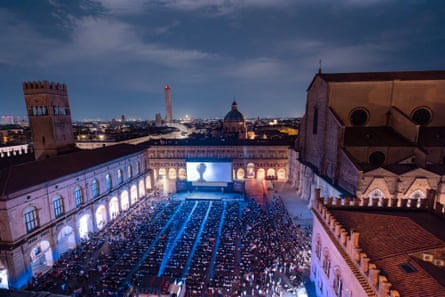
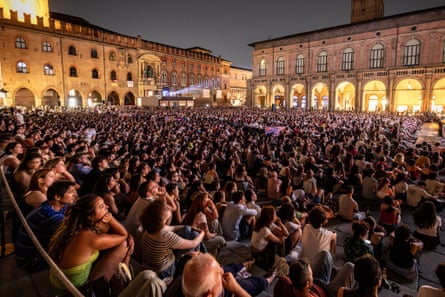
More than 500 films from world cinema will feature in the festival’s 40th-anniversary edition, ranging from silent films to 1980s Hollywood greats and restored films that were long buried.
“This year we will present various films that nobody has ever talked about, so it’s like seeing a film for the first time,” Farinelli said.
Among them is A Spring for the Thirsty, a black and white 1965 surrealist film by the Ukrainian director Yuri Ilyenko that was censored by Soviet authorities for its alleged “ideological perversions” before finally being released in 1987. This will be its first significant airing after being painstakingly restored in Cineteca’s laboratory.
“I have seen a huge amount of films in my life, but seeing this one was shocking – I have never seen a film like it,” Farinelli said.
Retrospectives will be dedicated to the Italian director Luchino Visconti, including a restoration of Il Gattopardo (The Leopard), as well as the screen legends Barbara Stanwyck and Josephine Baker.
Farinelli said: “When someone organises a festival, you can only hope that it will grow. But what is quite unique about Il Cinema Ritrovato is that it has grown while maintaining its principles – that is, to go in-depth and show films but also the complicity, richness and contradictions of the history of cinema.”