.png) 1 month ago
41
1 month ago
41
It shouldn’t feel like a contentious image: a large cross of St George – England’s national flag – being unfurled and laid out on a raked stage. But at that time, in that place, and in this way, you could feel one of those unique, intake-of-breath moments that happen sometimes in the theatre.
The place in question was the Nottingham Theatre Royal in the East Midlands, one of my local theatres when I was growing up. The play – forgive the self-aggrandisement – was my own, Dear England, about Gareth Southgate’s tenure as England men’s football manager: the first production in the country to receive funding through Arts Council England’s incentivising touring scheme. And the time was the opening night of the play’s nationwide tour in September 2025.
The England flag – seen by some as a legitimate expression of national pride and by others as an intimidating rebuke to perceived liberal immigration policies – had long been fought over, but its controversy intensified after a guerrilla campaign to hang St George’s Crosses on lamp-posts was waged across England’s towns and cities last summer.
The flag featured heavily throughout Dear England in its initial run at the National Theatre, and in the West End in 2023 and 2024. But in the course of a year it had become a toxic hot potato, prompting discussions about how to handle the passionate reactions the scene and the symbol might provoke when the actor playing Gareth simply asks: “What is this?”

This is what I love about theatre. Its superpowers have always been nuance and empathy, even when the world around it is reductive, polarising and unkind. Theatres are story factories that offer, within our communities and nationwide, a lens through which we can see ourselves and our lives, and feel our lives seen and heard.
Thomas Tuchel leads England at World Cup 2026, but when Gareth Southgate took on the role a decade earlier, just months after the divisive Brexit referendum which had done – and would continue to do – so much to challenge social cohesion, he was taking charge of a team that had fallen to new lows. His response was to state explicitly to his squad that he wanted England to write itself “a new story”.
It took a shy England manager to recognise that sport, like theatre, serves as more than just a distraction in the busy rhythm of our lives; that big moments, on stadiums and on stages, can become markers in our ongoing island narrative.
When I was 16, my mum took me and my twin sister down to the city to see a production of Macbeth on the stage Dear England was eventually performed on, because it was on our school syllabus. It was my first experience of live professional Shakespeare. It starred Pete Postlethwaite, and I found it mesmerising.
Later that summer, I applied for work experience in the same theatre, and years down the line, I became its stage door keeper. One of my jobs was to lock up the building at midnight, and I would sometimes allow myself a moment to sit on the empty stage, imagining all the shows that had passed through, and maybe even hoping to create my own work there one day. I am delighted to acknowledge the role that our unique, publicly funded cultural sector – whose 80-year history is being marked this year – has played in my own development as an artist from an unlikely background.
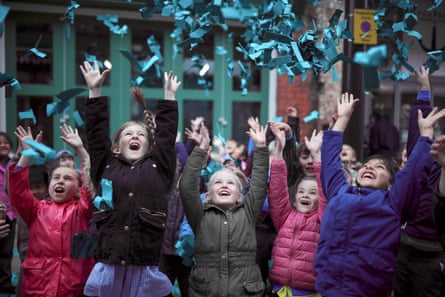
In the 1960s, the very first arts minister, Jennie Lee, described art and culture as public goods, which should be available to “everyone, everywhere”. But this mission didn’t begin with her. It began with an economist. John Maynard Keynes drove the foundation of what was then the Arts Council, drafting its royal charter and securing funding in 1946. It has always given me great personal delight to note that the 20th century’s most impactful economist saw no contradiction between fiscal discipline and state investment in culture for its citizens’ long-term happiness and wellbeing.
I had to wait until I was 21 to see my first piece of “new writing” in the capital: Fallout, by Roy Williams, at the Royal Court theatre, an unflinching look at gang violence and loyalty after the murder of a young Black British lad. I’d never seen anything like it – theatre that was aggressively modern; a searing reflection of a specific community from an authentic voice within it.
My first visit to the National Theatre followed soon after, this time to see David Hare’s A Permanent Way, which turned the privatisation of the railways into a sweeping and poetic analogy for a wider decline in British values. It was another lesson, for me, in theatre’s power to mark national inflection points, good and bad; and in the way live theatre allows us to make collective sense of those inflection points. The importance of political provocations; the power of proximity.
after newsletter promotion
I witnessed this happen on a massive scale during Hull’s tenure – Arts Council England-supported – as the UK’s city of culture in 2017; I studied drama at the University of Hull, and was excited to come back and create work for the year-long festival. Such events, like football tournaments or even the Olympics, can be viewed simply as opportunities to crassly “sell” your area: Hull had 5 million extra people visit the city. But it wasn’t merely an exercise in using arts investment to make things look pretty for outsiders. It was yet another example of how storytelling can empower a place. Work produced in Hull that year covered everything from the human cost of the collapse of the fishing industry to Hull’s role in the slave trade, the impacts of environmental change, and the somewhat farcical part the city played in the English civil war.
An evaluation team found that three out of four residents felt an increased sense of pride in place, and self-esteem went up markedly among young people.
My own key memory from that time was standing in Queen Victoria Square in the heart of the city for the opening event. A video installation that covered 100 years of the city’s history was projected on to buildings around the square. An elderly man standing next to me said, with some emotion in his voice, “We just don’t normally get this sort of thing round here …”
For my own community in Nottinghamshire, the arts story is coming full circle too. A decade ago, a report identified Ashfield as being 647th out of the country’s 650 constituencies in terms of access to art and culture. The wider East Midlands, meanwhile, in the market towns and villages of the so-called red wall – has traditionally been bottom of every table when it comes to investment, public or private. That trend is now, thankfully, being reversed. In July 2024, Arts Council England invested £1m in Ashfield Creates, a three-year programme designed to transform access to, and participation in, the arts. It’s a very Keynesian intervention.
No one believes that stories alone have the power to fix all social ills. But time and again, across 80 years, they have proven to be disproportionately effective instruments in supporting us to better know ourselves and see ourselves as part of a bigger picture.
It was one of the privileges of my creative life, hailing from a deprived pit village with little culture, to be asked – following the success of Dear England – to write the BBC montage for the England final at the Euros 2024. I wrote then about the potential and power of story. “A country is only the stories we tell ourselves, about ourselves. A series of moments, seared into one memory, stitched together across time … Nothing is ever really ‘final’.” England is a story we’re all writing.”
-
James Graham is a British playwright and television writer. This piece is based on his contribution to Made in England: Art and Culture in Changing Times – a book to mark the Arts Council’s 80th birthday, published on 9 July