.png) 2 months ago
33
2 months ago
33
The UK has had six prime ministers in the last 10 years – with a seventh likely to be in place by as early as mid-July.
John Crace ranks those who have been booted out of Downing Street between 2016 and 2026.
Worst of all is …
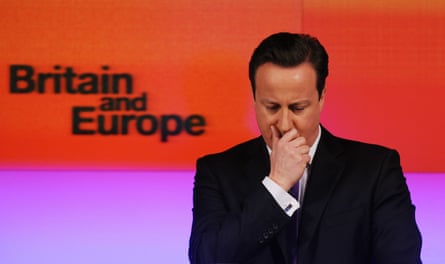
6. David Cameron

If you’re looking for villains, the architect of much of the political chaos of the last 10 years, then David Cameron is your man. On the surface he had many of the characteristics a prime minister needs – he knew how to make a speech and was a good performer in the Commons – but he also had fatal flaws. Mostly his entitlement and carelessness. Even now he is either oblivious or indifferent to the damage he has done and would be astonished to find himself heading this list. It was his programme of austerity that lit the touchstone for communities feeling left behind, that government was no longer working for them. Then came the referendum. Promised as a means of resolving an internal problem in the Conservatives – membership of the EU barely registered as a national grievance in 2014 – so that Cameron, spooked by the rise of Ukip, could go into the 2015 general election with his party more or less united. To his and everyone else’s surprise he won an outright victory and was obliged to deliver on his promise. Even then, there was plenty of time to mitigate the damage. Dave had said the referendum would be held by the end of 2017. Time that could have been used to prepare the ground and plan an effective campaign for remain. Yet he chose to go early, partly because he wanted to get it out of the way, but mainly because he thought he would win easily. Two weeks before the vote he was asked if he would stick around if remain lost. He said yes. Of course. At 9.30am on the morning after, he was gone, whistling to himself as he entered Downing Street for a final time. As if he didn’t give a toss. He would be fine whatever. A peerage down the line. Others could deal with the fallout. An economy made infinitely worse and a divided country that subsequent prime ministers would find almost ungovernable.
5. Liz Truss
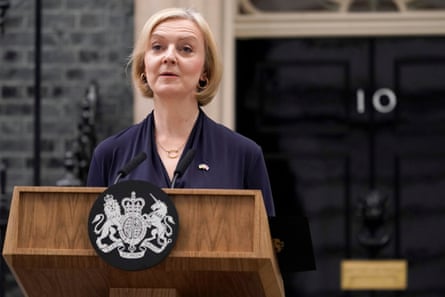
If this were a list of my favourite prime ministers, Liz Truss would have easily come top. I knew she was going to be sketch gold when at her leadership campaign launch in 2022 – with a packed room waiting expectantly – she wasn’t able to open the door to enter the room. And then, to prove this was no one-off, she tried to leave via the first-floor window. Those are the kind of motor skills I am looking for in my leader. But what’s endearing to a sketch writer isn’t necessarily what the country needs. And so it proved. Liz got in a remarkable amount of damage, most notably the mini-budget, during her 49 days in office. Really only 39, as 10 of the days were given over to state mourning during which she was prevented from doing any actual harm. No one is ever likely to serve for a shorter period in No 10 and in years to come she will probably become a pub quiz staple as contestants are asked to identify that strange woman in the line-up of former prime ministers at the Cenotaph on Remembrance Day. But the real question we should be asking is not how much chaos she caused in just a few weeks, but how she became prime minister in the first place. It’s a measure of the psychosis running through the Tory party that its MPs and members managed to elect someone so clearly out of her depth. Someone who as a cabinet member in previous governments had always been a joke figure. So dim and so obviously incapable. Weirdly, it turns out she went to Oxford. The admissions tutors must have been having an off day. Still, she’s one of a kind. The first student to have left university stupider than when she arrived. Her lack of self-awareness is staggering. Liz still believes her only problem was that we did not get more Liz. Please, no.
4. Boris Johnson
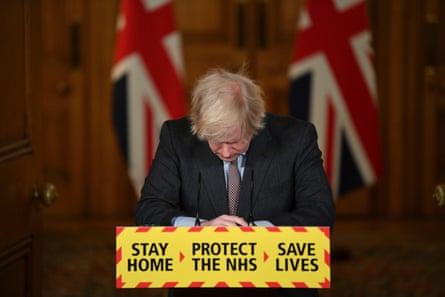
It’s a measure of just how shallow the gene pool of prime ministerial talent is that Boris Johnson only comes in third. In any other, normal era the man who has never admitted exactly how many children he has would easily have come top. For Boris, reaching No 10 was only ever an extension of his narcissistic personality disorder. He never had any great vision for what he wanted to do with the country, no real interest in making people’s lives better. All that mattered was the satisfaction of his own ego. The natural culmination of a childhood dream of himself as “world king”. His decision to front the Vote Leave campaign was merely a means to an end of becoming prime minister. As London mayor, he had been a confirmed Europhile. He was a man totally lacking in conviction. And scruples. He became prime minister in the summer of 2019 and within months had illegally prorogued parliament to buy himself some time. He campaigned for the December election under the slogan “get Brexit done”, one an exhausted country fell for, even though his Northern Ireland solution was just another fudge. Boris hoped he was going to be a leader for a good-times Britain, that the UK would fall for his jokes and charm. Instead, the world fell into the chaos of the Covid pandemic that required strong and stable leadership which Johnson was unable to provide. Over the course of the next two years, his government was rocked with the scandals of dodgy PPE contracts and Partygate. Boris was even fined by the police for attending a party given for his own birthday. He tried to claim he had no idea the parties were taking place, even though he was setting the culture inside No 10. Boris lied and lied and lied again. It’s what he always does. In the end, a Tory party that had welcomed him with open arms as a saviour, turned on him. Enough was enough. His resignation speech was typical Boris. Self-serving and lacking in grace. He promised he would be back, but has slipped into the obscurity of a weekly Daily Mail column that is barely read. Even the Tory party won’t have him back. They are still trying to shrug off the so-called Boriswave – the mass immigration over which he presided in order to replace the skills of departing EU citizens. To round things off, he still blames Cameron for not having a plan for if leave won the Brexit referendum. You’d have hoped Boris might have thought about that himself before he led the Vote Leave campaign. But that’s the thing about Boris. He always lets you down in the end. He has no sense of personal responsibility. Just a needy manchild, constantly craving attention and approval.
3. Theresa May

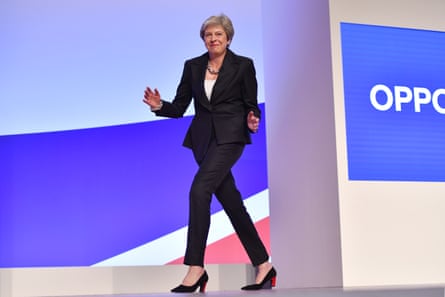
It always rather felt as if Theresa May became prime minister slightly by accident. It had been widely expected that Johnson would succeed Cameron as prime minister. But just as Boris was about to announce he would stand as leader, he was stabbed in the front by Michael Gove. So we quickly reached a point where the final two were whittled down to May and Andrea Leadsom. Andrea rapidly committed career suicide in an interview with the Times and withdrew, leaving Theresa as prime minister without having opened her mouth. So no one really knew what she was thinking or what she believed. Unfortunately, over the next few years it became clear she also didn’t know what she was thinking or what she believed. All she could say was “Brexit means Brexit” – I soon christened her the Maybot. A moniker that even her cabinet colleagues began to adopt. She had started out saying she would govern in the interests of the 48% as well as the 52%, before contradicting herself by pursuing the hardest of Brexits – out of the single market and customs union – to appease the Brexiters in the Tory party. A year in, she called a general election as the polls indicated an easy victory. Her unique leadership meant the Tories returned to Downing Street as a minority government relying on a supply and demand relationship with the DUP. What followed was indecision and increasingly bitter Brexit wars. The Maybot was in office but not in power. Most days she looked like a rabbit in the headlights, not knowing what to do. It would have been an act of mercy when the Tories finally forced her out of No 10. If only they hadn’t followed up by electing Boris.
2. Rishi Sunak

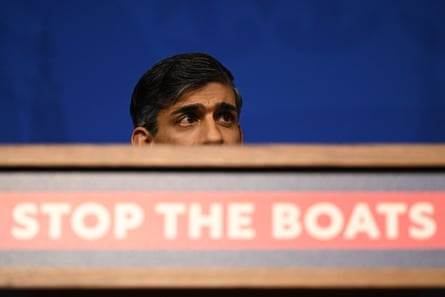
It’s one of life’s inconvenient realities that most prime ministers don’t get to choose when their time in power comes. They just have to make the best of the opportunities that come their way. So while it’s true that Rishi Sunak had always craved the chance to be prime minister, he must have been cursing his luck that his moment had come at a time when the Tories had trashed their brand after 12 years of austerity, Brexit, Partygate and Liz Truss. But Rishi had no choice. If he didn’t go for the top job in 2022, then he would never get a second chance. By the time the Tories were electable again, he would no longer be the shiniest kid on the block. Better to have been prime minister in a period of terminal decline than never to have been prime minister at all. Rishi’s failure was that he made so little effort to conceal the fact that he was only filling in time, caretaking No 10 for a couple of years until the next election. He only ever had one big idea during his time in office and that was the Rwanda plan. A £600m disaster that only resulted in four people being deported to Rwanda. And they went voluntarily. Even his then home secretary, James Cleverly, described the plan as “batshit”. Otherwise, Rishi seemed happy enough to let the country drift. Though some in the shadow cabinet wondered if he was actively trying to destabilise the country to make the job of the next Labour government more difficult. Come his last year in No 10, Sunak barely tried to conceal his own futility. His leader’s speech at his final party conference was all but an admission of defeat. The lasting image anyone will have of Rishi is of him getting drenched outside Downing Street as he called the election. He didn’t even have the energy to bother with an umbrella.
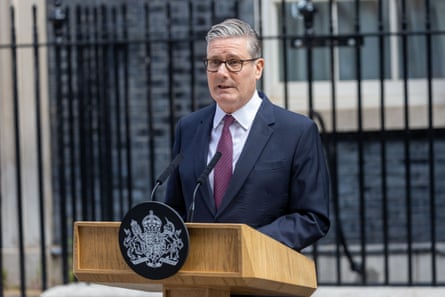
1. Keir Starmer

There were such high hopes when Keir Starmer won a landslide victory in 2024. It felt as if, just maybe, the grown-ups were back in town after the chaos of 14 years of Tory governments. That feeling quickly turned to anxiety that maybe the job was just too much. That in the years since the Brexit referendum, the economic and social problems had made the country all but ungovernable. Grievance and division were now embedded in large parts of the country. What’s more, the electorate had become ever more unforgiving of its politicians. Expecting miracles when it would take at least one, if not two, terms in office to effect real change. To be fair, Keir did some good things. Workers rights, raising the national living wage, a social media ban for under-16s. His refusal to join the US in its war against Iran when Nigel Farage and Kemi Badenoch were both advocating military action is something we should all be thankful for. But Keir was just too Keir. He called for change without ever really articulating what that change should be. His communication skills were terrible. He could give a speech and no one could ever remember quite what he had said. And there were terrible missteps. The free suits and glasses. What was he thinking? Only weeks earlier, he had campaigned on an end to Tory sleaze. Then there were the endless U-turns. Changing your mind a couple of times shows a government that is prepared to listen. Changing your mind 18 times suggests a government that doesn’t know what it is doing. Add in the huge misjudgment of appointing Peter Mandelson as US ambassador and – fairly or not – Keir ended up as one of the most hated prime ministers of all time. Without having been as bad as the previous five. Even then he might have survived a while longer, but Labour MPs became spooked by Reform, and the recognition that a Starmer-led Labour party could lose to Nigel Farage. So he had to go.