.png) 1 month ago
53
1 month ago
53
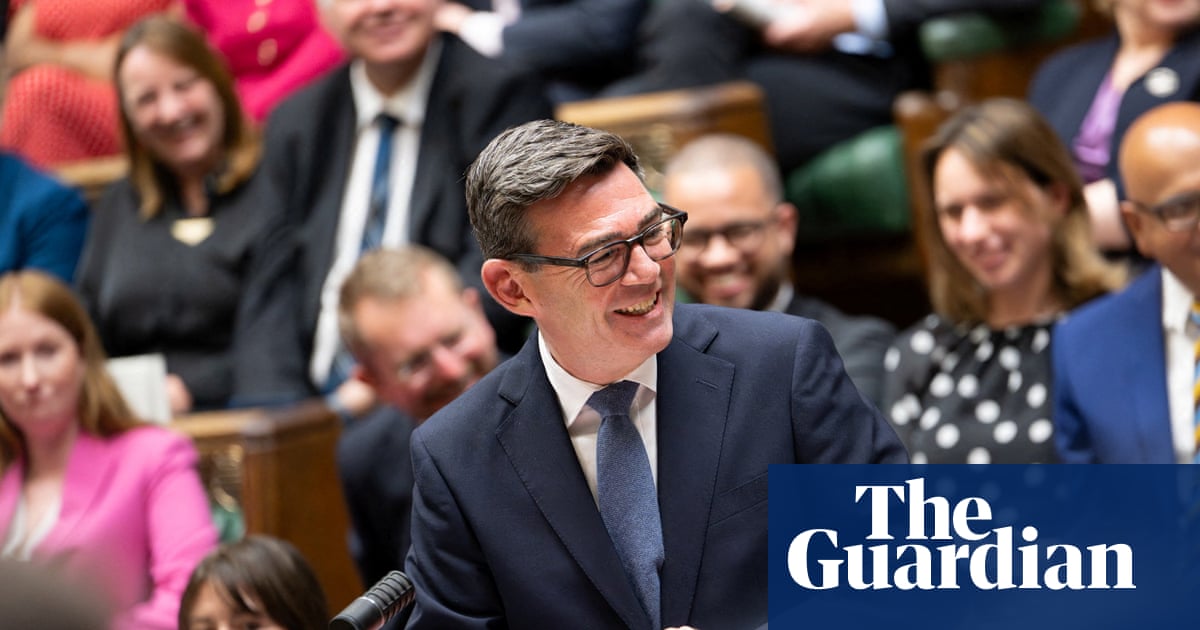
Andy Burnham risks his first confrontation with Labour MPs if he announces new oil and gas drilling licences when he becomes prime minister, insiders have warned.
Speculation is rife that Burnham will announce some new plans for drilling in the North Sea after he is installed in Downing Street on Monday.
In the party’s 2024 manifesto, it pledged to honour existing exploration licences but not issue new ones.
Burnham’s team have not confirmed the details of any proposals and whether they would involve new exploration licences or so-called “tiebacks” – where offshore oil and gasfields are connected to already approved production facilities via pipelines.
One source said the prospect of new drilling was the subject of “extensive” discussions among MPs on Saturday, many of whom are worried that it could affect the climate while having little impact on energy bills and security.
The debate largely centres around two sites, Rosebank and Jackdaw, off the north-eastern coast of Scotland.
Licences for the proposed sites were approved under the Conservatives, but overturned last year by a Scottish court, which ruled that the government would have to consider the environmental impact before agreeing to let new drilling go ahead.
The energy secretary, Ed Miliband, a Burnham ally who is tipped for a senior role in his cabinet, has previously described the Rosebank licence as “climate vandalism”.
Burnham, confirmed as Labour leader on Friday, has indicated that cutting the cost of living will be a priority for his government.
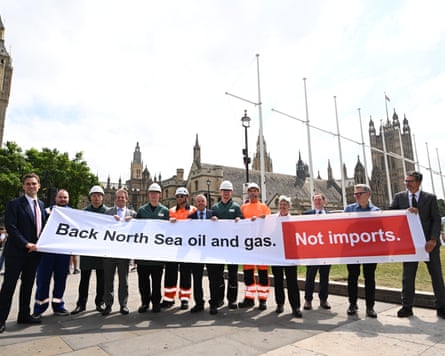
However, Mike Reader, an MP who is part of Labour’s environment campaign group, which backed Burnham for the leadership, said new licences, if approved, would have “zero impact” on household bills as they would generate a tiny proportion of the energy needed to power the UK.
The party has been divided over the issue, with some trade unions and MPs urging Burnham to demonstrate his support for the future of the oil and gas industry, centred around Aberdeen. He is also under pressure on North Sea drilling from the Conservatives and Reform UK, who support new licences.
Others in the party want to see a shift in focus towards renewable energy, which they believe will reduce the impact on the environment and provide more long-term security amid increasing global instability.
Experts have argued that new North Sea gas licences would have little influence on prices as the UK is “highly integrated” with the European and global markets.
“If Andy is looking to cut the cost of energy, [new licences aren’t] going to touch the sides,” said Reader, who is also on the energy security and net zero select committee. “It will not do anything to job security, long term, in Aberdeen.
after newsletter promotion
“We have to continue to remove this fossil fuel dependency from the UK. If Andy is looking for ways to stem job losses in Scotland, particularly in Aberdeen, I would much prefer we were putting every focus into unlocking wind [power].
“If this does come forward, it will be clear that Andy is focusing on the short-term challenge of jobs in Aberdeen. I can see the argument being that doing this in the short term gives security to a group of people who have become a political football.”
In March, the Guardian reported that hundreds of new North Sea licences granted by the Conservatives during their 14 years in power produced just 36 days of gas.
Tessa Khan, executive director of the renewable energy campaign group Uplift, said approving the licences would suggest that Burnham is “not taking the interests of ordinary people very seriously” and is instead prioritising “the interests of very profitable oil and gas companies”.
“As for our energy security, which is clearly on people’s minds, 80% of the oil we produce in the North Sea ends up being exported,” she added. “That’s not going into people’s cars or British industry.
“There is very little oil left in the North Sea and a field like Jackdaw would only make a 2% difference to how much we have to import to meet our gas demands.
“In the weeks and months that the UK has experienced record-breaking heat, the science is crystal clear. We can’t burn all the oil and gas in existing fields if we are going to stay within safe climate limits.
“Saying yes to additional fields is really a clear signal that this is a government that isn’t going to take the climate crisis seriously. Given the huge amount of genuine pain, disruption and suffering that the heatwaves caused in recent weeks, that’s a huge mistake.”

Bob Ward, policy director at the Grantham Institute on Climate Change and the Environment, based at the London School of Economics, said: “The remaining oil and gas is in more inaccessible places. More inaccessible places require higher operating costs. They are only really economically viable as long as consumer prices are high.
“It really is locking us into a regime in which one would have to expect high consumer prices. It’s completely perverse to be doing that when we should be focusing on how to get our electricity prices down.”
Some unions have told Burnham that new licences would send “a signal that the country remains committed to producing, building and manufacturing”.
However, Lee Hunter, of the Fire Brigades Union, said on Saturday that being called to incidents linked to extreme weather – such as floods and wildfires – was becoming the “new normal” for firefighters.
“That’s why our union is saying no to Rosebank,” he said. “It would pour more fuel on the fire while doing nothing to bring down people’s energy bills or improve our energy security.”
Burnham will become prime minister on Monday, when he is expected to set out his policy agenda, including plans to take water and energy companies under public control and initiate a major council housebuilding programme.