.png) 2 months ago
59
2 months ago
59
Carnivàle premiered on HBO in 2003 and was cancelled after only two seasons. In the immediate aftermath, this decision was protested by the small but dedicated cult following the show had amassed (to the tune of 50,000 emails).
But in the years since, as the television canon has expanded and the taste for mystery-box TV has waned, Carnivàle now seems little more than a minor curio in HBO’s ever-expanding back catalogue. So what is this curio about?
Carnivàle follows the exploits of its titular carnival as they travel across the American dust bowl in the 1930s. At the beginning of the series, these nomadic showpeople pick up Ben Hawkins (Nick Stahl), an ex-con with a mysterious past (and inexplicable powers). Interwoven into the show is the contrasting story of Brother Justin Crowe (Clancy Brown), a preacher who finds himself on the receiving end of nightmarish, foreboding visions which convince him he is God’s messenger: a man with divine purpose.
Throughout much of the series, these two storylines never physically intersect, except within the confines of dreams shared by both Hawkins and Crowe. Their contrasting tales make tangible the existential, mythic battle between good and evil resting beneath Carnivàle’s literal narrative. It’s reminiscent of the broad, pulpy scope of early Stephen King novels – or, perhaps more relevant to Carnivàle, Twin Peaks’ surreal lore. The viewer knows the worlds of Hawkins and Crowe will eventually collide, and when they do, the effects will be cosmic.
What makes the show special is the way this otherworldly tone is welded on to what is, at its core, a very traditional ensemble piece. Screenwriter Ronald D Moore helmed much of Carnivàle’s first season before leaving to create Battlestar Galactica, and his sensibility – one deeply attuned to character, fascinated by human folly – informs much of the season’s slow burn. The show luxuriates in the texture of the carnival itself and the small human drama of its troupe.
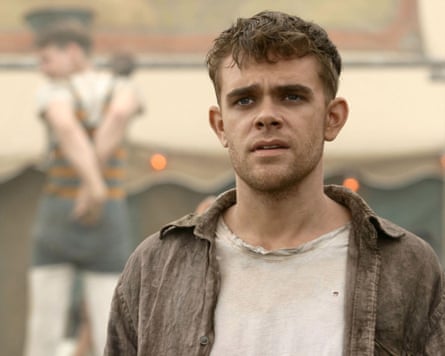
Also worth noting is just how handsome the production is. Many of the show’s regular directors – the likes of Jeremy Podeswa, Jack Bender and John Patterson – cut their teeth working on The Sopranos and Six Feet Under, and would later go on to helm landmark episodes of television on series such as Lost and Game of Thrones; there is also a late episode directed by Tár’s Todd Field. As a result, the visual style of Carnivàle is consistently hypnotic – and, yes, Lynchian. There are the bizarre conversations between different members of the carnival and “Management”, an unseen, all-seeing character whom we only know through their reedy, strained voice residing in the shadows behind a curtain. Then there are the show’s many dream sequences, which move from the ethereal to the outright horrific, presenting us with images of war, of blood raining down on a tortured preacher, of nuclear explosion.
Discovering the show afresh this year, it has already found its place among my own TV canon. Carnivàle’s sideshow of bizarro characters; the dense, theological mysteries which sit at its centre; its refined cinematic style: all these elements come together to create a singular experience. A word of warning: its premature cancellation will leave you aching for more.
-
Carnivàle is available to stream on HBO Max in Australia and the US, and on Now in the UK. For more recommendations of what to stream in Australia, click here