.png) 3 months ago
75
3 months ago
75
The cost of living crisis and an increase in people experiencing mental health difficulties have led to a rising number of multi-animal rescues in England and Wales, an RSPCA superintendent has said.
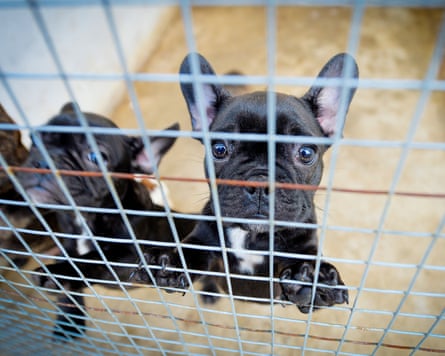
The animal charity this week had to confirm that a shocking photograph of more than 250 poodle-cross dogs found at a property in the UK was not faked with artificial intelligence. The RSPCA took in 87 of the dogs and the remainder went to the Dogs Trust, another charity.
Superintendent Jo Hirst believes the charity has seen an increase in the number of pets being abandoned as people cannot afford their vaccinations or medical care, or find people to re-home accidental litters.
“People abandon animals because of the financial crisis we are all in,” she said. “Sometimes people take them on because they care and then they become overwhelmed, but that whole issue of not being able to say no starts its own problems.”
She added: “It costs money to neuter your animals, they breed and they have to take the litter as they can’t re-home them, it becomes out of control very quickly.”A recent case involved the rescue of more than 450 animals from appalling conditions, including approximately 70 horses and donkeys. Barns and enclosures were knee-deep in faeces, with rotting, mouldy forage underfoot. Mares had been left to mix with stallions, leaving many pregnant and adding to the growing numbers of horses.
Another involved more than 30 alpacas that were recently re-homed in the Midlands when the owners were struggling to care for them. Earlier this month, 25 Scottish Fold cats were rescued from a caravan in south London. In December, the RSPCA assisted Devon and Cornwall police by removing more than 100 cats, a dog and a tortoise from a three-bedroom house.
Hirst said mental health was a factor. “We are finding a lot of people in crisis sometimes because of their finances, but their mental crisis means they become overwhelmed, can’t see the issues and don’t know where to reach out for help,” she said.
The RSPCA has reported a six-year high of animals in its care, with almost half in emergency boarding because centres are full. Last year alone, it responded to 75 large-scale incidents involving 100 or more animals being rescued from the same property. There were 1,752 mass cat incidents and 1,119 mass dog reports.
RSPCA investigators have also uncovered cases of “exploitative people” who overbreed pedigree animals for sale. When there is cruelty involved, the charity pushes for prosecution. For people who are simply overwhelmed, the RSPCA does not seek punishment and simply wants to help.
“In some of these cases,” Hirst said, “that would just turn someone’s life more upside down. If someone is deliberately cruel, that is different, if someone is in need and in difficulties, we are here to help.”
The charity struggles when it receives a large volume of animals because every pet needs to be checked to see if it can be re-homed, and whether it has any needs: for example, if it can live in a house with children. The animals are also often in bad health, which needs to be resolved before they can be re-homed.
“We have to educate people around how much an animal actually costs,” Hirst said, adding that some live for “a very long time” and that vet and neutering bills have to be taken into account.
The charity has many pets from the multi-animal raids up for adoption, including some of the Scottish Fold cats and a number of the poodle-cross dogs from the photograph.