.png) 2 hours ago
11
2 hours ago
11
Half of England and all of Wales are officially in drought. But what does this mean and could the UK’s taps eventually run dry?
What does it mean to be in drought?
There is no single definition of drought and every drought is different. But they are all characterised by a prolonged period of low rainfall creating a shortage of water.
Some droughts are short and intense, like the recent “flash drought” declared across half of England, which developed quickly because of unusually low rainfall and high temperatures. Others can take a long time to develop over multiple seasons due to prolonged low rainfall.
What are the drought conditions like this summer?
Helen Wakeham, the chair of the National Drought Group, said this year’s drought was “exceptionally serious” and would have long-lasting impacts on the environment and the economy. In July, England received 7% of the long-term average rainfall, making it the driest July since records began almost two centuries ago.
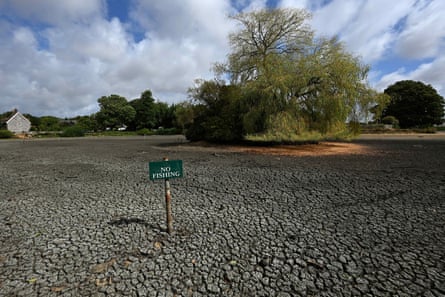
There was also a record-breaking drought in 2022, which affected large parts of the country and was the worst in some areas since the infamous drought of 1976.
But isn’t the UK famously rainy?
Yes, the UK does have a global reputation for its wet weather and we did see particularly heavy rain in the first half of the year.
While winter rainfall can help to replenish reservoirs and groundwater, summers are becoming exceptionally hot and dry. Combined with climate-induced heatwaves, we are using water faster than nature can replenish it.
Drought is only over when river, groundwater and reservoir levels are back to normal, and this can take time.
A key issue is also storing water during times of plenty. The UK has not built a new reservoir since 1992. The National Farmers’ Union is calling on the government to streamline the planning system to make it quicker and easier for farmers to build on-farm water storage systems.
Additionally, research by Greenpeace UK found that 2.87bn litres of water a day is wasted by water companies through leaky pipes in England and Wales – enough to fill 1,150 Olympic-sized swimming pools and amounting to a fifth of all water pumped through the network.
Where do water companies get the water?
Most of the water comes from lakes, reservoirs and rivers. This is then pumped to water treatment plants before being directed to homes. The amount of water that companies can take is controlled by environmental regulators.
During times of drought, water companies can use drought permits and drought orders to take more water. Last year Southern Water applied for a drought order that allowed it to draw water from an internationally prized chalk stream and rare salmon habitat.
Do only water companies take water from the environment?
No, water companies are not the only ones taking water from the environment. Agriculture, power generation, manufacturing, fish farms and golf courses are all big users of water.
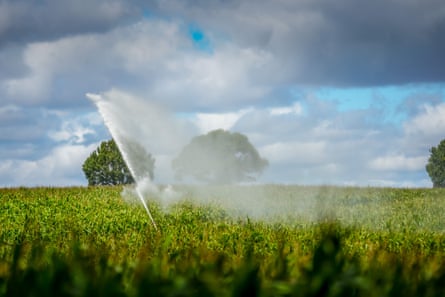
Analysis by the Ends Report revealed 47bn kilolitres (kl) of water was extracted from the environment in 2023. Electricity generation took 26bn kl, public water supply took 9.2bn kl and agriculture took 2bn kl.
Why is the UK running out of water?
The Environment Agency has estimated England’s public water supply could be short by 5bn litres a day by 2055 without urgent action to future-proof resources.
Water demand is going up as the population grows and new industrial demands from datacentres and energy infrastructure require more water. Plus, the water available to supply those needs is going down as the effects of the climate crisis kick in, and we have greater variability and unpredictability of rainfall and greater water demand during hotter, drier summers. There has also been a lack of investment over several decades in fixing leaks and building new reservoirs.
Isn’t there also a water quality crisis?
Yes, the UK has a serious problem with water pollution. Recent government data revealed that every single English water body is polluted with toxic chemicals, while just 14.3% of surface waters achieved good ecological status.
Do people in the UK use more water than elsewhere?
The Consumer Council for Water has estimated the average person in the UK uses 139 litres of water a day. In Europe, this figure tends to be lower, for example in Germany individuals use about 120 litres per day. In the US, the average American is estimated to use 310 litres per day.
How can individuals reduce water wastage?
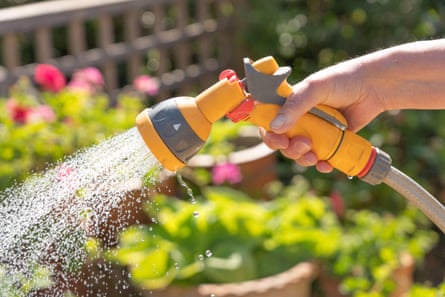
Smart metering programmes can help households look at their water consumption. The Environment Agency has suggested opting for a low-flow shower head, which uses about half the amount of water per minute compared with a standard shower head. You can also request a cistern displacement device from your water company, which can reduce each toilet flush by at least one litre.
However, one of the biggest ways you can reduce your water consumption is through your diet. Some estimates suggest a vegetarian diet could reduce your water consumption by 27% to 41%.
How can the UK become more drought resilient as climate breakdown accelerates?
There have been three droughts in the past five years so becoming more resilient is essential. While we can all take steps to reduce our water use, investment is key.
The Environment Agency expects 60% of the predicted 2050 water deficit to be addressed by water companies managing demand and dramatically reducing leaks. The remaining 40% would come from boosting supply, including the building of new reservoirs and water transfer schemes.
Can water companies go further than a hosepipe ban?
About 40% of the population of England is under a hosepipe ban – officially called a temporary use ban – which is a legal restriction imposed by water companies to conserve water during times of low supply and high demand. Breaching the ban is a criminal offence and can lead to a fine of up to £1,000.
Water companies are all required to have drought management plans setting out what they would do in an “emergency drought” scenario. This could see rota cuts introduced where water is limited to a few hours each day.
Water companies can apply to the government for a drought order, which allows them to change someone else’s licence to take water from the environment. They can also prohibit or limit non-domestic customer uses of water under non-essential use bans, and can manage the water pressure in drought-affected areas.
As well as investment in fixing leaks and building new reservoirs, nature-based solutions can play an important role to help mitigate the impacts of dry weather.
If nothing changes, could we actually run out?
Yes, without investment and reductions in our water use, we are facing a serious problem.
In some areas, the impact is already being felt. For example Sussex, Cambridgeshire, Suffolk and Norfolk have all seen housing and business development delayed due to water supply availability and ageing or inadequate water infrastructure.

South East Water said this week supplies in its area were “critically low” and warned customers they may lose supply unless demand for water in the area dropped.
In a report written in the aftermath of the 2025 drought, which resulted in the driest spring in 132 years, MPs warned that without action to reduce water use and build new supply infrastructure, England’s taps could run dry.
In the infamous drought of 1976, several water companies closed off supplies, with the public having to use standpipes in the street.
Dr Anna Murgatroyd, a lecturer in hydrology at Newcastle University, said the current conditions were equivalent to, if not worse than, 1976 and so “we could end up seeing similar shortages”. But she said it was hard to say at this stage whether that was likely given the uncertainty of the weather. She added that water companies had more efficient systems today than they did in 1976.
What does this mean for the future?
Water companies are channelling record investment into fixing leaks and while it has been more than three decades since a major new reservoir was built in England and Wales, several are in the planning stage.
But as the climate crisis intensifies, the risk worsens, and even if the UK manages its domestic resources efficiently, it will still face the knock-on effects as countries across the globe grapple with their own water shortages.