.png) 3 months ago
75
3 months ago
75
From bold anti-Nazi posters to an acid-drenched take on Jean Cocteau, a new exhibition, curated by writer Philip Hoare, shows how influential the DIY designs of the 70s and 80s became
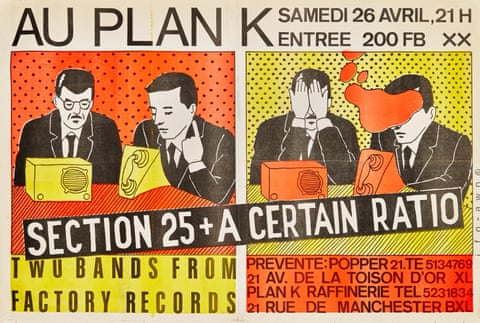
‘Epitome of eeriness’ … Section 25 + A Certain Ratio, poster Plan K concert, Brussels, by Jean-François Octave, 1980. Photograph: Reece StrawTue 3 Mar 2026 08.00 CETLast modified on Tue 3 Mar 2026 08.31 CET
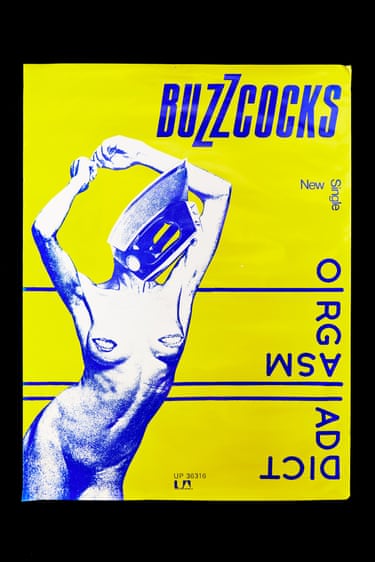
Buzzcocks, poster for Orgasm Addict, 1977
A new exhibition looks at the cultural impact of punk and post-punk. The cover of Orgasm Addict by Buzzcocks was designed by Malcolm Garrett using a photomontage by the artist Linder. It became one of the most memorable images of the era, born of the meeting of a soft-porn magazine and an Argos catalogue. ‘I took the female form from both,’ Linder said, ‘and made these peculiar jigsaws highlighting these various cultural monstrosities.’ So This Is Real Life is at the John Hansard Gallery, Southampton until 9 May. All captions by curator Philip Hoare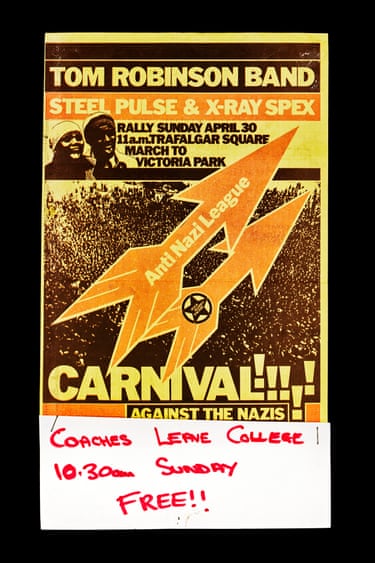
Anti-Nazi League Carnival poster, 1978
Designer David King achieved his ambition to create ‘a visual style for the left’ in his work for the Anti-Nazi League. On 30 April 1978, a march from Trafalgar Square to Victoria Park in Hackney drew a crowd of 80,000, protesting the rise of the far-right National Front. The event culminated in a concert, ‘secretly’ headlined by the Clash, whose lead singer, Joe Strummer, wore a T-shirt bearing the machine-gun logo of the Red Army Faction, aka the extreme leftist Baader-Meinhof gang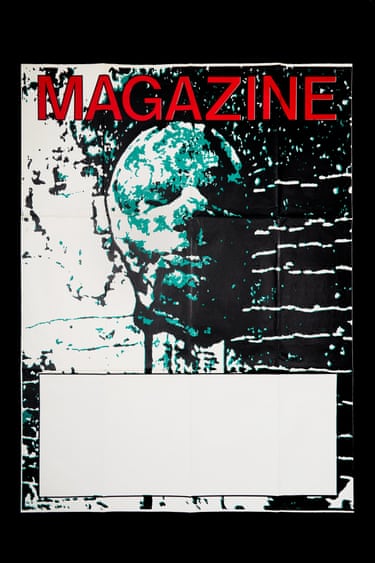
Magazine, poster for Secondhand Daylight tour, Virgin 1979
Magazine’s hyper-charged music and literary-aware lyrics, snarlingly delivered by lead singer Howard Devoto, marked the peak of post-punk. For their Secondhand Daylight album, Ian Pollock used an eerie image of a head on a post, utilising a photograph he took of a masked protestor at a Save the Whale rally in Trafalgar Square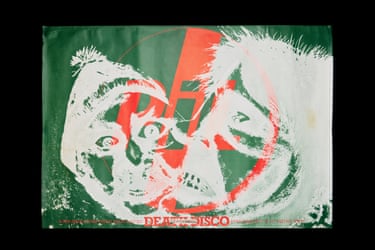
Public Image Limited, poster for Death Disco single, Virgin 1979
These grimacing, puppet-like heads, overprinted with the pill-shaped PiL logo, were drawn by John Lydon, ex-Pistol and singer in Public Image Limited, a key post-punk band formed with Jah Wobble and Keith Levene. The song, a tribute to Lydon’s dying mother, was performed in semi-darkness on Top of the Pops with a banshee-like wail, a throbbing bassline and a guitar part stolen from Swan Lake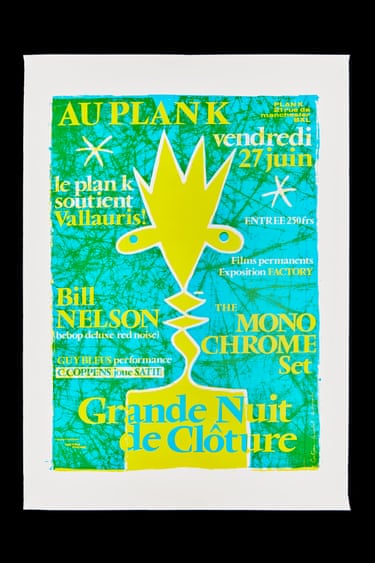
Grande Nuit de Clôture, concert poster, Plan K, Brussels, 1980
British post-punk’s close artistic connections to Europe owed much to the example of the Belgian record label Les Disques du Crépuscule. Benoît Hennebert’s poster for the label’s first multimedia event at Plan K in Brussels in June 1980, reimagines Jean Cocteau’s graphic art in acid colours. It advertised performances by Bill Nelson and the Monochrome Set, a display of Factory Records designs, an Erik Satie recital and an exhibition of smells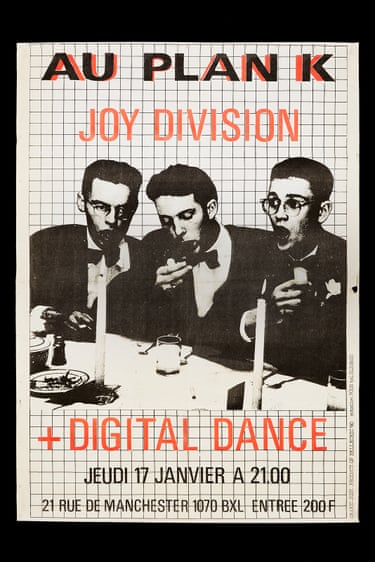
Joy Division + Digital Dance, poster, Plan K, Brussels, 1980, screenprint by Jocelyn Coster
In January 1980, Joy Division played at Plan K, a five-storey former sugar refinery where, invited a year before by Annik Honoré and Michel Duval of Les Disques du Crèpuscule, the band had first performed Love Will Tear Us Apart. After the tragic death of their lead singer, Ian Curtis, on 18 May 1980, the band reformed as New Order, taking their name from an article in the Guardian titled The New Order of Kampuchean Rebels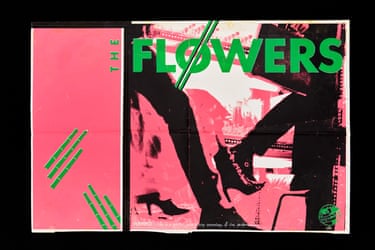
The Flowers, screenprint poster by Bob Last, 1980
Bob Last, founder of Edinburgh’s groundbreaking Fast Product label, designed covers for its bands the Human League, Gang of Four and Fire Engines. This vibrant poster for the Flowers utilises what Last calls ‘dynamic unbalance between the fields of colour’. He was a fan of the Russian constructivist El Lissitzky and German designer Jan Tschichold, both important influences on post-punk graphics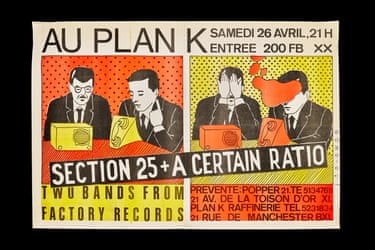
Section 25 + A Certain Ratio, poster Plan K concert, Brussels, by Jean-François Octave, 1980
A Certain Ratio were described by Factory’s Tony Wilson as a better-dressed version of Joy Division. Their mysterious jazz-inflected 12” single, Flight, with its cover image of a messed-up Icarus by Anne Quigley, may be the epitome of post-punk’s eeriness. Section 25 took it into even darker places: their 1980 debut single Girls Don’t Count was produced by Ian Curtis and Joy Division manager Rob Gretton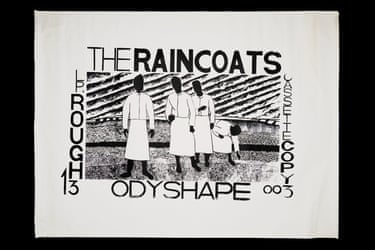
The Raincoats, screenprinted poster for Odyshape album by Simon Bramley, 1981
As a radical all-woman band, The Raincoats’ provocative feminist stance could draw violent opposition. Their manager Shirley O’Loughlin recalls that after a concert in Portsmouth with Gang of Four in 1980, they emerged to find that their car, borrowed from Rough Trade for the night, had been deeply scratched with a massive swastika across the bonnet by ‘some NF skins’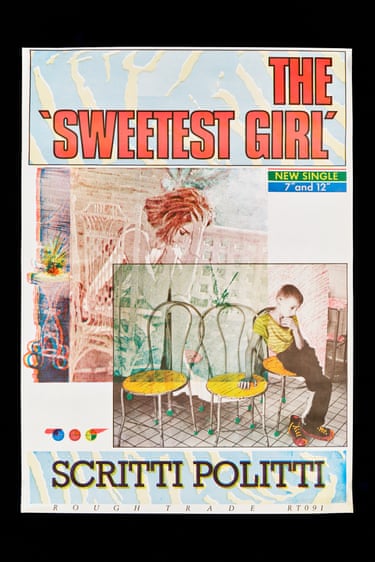
Scritti Politti, poster for The Sweetest Girl single, Rough Trade 1981
Scritti Politti’s situationist-Marxist aesthetics were subsumed in their song The Sweetest Girl. This poster, with its retro-European feel, was designed by the band’s drummer, Tom Morley, using an intricate combination of three colour separation printing sheets. ‘The first run was a disaster and held back the song’s release for two weeks,’ Morley said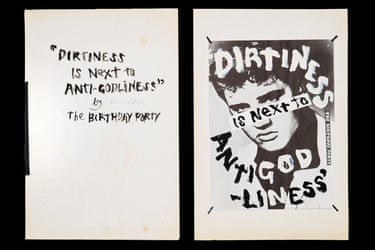
Nick Cave/The Birthday Party, collage for Elemental fanzine, 1981
Nick Cave’s text, Dirtiness Is Next to Anti-Godliness, was a perverted advertising line scratched into the Birthday Party’s gothic-inflected single, Release the Bats. The line later appeared in Cave’s novel, And the Ass Saw the Angel. By the 1980s, fanzines had moved on from Sniffin’ Glue, the first house magazine of punk, to more elaborate ways of exploiting photocopying and other methods to disruptive and riotous ends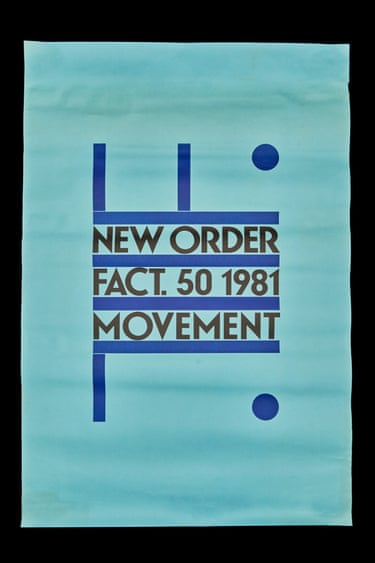
New Order, poster for Movement album, Factory Records, 1981 design by Peter Saville
For this poster and album design for New Order, Peter Saville drew on a 1932 poster by Italian Futurist artist Fortunato Depero. When the band’s manager, Rob Gretton, saw Saville’s design and its credit for Depero, he insisted the artist’s name was removed because of Futurism’s associations with fascism. ‘I’d had enough problems with “Joy Division”,’ Gretton told the designer, mindful of criticism that the band had taken their original name from a concentration camp brothel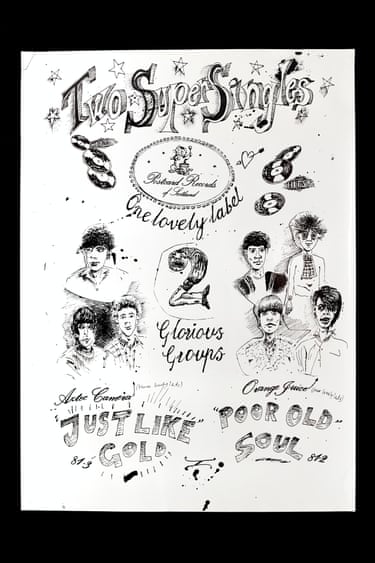
Aztec Camera and Orange Juice, poster design by Edwyn Collins, 1981
Alan Horne’s Postcard Records and its bands, Orange Juice, Aztec Camera and Josef K, were The Sound of Young Scotland, combining brilliant songwriting, Warholian wit and ironical use of tartan. This 1981 poster is illustrated by Edwyn Collins, lead singer of Orange Juice, also known for his delicate drawings of birds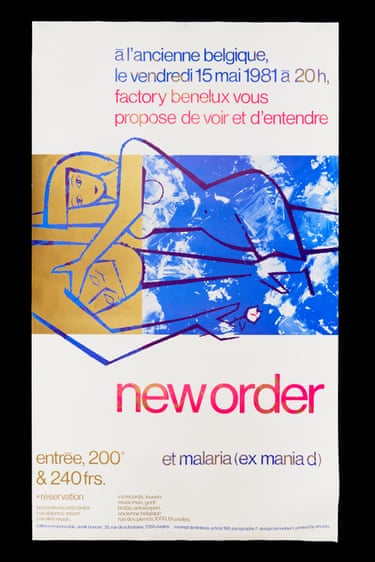
New Order, concert poster, Brussels, 1981, illustration and design by Benoît Hennebert
Les Disques du Crèpuscule’s romantic image was predicated on the elegant, quirky work of its designer Benoît Hennebert. The lush colours and mid-century style of this poster for a New Order concert in Brussels tease out a sense of restrained luxury from the austere aesthetic of the band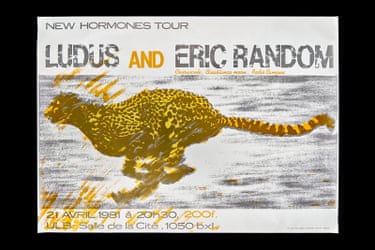
Ludus and Eric Random, New Hormones tour poster, 1981, designed by Benoît Hennebert
Ludus, formed by Linder Sterling and Arthur Kadmon in 1978, famously performed at the Hacienda in November 1982. Linder wore a dress clad in raw meat, pulling aside her skirt to reveal a dildo underneath – a feminist protest at the club’s casual and interminable showing of porn films. Eric Random is a radical hero of the Manchester music scene, collaborating with artists such Nico, A Certain Ratio and Sheffield’s electronic pioneers Cabaret VoltaireExplore more on these topics