.png) 3 months ago
84
3 months ago
84
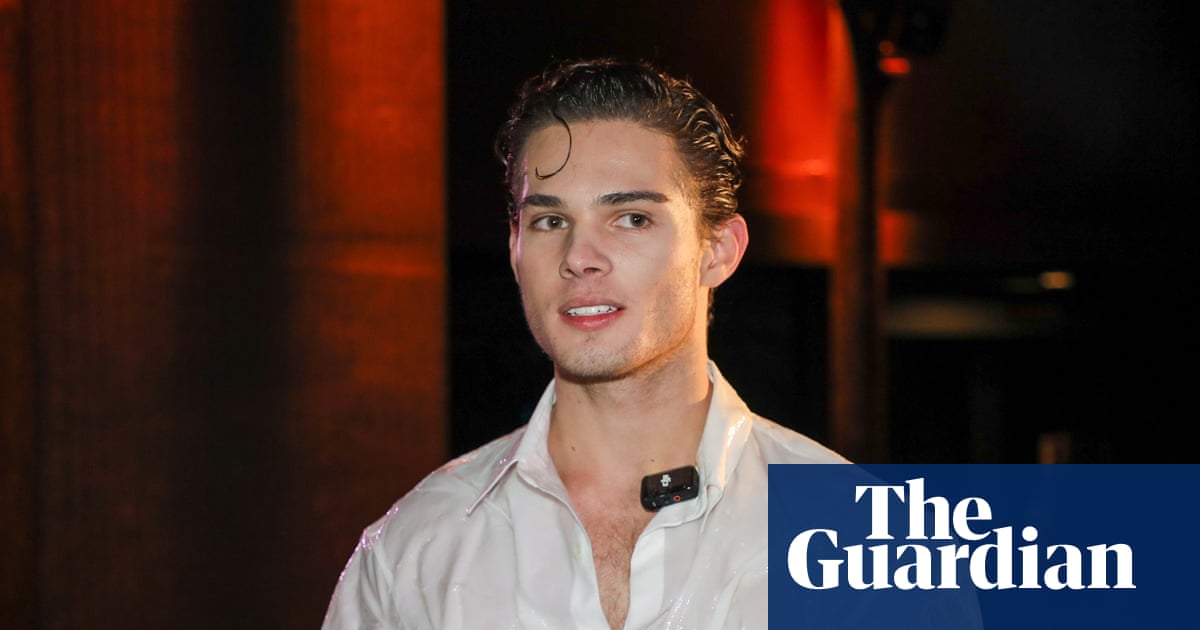
Mike Babayan was in a hookah lounge when he heard the explosion on Saturday night. Dubai – a gilded playground for the ultra-rich and oligarch class, billed as one of the safest places on Earth – had been attacked by Iranian missiles. Phones lit up with emergency messages urging residents to take shelter. But Dubai is resilient, at least when it comes to partying. “Everyone just went back to their hookah and food a minute later,” said Babayan.
Still, as a precaution, that night Babayan moved from his main home in the Burj Khalifa, the world’s tallest building and anchor of the Dubai skyline, to a residence further from the city center. There, he could hear the explosions much clearer – one every 20 to 30 minutes, he said. “But everyone is just having coffees, walking around like there’s no care in the world. It’s pretty insane.”
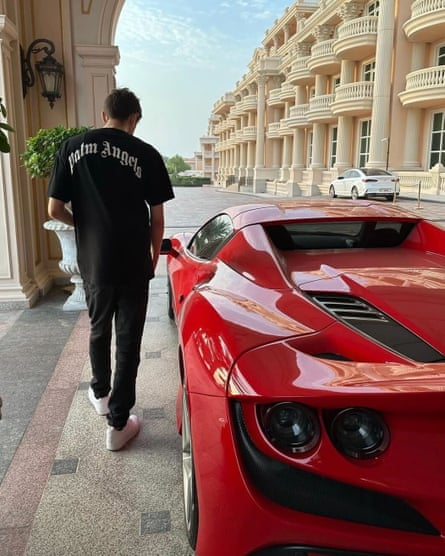
Babayan is 23 and originally from Los Angeles. He moved to Dubai, the most populous city in the United Arab Emirates, in 2020 to work in finance. He now documents his life as a daytrader and flexes the trappings of influencer life (BMWs, million-dollar apartment) to his nearly 150,000 TikTok followers. Over the weekend, he shifted his focus to commentating on the Dubai strikes in the direct-to-camera style typical of influencers, the city’s night skyline shimmering behind him. He felt a responsibility to combat misinformation; when he saw an AI-generated video of the Burj Khalifa burning, he told his followers it was fake.
But he couldn’t resist showing off a little, too. In one clip, Babayan said he felt that Dubai remained safer than New York, Los Angeles and London, even amid the war. Where else, he asked, could he walk around at night wearing his $60,000 watch undisturbed? “I feel like that’s more important, not having to look over my shoulder every two seconds, compared to the chances of a drone hitting me, which I feel is not as likely,” he said.
Iran began targeting neighboring Gulf states with missiles and drones in retaliation for US-Israeli attacks that have killed more than 700 Iranians, including 168 people at a girls’ elementary school, according to Iranian state media. Caught by surprise, influencers living in Dubai responded in the way most natural to them: by flooding the information void with scenes from a life of luxury interrupted by war.
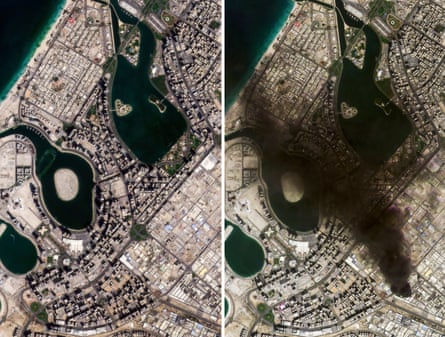
Will Bailey, a British travel influencer with nearly 500,000 followers, witnessed the missiles fall from his perch at a beach club. The DJ did not stop playing thumping beats as Bailey and others posted videos of themselves staring at the nearby Fairmont The Palm hotel engulfed in smoke. (Sample response in his comment section: “Why is everyone still partying?”) Another visiting travel influencer posted his vantage point of the attack, from the deck of a yacht party.
One British entrepreneur visiting Dubai became the face of entitlement after she complained that the conflict grounded her flight, saying in a since deleted video: “It’s really annoying actually because we have got events, we’ve got meetings, probably going to have to cancel them.”
“Influencers give the impression that they are more douchy in the way they portray life,” said Babayan. “That does piss people off, and now they’re saying that [the chaos] is well deserved.”
Dr Sreya Mitra is an associate professor of mass communication at the American University of Sharjah who studies South Asian influencers based in Dubai. (The UAE is overwhelmingly populated by expatriates, the largest demographics being Indians, Pakistanis and Bangladeshis.) Indian television news channels face what some have called a “credibility crisis”, and Mitra says Indians living in Dubai felt the need to reassure friends and family back home.
“Indian social media influencers are trying to counteract and factcheck the hyperbole of Indian news channels,” Mitra said. “[These influencers] are reinforcing a narrative of normalcy. They’ll say, ‘Hey, it’s 2am and I’m here in the Ramadan market or downtown Dubai, and it’s safe.’”
The UAE has reported three deaths and 68 injuries since the war started – far less than those reported by Lebanon and Israel, and more than Qatar and Bahrain, per Al Jazeera. The UAE said it destroyed or intercepted most of the missiles and drones launched at it by Iran; the Fairmont hotel and airports in Dubai and Abu Dhabi sustained damage, and on Tuesday a drone strike reportedly hit the US consulate’s parking lot in Dubai, causing a fire but no injuries.
Some influencers downplayed the strikes. “We are calm. We are protected. We are in safe hands,” a Ukrainian influencer captioned her video montage of Emirate leaders. “There’s no place I’d rather be,” wrote another Dubai-based content creator over clips of picturesque sunsets and bike rides along the beach.
The influencer facade
The influx of content from the Gulf has brought into focus the strange interplay between state repression and the uninhibited lifestyle that influencers show on their socials.
Dubai is known as the influencer capital of the world, playing host to an ecosystem of content creators, agents, producers and luxury brands ready to tap into the talent pool. Professional posters are required to obtain an operating license that can cost up to $4000. They are ordered by the UAE’s media council to “respect” the state, its politics, and “the divine and Islamic beliefs, as well as all other religions and beliefs” in their posts. The “safest place in the world” moniker often touted by influencers comes at the expense of a migrant working class subject to abuse and suppression, and an advanced system of civilian surveillance.
“Dubai and the UAE in general have very strategically used the idea of creators and influencers to promote the country, not just to the west but to the global south,” said Dr Zoe Hurley, an associate professor of media at the American University of Sharjah and author of the 2023 book Social Media Influencing in The City of Likes: Dubai and the Postdigital Condition. “They strategically deploy digital assets to hold up a mirror to the world and provide a place of affordable destination as an alternative to the American dream.”
Hurley describes the mood among UAE-based influencers now as one of shock and vulnerability. “People are attracted to living here because previously, it was this safe oasis in this region. That idea has been shattered,” she said. “I’m someone who questions authenticity in my writing, but I’m seeing quite authentic responses to this situation.”
She notes that news coverage and commentary painting influencers as “selfish” does not take into account the full story. “People pay $20 US dollars to go to a beach club and look like they’re living in an Instagrammable place, but that’s kind of the facade,” Hurley said. “It’s really a city and a place of contradiction.”
Bailey, the influencer who shared videos of missiles from his beach club, has defended himself from commenters who called his posts sensational and misinforming. “All I’m doing is I’m documenting what’s happening,” he said in a video posted on Monday. “I’ve had thousands of messages from people who are grateful for the videos I’m putting out.”
But no TikTok can fully encapsulate a conflict that was decades in the making and the result of more than 70 years of US and Israeli entanglement with Iran. Influencer dispatches from the Gulf’s biggest cities are inherently “ahistorical”, said Peter Loge, an associate professor of media and public affairs at George Washington University. “These content producers are saying, ‘Hey, here’s a quick video, it’s exploding, it’s scary.’ But you can’t do more. [That] is not what social media is built for, and that’s not what people are on TikTok to learn about.”
Users across the globe are eagerly scrolling through “POV” war content. Loge likened the feed to the next evolution of “disaster tourism”, a uniquely western phenomenon where travelers visit recent catastrophes sites (such as monied tourists visiting the ruins of Pompeii in the 1700s, or bus tours descending on New Orleans’ Lower Ninth Ward after Hurricane Katrina). Of course, Dubai’s influencer class did not realize they were about to witness disaster themselves. Nevertheless, they were in prime position to film, caption and post as it happened. “Whenever anything big happens, we try to make sense of what happened,” Loge said. “It’s meaning-making, this is what we do all the time as human beings. These influencers are part of the meaning-making ecosystem.”
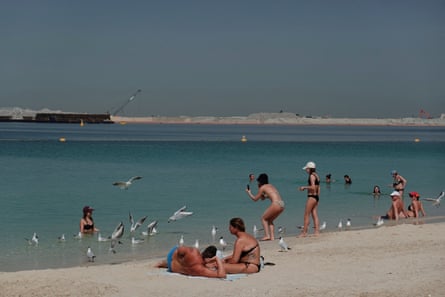
Mia Plainer, 23, is a social media planner for a fashion and beauty-themed social media channel in London. She and a friend found themselves in Dubai this weekend on “a little break” from the corporate grind. They were on a boat when the missiles started falling. The Coast Guard brought them back to shore, and they ended up sheltering in their hotel’s garage for the night, sleeping on sun lounges brought in from the pool deck.
Plainer filmed their experience, which she called a “juxtaposition” of war and luxury, for her family and followers. “There’s this narrative of, ‘Oh look at all these influencers crying about how war’s going on and they’re not used to it,’” she said. “But I think it opens your eyes to how anyone and everyone is in the same situation, no matter your status.”
Plainer says she has empathy for people in war zones such as Gaza and Ukraine, many of whom have shared their experiences on TikTok. “I’m always shocked that these people have to live this reality,” she said. “This is their day to day, and I’ve just come out for a trip, it’s just a few days of my life.”
By Tuesday, the vacation had returned to normal. Plainer and her friend hope to fly home on Thursday afternoon; the UK is preparing to evacuate citizens in the Gulf, and the US urged Americans to leave 14 countries in the Middle East including the UAE. However, flight availability and air travel remains uncertain as the war escalates across the region. For Plainer, “the plan is just, life goes on, and to enjoy ourselves as much as possible as we can whilst we’re here.”
-
This article was amended on 3 March 2026 to include mention of a drone strike reportedly hitting the US consulate’s parking lot in Dubai.