.png) 2 months ago
62
2 months ago
62
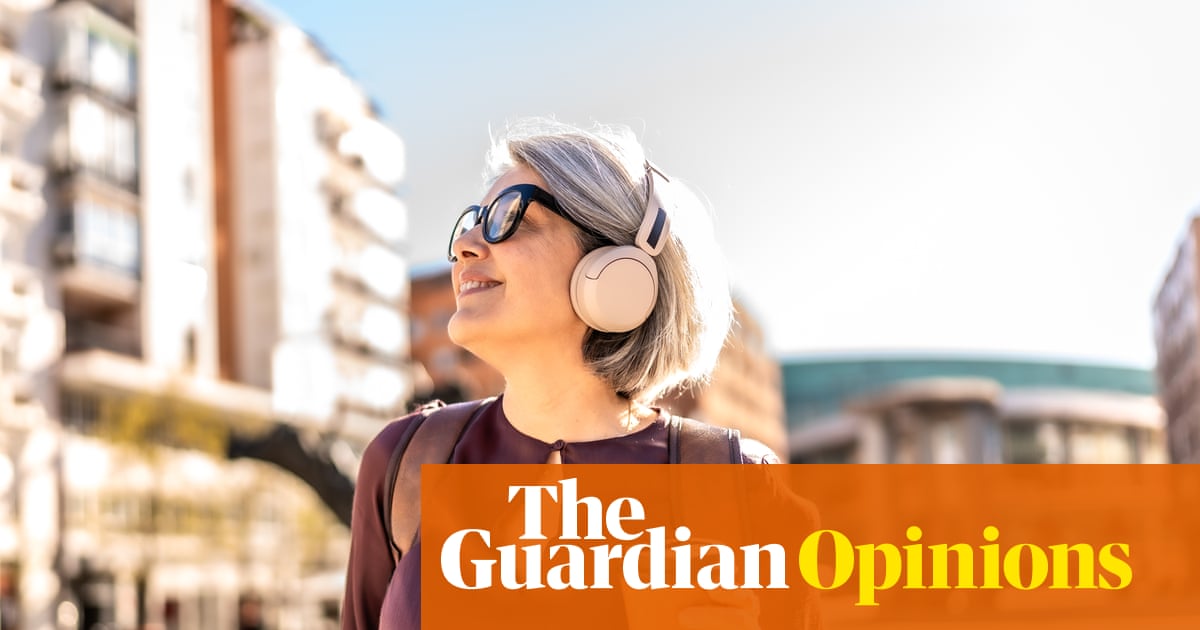
Councils are for the first time to receive guidance on how to create streets that are safer for women and girls, as ministers try to tackle what they describe as systemic unfairness in people’s ability to walk around their own neighbourhood.
The guidance, being drawn up by Active Travel England (ATE), is still being finalised but is expected to include measures such as better lighting and CCTV, and replacing dark underpasses with street-level crossings.
Officials will also look at initiatives from other countries, such as schemes in Spain and Sweden which allow women to ask bus drivers to drop them between stops at night to minimise how long they have to walk in the dark, something which can be particularly useful in more rural areas.
To coincide with the guidance, polling commissioned by ATE showed that nearly three-quarters of women said they changed their routes in winter to avoid walking in dark places, with 88% saying they felt unsafe walking alone after dark.
Local transport minister Lilian Greenwood described the guidance for English councils as both a fundamental issue of fairness and also a way to improve levels of physical activity among women and girls, which tend to be lower than their equivalents for men and boys.
“For too many people in this country, walking is not simple or straightforward,” Greenwood is to say in a speech to a conference on Wednesday, setting out the new guidance.
“For too many, particularly women and girls, it comes with a calculation – a constant, exhausting mental calculation – about safety, lighting, routes and risk. Rather than get excited about the destination, too many are forced to fret about the journey.”
The guidance will be published later this year, along with training sessions. As with earlier ATE guidance on cycling infrastructure, councils will be able to bid for central government money for improvements, but this will only be granted if the schemes are of sufficient quality.
The intention will be to “introduce how looking at active travel through the lens of gender can help create safer and more inclusive places”, according to ATE. This will cover not just changes such as better street lighting on quieter routes, but changes to help people to feel safe walking on busier roads which already have CCTV and passersby.
Jess Phillips, the Home Office minister whose brief covers safeguarding and violence against women and girls, said the guidance was aimed at “shifting responsibility away from women and on to the spaces and behaviours that put them at risk”.
She added: “Women and girls deserve to feel safe simply going about their lives, whether that is walking down the street, travelling, or using public spaces after dark.
Chris Boardman, the commissioner for ATE, said guidance would be based not just on known improvements such as better lighting but “by listening to and acting on lived experiences”.
He said: “It’s a terrible thing that women and girls don’t feel they have the same freedoms to simply walk in their neighbourhood as men and boys. Everyone should feel safe getting around, and our job is to help make that happen.”
The polling for ATE, carried out by YouGov, found that 57% of women and girls had used other transport modes such as taxis or being picked up in a car instead of walking because of safety worries.
In her speech, Greenwood will describe helping people be more physically active for transport as “a political no-brainer”, helping improve the nation’s health as well as the economy.
She went on: “Yet all this remains out of reach if people don’t feel safe on our streets. The polling is stark. Almost nine in 10 of female respondents reported feeling unsafe when walking alone after dark.
“These are not small numbers. Nor is this a marginal issue. This is a systemic barrier preventing millions of women and girls from making journeys they want and need to make.”
Earlier this year, there was criticism after the government’s new national planning guidelines for England failed to mention the safety of women and girls. The housing and communities department, which drew up the framework, said at the time that it was “unclear as to why anyone would expect” planning and women’s safety to be connected.