.png) 2 months ago
58
2 months ago
58
The failure of this week’s peace talks between Vladimir Putin and Donald Trump’s envoy Steve Witkoff fits into a now well-established pattern of standoffs on Ukraine during Trump’s second term. But the dynamic that produced these talks may be becoming more entrenched. The US and Russian interests driving the process have not changed, while the conflict on the ground is intensifying. The lack of progress this week means there will be another attempt to end the war soon, and perhaps another after that, until, one day, there is some kind of US-backed deal to halt the conflict on terms broadly favouring Russia.
The geopolitical algorithm driving this effort is too consistent to ignore. It has been repeated ever since Trump re-entered the White House in January. On the campaign trail, Trump had claimed he could stop the war in a day. That was never going to happen. But from 12 February onwards, when Trump first talked directly to Putin about Ukraine, the intention and approach have not altered. There is no reason to suppose they will do so now. Indeed, Tuesday’s impasse may spur them on again.
The internal logic of the interactions that have brought us to this point is familiar by now. Trump refuses to give arms to Ukraine. Instead he attempts a bilateral deal with Putin to stop the war at Ukraine’s territorial expense. Russia bombs Ukraine and makes attritional battlefield progress. Ukraine and its other allies mobilise to challenge any emerging pro-Russian deal. The US rebalances its plans to take account of the objections. Talks take place. Putin says no deal. The war continues, but so does the diplomacy.
As this process repeats itself, as it will, one of two things will happen. Either the process will be recognised as achieving nothing, or some aspect of it will be changed to make an outcome more likely. The first option, abandonment of the process, is a possibility, but this would mean humiliation for Trump. It would also mean the war would intensify and become more lethal, destructive and destabilising. Pressures to stop it would thus recur, leading to the resumption of the US diplomatic effort, but from a weaker position than today.
The second option, the alteration or bypassing of some aspect of the process, therefore seems more likely. This inevitably places Nato and Europe firmly in the crosshairs of Moscow, in particular, and also of Washington. It explains why the Kremlin hinted yesterday that there were still agreements worth making – agreements, in other words, between Russia and the US, from which Europe is excluded. Putin could not be clearer that he sees Europe as Trump’s weak link. “Europe is preventing the US administration from achieving peace on Ukraine,” he said before the talks with Witkoff this week. “They are on the side of war,” he said a little later. “Russia does not intend to fight Europe, but if Europe starts, we are ready right now.”
Some of this is nonsense. But Putin’s key insight is right. Europe – more accurately Nato minus the US – is indeed managing to frustrate Trump from making the kind of deal with Putin that he wants. The Nato allies’ consistent dedication to this task has not been widely celebrated, for fear of provoking Trump, but it is impossible to miss. The effort has been intense, from the moment that Trump and JD Vance publicly abused Volodymyr Zelenskyy during his Oval Office visit on 28 February. It has also been more or less successful.
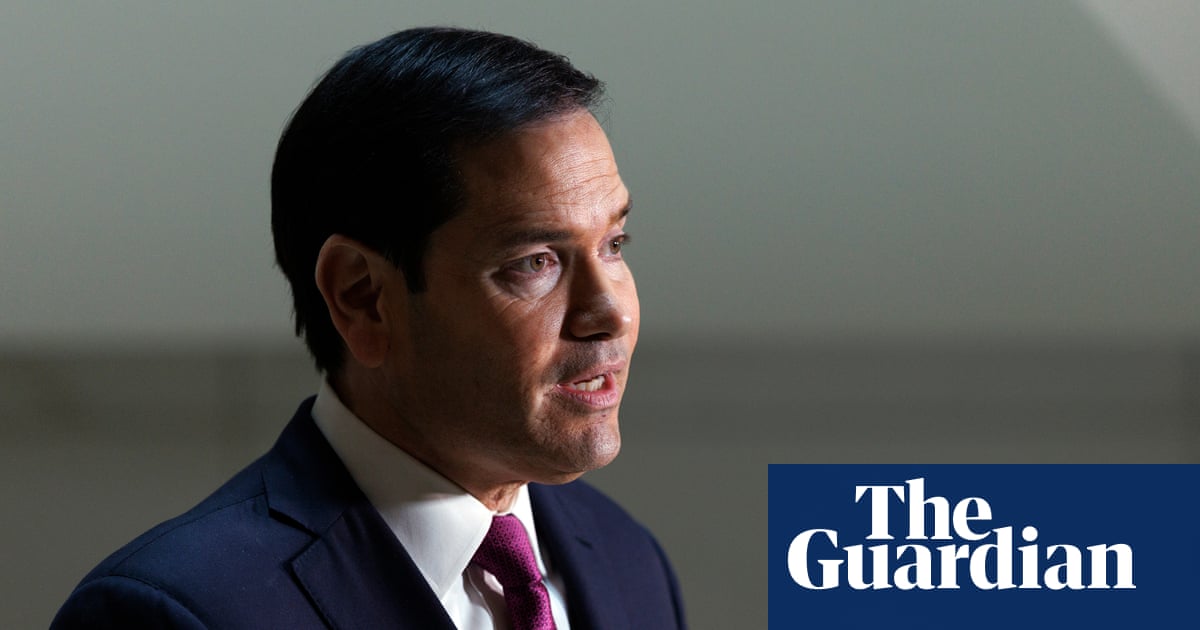
This so-called “coalition of the willing” has the power to wound US-Russia plans, but it lacks the power to shape them. The coalition involves most European nations, plus Canada, all of whom have committed to material support for postwar Ukraine. Its aims have been pursued ad hoc, and partly within Nato, as in yesterday’s foreign ministers’ meeting at Nato HQ in Brussels, from which the US secretary of state Marco Rubio was conspicuously absent.
Either way, the European scramble on Ukraine’s behalf has repeatedly managed to hold the line against Trump and Putin. It did so again this week when the Witkoff plan was tweaked before the Putin meeting. Hugging Zelenskyy closer has been a key part of this effort ever since the Oval Office disaster. It would be surprising if Zelenskyy was not being intensively advised and consulted by the allies at almost every turn. I would bet that, if we ever get access to a log of his messages, memos, meetings and travels, we will find that Keir Starmer’s national security adviser, Jonathan Powell, plays a big role in this effort.
Yet this cannot and will not continue indefinitely. The central problem for both Ukraine and Europe is that the 21st-century imbalance of power is turned against them. In this new imbalance, Europe and Nato have not enough arms, power or wealth to leverage an alternative peace settlement that Russia and the US are compelled to take seriously or accept. The postwar idea of the west may not be dead, but it is in intensive care. European and some American surgeons are battling with all the skill at their disposal to keep it alive. The truth, though, is that Trump could very easily pull the plug tomorrow.
If that were to happen, the danger of Russian troops eventually marching down Whitehall might remain remote. But the threat to Kyiv’s main street, Khreshchatyk, would undoubtedly increase. Whether Trump grasps this, or cares, is hard to say. It is not impossible that an effective Ukrainian government, whether headed by Zelenskyy or not, could continue to function and win the financial and military support of international backers to begin reconstruction. Much would depend on whether the west’s frozen Russian assets, worth £253bn, ended up in Kyiv or are returned to Moscow.
after newsletter promotion
Either way, Nato could then prove to be yesterday’s solution to tomorrow’s threat. The Nato nations would all still have their weapons and armed forces. They would retain their commitment to an independent Ukraine and to their common values. They would also continue to possess what the London-based historian Georgios Varouxakis, author of the widely praised The West: The History of an Idea, calls their “capacity for self-criticism and self-correction”. But the strategic self-correction required of Europe in the absence of a fully committed US partner would be arduous, and could involve a price tag that few European nations and voters would be willing to pay.
It may not be true, yet, that Trump’s US has reached a fateful fork in the road, where it decides to choose between Europe and Ukraine on the one hand, and Russia on the other. But that place and that moment are getting closer than at any time since 1945. The looming tragedy is that history has conferred upon Europe a role in support of Ukraine that it is ultimately unable to fulfil to anything like the degree required.
-
Martin Kettle is a Guardian columnist