.png) 2 months ago
21
2 months ago
21
In March 2000, Bill Gates stood onstage at the Game Developers Conference in San Francisco and, to a packed crowd, officially announced the company’s long-anticipated video game console. “We want Xbox to be the platform of choice for the best and most creative game developers in the world,” he told attenders – and that was indeed the intention of the small, dedicated team who put together the blueprints of that first machine.
The Xbox landscape seems very different 25 years later. Last week, mere days after a bullish summer showcase full of Gears of War revivals and promises of a renewed focus on Xbox’s gaming strengths, new CEO, Asha Sharma, and chief content officer, Matt Booty, wrote a memo to Xbox staff inviting them to brace for “hard truths”. “Excluding Activision Blizzard King, over the past five years, we have spent over $20bn on ongoing investments in our content, platform and hardware subsidy, but our annual revenue has declined nearly half a billion during that time. Going forward, this cannot continue,” it read.
With grim inevitability, Bloomberg and Kotaku reported that Xbox is planning to cut costs by shutting three studios: Ninja Theory, Double Fine and Compulsion Games. All three are said to be in the process of negotiating with Xbox in order to buy their independence and avoid closure.
None of this has yet been confirmed by Microsoft, but several members of staff at the affected studios have publicly posted that they are available for work. Sharma and Booty’s memo warned that Xbox would need to “reset” in order to meet the challenges of the modern industry. “We expanded our studio system when we needed a pipeline of content to meet multiple strategies across subscription, streaming and devices,” the memo said. “In the process, we have found ourselves overextended.”
Microsoft also cites the “hardware component crisis” as a motivator for change – a components crisis that Microsoft itself has driven, along with every other company that has powered the AI boom. A reminder here that Microsoft overall posted profits of $217.4bn in the most recent financial year.
Craig Duncan, the head of Xbox Games Studios, and the chief of staff, Louise O’Connor, have both resigned from their positions, perhaps after discovering how the company planned to correct its over-extension: by shutting the sorts of talented studios that Microsoft once relentlessly pursued and purchased. Ninja Theory and Double Fine are both multiple award winners, responsible for some of the most fascinating, boundary-pushing games of the past two decades, from the gruelling mythological psychodrama Hellblade to the wacky cartoon adventure Psychonauts. Compulsion, meanwhile, produced South of Midnight, a truly original southern gothic thriller and Peabody award winner. Now they are to be jettisoned in favour of more Halo and more Gears of War – two ageing franchises that have almost certainly left their best years behind.
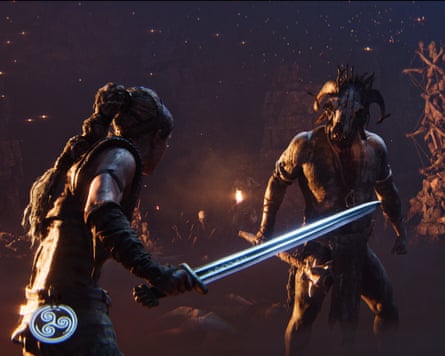
It is all the more frustrating when you consider how recently Xbox was grandstanding these studios as creative giants. During the Xbox Showcase in early June, the third Hellblade instalment, Senua, was given its world premiere followed by a glowing feature on the Xbox Wire site. Now Ninja Theory will need to gather whatever funds it can manage to survive and continue its project. In April, Sharma and Booty sent out a different message to staff – a sort of Jerry Maguire-style vision statement containing a list of 10 commandments for the business. One was “Makers over managers”, another was “Clarity is kindness”. How much clarity was extended to the team at Ninja Theory in this case?
It is, after all, not the first time Xbox has been here. In 2024, the company shut Arkane Austin and Tango Gameworks, the latter after delivering unexpected hit HiFi Rush. In 2025, Microsoft made 9,000 staff redundant and cancelled high-profile game projects including a Perfect Dark reboot and new title Everwild from Rare. This was all after billions were found to purchase Bethesda and Activision. (Going further back, Microsoft is also responsible for purchasing and then closing legendary British studio Lionhead.)
The newest whispers are that Xbox plans to spend cash to speed up development on new Halo, Fallout and Elder Scrolls titles. There are even reports that Xbox itself may be spun off into a separate company by Microsoft. It is an enormously disappointing situation for anyone who has spent two decades buying, playing and adoring Xbox games. It’s true that many of the market conditions the company is now facing could not have been predicted when Seamus Blackley, Kevin Bachus and the rest got together to put the original console together 25 years ago – the industry has been through massive technological changes and now faces ceaseless competition for consumer attention.
But a division founded on a love of games, a division that brought us Halo: Combat Evolved, Xbox Live, Forza, Fable, Sea of Thieves and hundreds of other wonderful titles and experiences, now appears to be in danger of being finally, fatally overcome by its corporate owner, intent on undoing decades’ worth of work to build a portfolio of diverse studios full of talented developers making interesting art. For developers as well as fans, the future has got to be brighter and broader than this.
What to play
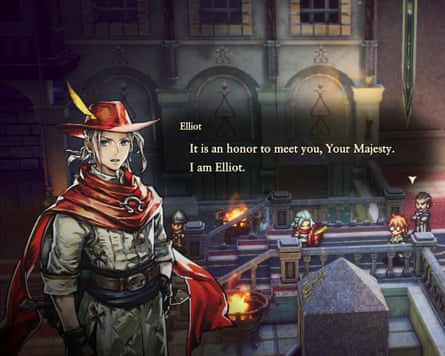
Hot on the heels of last month’s brilliant Mina the Hollower, comes a second piece of playable Zelda worship: The Adventures of Elliot. Says our reviewer Tom Regan:
“Created by the makers of Octopath Traveller, this Square Enix published Link-a-like swaps Mina’s swear-inducing sadism for a breezy, big budget take on top down Zelda. Rendered in glorious 2D-HD, it reimagines Link’s Gameboy-era time-travelling adventures as a sprawling, narrative-driven modern adventure, part Chrono Trigger, part Oracle of Seasons. Our obnoxiously upbeat hero journeys through the ages in order to solve puzzles, uncover lost magic and of course, save the princess. With Breath of the Wild-esque temples hidden across the map, fast travel, and constant hints about your next destination, Team Asano sacrifices retro mystique for satisfying forward-momentum.”
Available on: Nintendo Switch 2, Xbox, PS5, PC
Estimated playtime: 30-50 hours
What to read

-
There is much more to be written about this when we have more information, but the UK government announced an “Australia-plus” social media ban for under-16s this week. It seems the ban will not target online gaming spaces, but will make it mandatory to prevent under-16s from talking to strangers on voice chat and messages (functionality that already exists on all games consoles). The real effect here will be on the spaces where teen gamers gather: Discord, YouTube, and Twitch. What will Twitch even look like without teenagers?
-
For more video games and politics, a new book from George Osborn (not that one, promise) shows how rightwing and authoritarian governments from the US to Russia to Saudi Arabia are way ahead on using games as third spaces to build political influence. It’s called Power Play, and it’s out this week.
-
Vintage UK computer brand Commodore has announced a new electronics product … a flip-phone. “Welcome to the Internot,” promises the Commodore Callback. This extremely Y2k-looking device blocks browsers and social media but still runs other useful apps, though honestly I don’t fancy going back to typing messages without a touchscreen.
What to click
Question Block
This week’s Question Block is a question for you, readers:
“What are the best games of 2026 so far?”
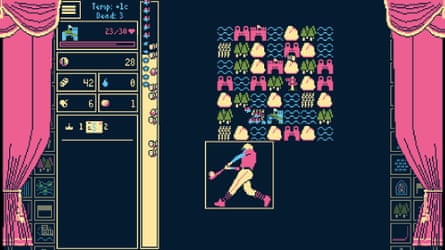
We published our favourites last week: unfortunately (or fortunately, for one other game that would have gotten knocked off the list), these were compiled a couple of days before Keza discovered Ribbit. Titanium Court (pictured above) ranked highly for both of us, and Pokopia, Pragmata and Forbidden Solitaire also feature.
What did we miss? Have you already played something you’re sure will be a favourite by the time December comes around? Write in a paragraph about it and we’ll round up some reader recommendations in a couple of weeks.
If you’ve got a question for Question Block – or anything else to say about the newsletter – hit reply or email us on [email protected].