.png) 3 months ago
83
3 months ago
83
Imagine an empty 6,000 sq metre warehouse intricately designed to contain 40 smaller performing spaces on multiple levels. On one side lie the fallen remains of Troy; on the other, the city of Carthage. At its dark centre is a labyrinth, and above sits the decadent realm of the gods, who are all too keen to interact with the struggling humans below. The look is steampunk dystopia meets Berlin cabaret.
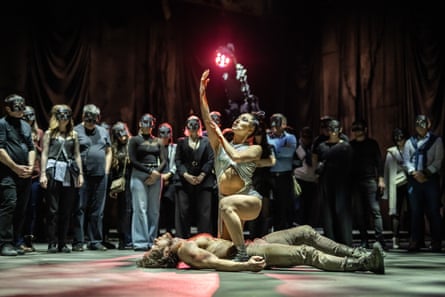
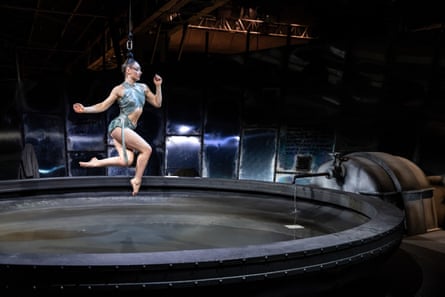
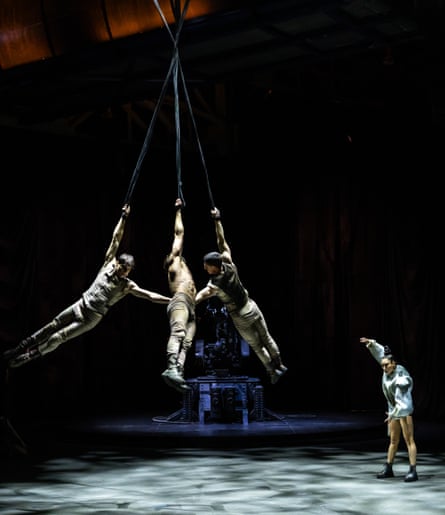
Step through a black-curtained door and you are in a neon-lit bar where two men writhe, whirl and twist above you on ropes. Then climb a spiral staircase to a pool above which a goddess hangs by her hair and spins in a frenzy. Somewhere below a monster drags a woman into the labyrinth’s heart and the darkness devours her. Above, exiled Trojan soldiers pay homage to an imperious queen. One of her courtiers breaks away, chased by a soldier – with a few audience members in hot pursuit. There is no safety net, no stage: only viewer and performer.
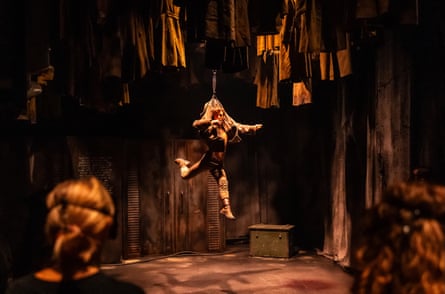
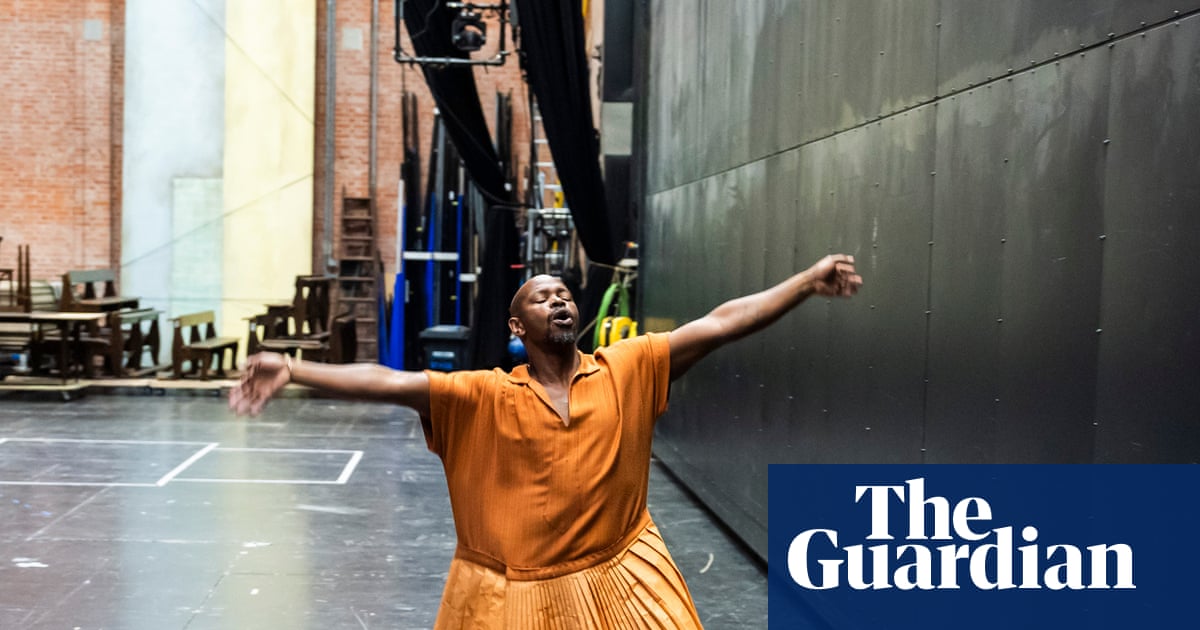
Now imagine all of this and more happening simultaneously, with multiple different performances taking place across a two-hour running time, and you come close to understanding Walk My World, which opened in Budapest last year. Part modern circus, part dance, part cabaret, it is immersive theatre on an epic scale – Europe’s largest. The story – or rather stories, for there are 26 performers, each with their own narrative – is based on the tale of Dido and Aeneas in book four of the Aeneid. But the gods, monsters, lovers and soldiers who appear elsewhere in Virgil’s epic are also woven into a looser narrative. Audiences wander the space, following characters or exploring the set at their own whim, often stumbling on performances by chance. Some scenes last over half an hour, others a few minutes; some are solos, others involve different combinations of the cast of jugglers, aerialists, gymnasts, acrobats and dancers.
Walk My World is the brainchild of Bence Vági, the founder and artistic director of Hungarian contemporary circus company Recirquel. A trained dancer and choreographer, Vági’s life and career have been marked by the sort of boundary-crossing that characterises his company’s productions.
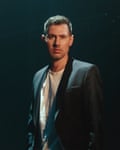
Born in the final decade of the cold war, his first experience of theatre was circus. As he says, all Soviet countries had a strong circus culture, offering an escapism deemed by the authorities to be ideologically sound. Meanwhile the realities of his own childhood took in communist Hungary and the west. Vági’s father was an athlete who had permission to leave Hungary to compete, and when Bence was five, his father took the family across the border and chose not to return. They lived in West Germany for the next five years, returning to Hungary after the collapse of the Berlin Wall.
Bence started dance lessons in Germany and discovered a passion that continued when his family returned east. From the age of 11, he took three or four classes a day, studying classical ballet, jazz and contemporary dance alongside his standard schooling. How did he fit it all in? “I studied on the bus,” he laughs. As a young adult he returned west to take a place at Liverpool’s prestigious Institute for Performing Arts, co-founded by Paul McCartney.
It was at the Edinburgh festival that Vági first saw Cardiff’s pioneering NoFit State Circus, who combine dramatic storytelling with spectacular acrobatic skills in ways that blurred the boundary between audience and performers. “Their show didn’t have the name ‘immersive’ attached to it, but inside the tent you were surrounded – it was like being inside a cabaret,” he says. “I went back home and said to the Sziget festival [one of Europe’s largest music and arts festivals], ‘I want to do a show for you with circus artists.’” His proposal was to use performers from Hungary’s national circus institute. He was told they were too young and lacked training. “I said give me two months and some funding and trust me.”
What emerged from this collision of cultures was his company – Recirquel – and a new form of modern circus that fused acrobatic skills with contemporary and classical dance and physical theatre. Cirque danse, Vági calls it. “The abstraction of dance is an amazing way of telling stories,” he says. “Sometimes circus as a genre is limited, because you have to focus on doing a trick while your life is in danger. When you are dancing, you are freer. Combining the freedom of movement with the superhuman qualities of circus brings out a new form.”
The company’s debut show, Night Circus, was an immediate success and convinced Hungary’s leading cultural institution – Müpa Budapest – to offer its support: the arts centre remains the company’s base today. The 2017 show, The Legend of the Golden Stag, commissioned for the televised closing ceremony of the 17th World Aquatics Championships, gave them greater public exposure. In 2023, IMA (Pray), a solo show, won the Seoul Arts award at the Edinburgh festival and was garlanded with four- and five-star reviews. The following year’s eight-person Paradisum met with similar praise and is now on an international tour.
Vági’s influences range far beyond circus and cabaret, drawing on the grand theatrical visions of Robert Lepage and Robert Wilson, and the unorthodox and imaginative choreography and storytelling of Bob Fosse and Crystal Pite. And if the set of his new show seems cinematic in scale and conception, that may be because it was built by a team who worked on Denis Villeneuve’s monumental Dune trilogy.
None of this comes cheap, and half the funding for Walk My World comes from the Hungarian government. There has been much concern about suppression of artistic freedom and expression under Viktor Orbán’s rightwing Fidesz government. A March 2022 report found that Orbán’s regime “implemented a cultural policy that advanced a single nationalist narrative … which has had the effect of limiting creative expression and diminishing plurality in the arts”. In 2018, performances of Billy Elliot the musical were cancelled after a media campaign against its alleged promotion of homosexuality. Is Vági finding his artistic freedom constrained or his content censored?
“No, never,” he says. “There has never been a limitation of what type of art we can do or portray in our productions.” He points to My Land (2018), a show that featured Ukrainian artists, music and myths, and explored what their country meant to them. It was on tour when the war broke out four years ago, and when it returned to play again in Budapest “the artists put a Ukrainian flag on the stage, and collected money for their friends still in Ukraine”. All this despite Orbán being Putin’s single closest ally in the EU.
So do you have complete artistic freedom? “Does anyone in any country?” asks Vági, pointing out the tough realities of funding that shape art and culture everywhere. But among the interwoven stories of Walk My World are LGBTQ+ characters; Trojan soldiers Nisus and Euryalus’s agonised pas de deux is a particularly memorable scene. Vági himself is gay. “I have made one promise to myself that if anybody ever tells me how I should be doing my show, that’s the moment I leave the country.”
And while Vági doesn’t rule out the show eventually touring, his focus remains on his home town. “I want Walk My World to be part of Hungarian culture, part of the city. I want people visiting Budapest to be chatting to bartenders who will say, ‘Have you seen this show? It’s amazing … a unique creation made by a Hungarian creative team in a company that’s famous all over the world.”
The complexity of what Vági and his company have produced is mind-bending. Each audience member is free to follow their own course, but performers must stick to a strictly mapped path across the set and ensure they’re in the right place for the next scene. Under their costumes, each wears a discreet smartwatch, programmed to make sure they hit their cues, and are in place to catch and throw their cast-mates. Picture a vast Rube Goldberg machine with 26 different parts, plus lighting and music for each individual performing space, all moving simultaneously.
Allow Instagram content?
This article includes content provided by Instagram. We ask for your permission before anything is loaded, as they may be using cookies and other technologies. To view this content, click 'Allow and continue'.
Everyone somehow finds themselves converging on the same place for the exhilarating finale. Whooping acrobats launch themselves off a Russian swing – a giant contraption with steel bars instead of ropes whose platform rotates 360 degrees, allowing performers to gain the height and momentum to catapult themselves high into the air in a jawdropping sequence. “There is a beautiful link between myth and circus,” says Vági. “They both connect us with the superhuman. The impossible.”
Then, the energy changes abruptly: Dido and Aeneas’s final tragedy is played out high above us in a heartbreaking aerial dance as the two, on ropes, entwine, writhe and twist. For the first time in two hours the audience is rooted to the spot as the performers are pulled further up and away, spotlit as they recede far back into the vast warehouse space. There is no pyre, no dagger; Dido drops from Aeneas’s arms into the labyrinth as her lover, still airborne, disappears from view.
The two sequences show the best of Vági’s innovative approach – astonishing physical skills combined with the beauty and emotive impact of dance and the immediacy of creating the drama around the spectators. “For me, immersive is Michael Ende’s The Neverending Story, where Bastian reads the book and goes, whoosh! Or Narnia,” says Vági. “You go inside – because if your mind clicks, you are inside the book. That’s what I wanted to do. I said, if we go immersive, then let’s do it properly.”