.png) 3 months ago
78
3 months ago
78
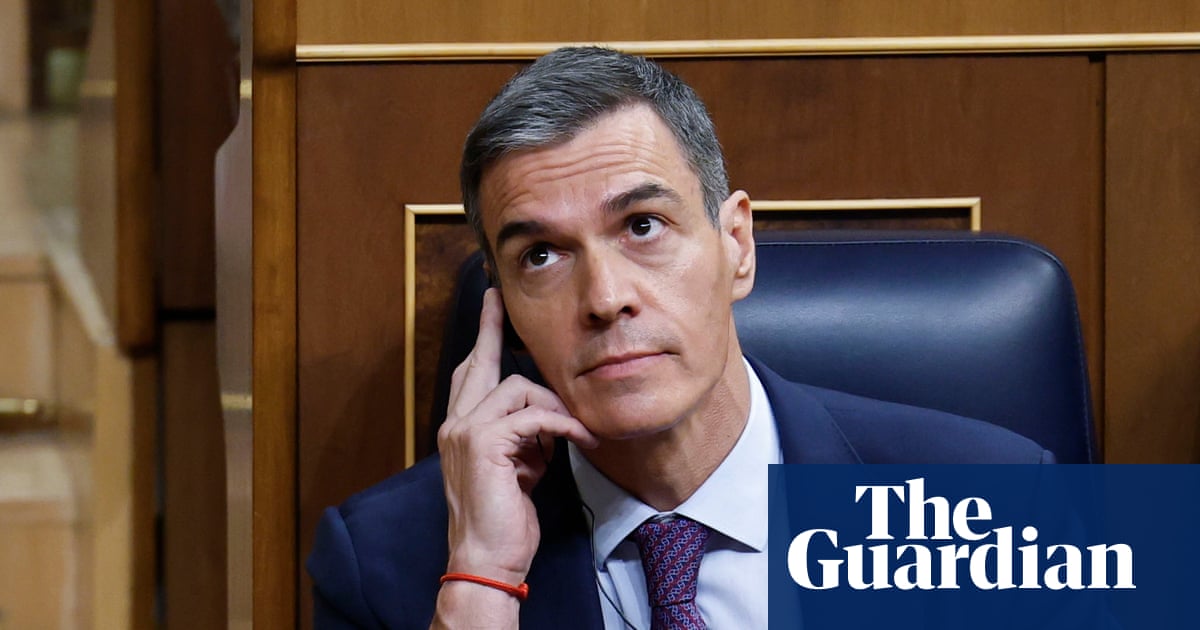
France will increase the size of its nuclear arsenal for the first time in decades and significantly intensify nuclear weapons cooperation with eight European allies including the UK as part of a “major” strengthening of its deterrence doctrine, Emmanuel Macron has said.
Amid growing concern among European leaders about wavering US commitments to help defend the continent, the French president said on Monday that Paris could deploy nuclear-capable Rafale fighter jets to partner countries such as Germany and Poland.
But there would be no sharing of decision-making on the use of the country’s nuclear weapons, he said, with the “ultimate decision” the responsibility of the French president and “the definition of [France’s] vital interests” also remaining “sovereign”.
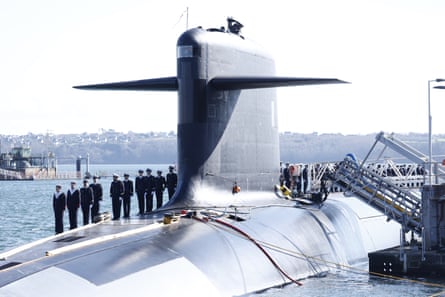
In a speech delivered from the Île Longue nuclear submarine base in Brittany, Macron said a “period of geopolitical upheaval, fraught with risk” meant France, the EU’s only nuclear power, must strengthen its deterrent “in the face of multiple threats”.
An upgrade of the country’s arsenal was “essential”, Macron said, adding that he had decided to order an increase. France’s estimated 290 nuclear warheads, a number that has not changed since 1992, constitute the world’s fourth largest nuclear arsenal, after Russia, the US and China.
“My responsibility is to ensure that our deterrence maintains – and will maintain in the future – its assured destructive power,” said the French president, who is commander-in-chief of the country’s armed forces.
He added that France would not stipulate how many nuclear warheads it had in its arsenal nor how many it planned to add, and that the increase was needed to maintain it. “This is not an arms race,” he insisted.
“It is essential that our adversaries, or combination of adversaries, cannot even glimpse the possibility of hitting France without the certainty of suffering damage they would not recover from.”
Macron cited Russia’s war against Ukraine, which last month entered its fifth year, China’s expanding military power and recent changes in US defence strategy as reasons why Europe had to take more direct responsibility for its own security.
Announcing the “gradual implementation of what I would call ‘advance deterrence’”, Macron said France must now also “consider our deterrence strategy deep within the European continent, with full respect for our sovereignty”.
Under unspecified circumstances, French “strategic assets” could be deployed in other European countries, he said, referring to France’s nuclear-capable Rafale jets. Talks on enhanced cooperation had already started with the UK, Germany, Poland, the Netherlands, Belgium, Greece, Sweden and Denmark, he added.
The new model would allow France’s strategic deterrent to be “spread across the European continent” to “complicate the calculations of our adversaries”, Macron said. The doctrine could also involve “the conventional participation of allied forces in our nuclear activities”, he added.
Bruno Tertrais, the deputy director of France’s FRS thinktank, said Macron’s speech was “the most significant update to French nuclear deterrence policy in 30 years” and a “major step forward”.
Donald Trump’s rapprochement with Russia over the Ukraine war and his tougher posture towards the US’s traditional transatlantic allies have shaken European governments, which have long relied on the US for deterring potential adversaries.
Macron’s long-planned speech was maintained despite the escalating conflict around Iran because the “violence in the Middle East shows the importance of France’s power and independence to face down growing threats”, a French official said.
Macron has previously floated a mutualisation of France’s nuclear arsenal, including at last month’s Munich Security Conference at which he said a “re-articulation” was needed to reflect “special cooperation … and common security interests” within Europe.
Earlier this month the German chancellor, Friedrich Merz, said he had held “initial talks” with Macron on the nuclear issue. France and the UK also adopted a joint declaration in July on the “coordination” of both nations’ nuclear forces.
France and Germany said in a joint statement on Monday after Macron’s speech that they had set up a “high-ranking nuclear steering group” as part of an arrangement they said would “add to, not substitute for, Nato’s nuclear deterrence”.
The two countries said they had “agreed to take first concrete steps, including German conventional participation in French nuclear exercises and joint visits to strategic sites as well as development of conventional capabilities with European partners”.
Poland’s prime minister, Donald Tusk, said in a social media post that he was in talks with Paris and European allies on the French proposals, adding: “We are arming up together with our friends so that our enemies will never dare to attack us.”
Sweden’s prime minister, Ulf Kristersson, also confirmed Sweden’s intention to take part in the discussions. “Strengthening Europe’s overall defence capability has not been as important since the second world war as it is right now,” he said.
Kristersson noted the talks would take place “in dialogue also with the US” and Nato, which Sweden joined in 2024. “As long as Russia has these weapons and threatens its neighbours, democracies must be able to deter” them, he said.