.png) 3 months ago
37
3 months ago
37
This is a bitter, resentful exhibition by a handful of bitter, resentful artists. Americans Jenna Bliss, Buck Ellison and Jasmine Gregory were born in the mid-1980s, coming of age in a world at its financial peak, but becoming adults just as the 2008 financial crash turned everything to crap. They saw a land of opportunity and boundless possibility, and then had it all kicked out from under them. Of course they’re resentful; we all should be.
Jenna Bliss’s first video here sets the mood. Shaky, handheld images of the New York skyline and public artworks in the city’s financial district are overlaid with text such as “We survived Y2K but now the real world source code is malfunctioning” and “Save the banks to save us all”. That’s the vibe: millennial despair at a world built to keep the banks rich and the rest of us placid.
Her other video is an awkward sitcom episode set in a fictional 2007 art fair booth, all about cocaine, Vice magazine and an art market just about to go bust. It’s a familiar depiction of a gluttonous world, but it might only be interesting if you’re an actual art world insider.
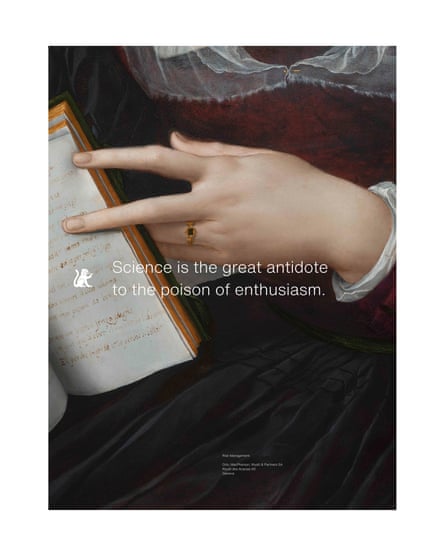
Buck Ellison’s work is about Orlo & Co, a fictional wealth advisory and multinational bank. Three light boxes act as ads for the bank, pairing classical paintings by Bronzino and Manet with stomach-turning taglines such as “In the hands of the few, for the good of the many”. It’s weaponised culture, aesthetics for profit, a world built for them and definitely not for you.
Opposite, big vitrines are filled with objects belonging to a young bank employee: doodles of sailing boats on high-end stationery, books by Machiavelli and Marcus Aurelius, luggage tags from luxury holidays. You know who Ellison is depicting here, the generic finance bro, a guy reeking of privilege and unearned success, a man made of gilets and khakis and polo shirts. It’s incredible how full the image of this guy is in your mind, a guy you will never be, with opportunities you will never have.
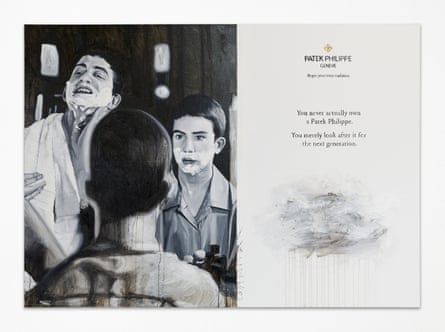
Jasmine Gregory is the third artist here. She paints ads for luxury watches with the watches removed, leaving behind only portraits of wealthy men and their soon-to-be wealthy sons who will inherit those watches. A painting of the word “divorce” lies askew on a plinth, an empty champagne bottle next to it. Gregory projects videos of price tags on everyday goods over a blank canvas, a glamorous studio portrait of the artist as a kid with her mother behind it. Those days of glamour shots and luxury aspirations are in the past, and all that’s left are worries about the cost of the weekly shop.
The whole show expresses a deep frustration with the stupidity and unfairness of a selfish, elitist society that continues to reward the few at the expense of the many. This isn’t about deep trauma or identity politics-based injustice, it’s about the daily grind that almost all of us drag ourselves through. It’s a portrait of millennial anger, of flogging yourself to death at a dumb job for bad pay while your bills go through the roof and oil companies make record profits. You don’t walk away feeling like you’ve seen beautiful, profound art – lots of it is quite ugly – but you do walk away feeling like you’ve just had your world reflected back at you, in all its grim, greedy idiocy. You leave, appropriately enough, bitter and damn resentful.