.png) 2 months ago
83
2 months ago
83
The former German chancellor, Gerhard Schröder, is enjoying a curious political revival. Not so long ago, his reputation seemed in tatters. In light of the full-scale invasion of Ukraine, many came to regard his longstanding ties to Russia and personal friendship with Vladimir Putin as self-serving. Fellow Social Democrats (SPD) tried to expel him from the party, and as recently as last year the government defunded the ex-chancellor’s office.
And yet a veritable Schröder nostalgia is now seeping into German political discourse, a phenomenon that’s less to do with a reappraisal of his chancellorship than with a desperate identity crisis on the centre-left.
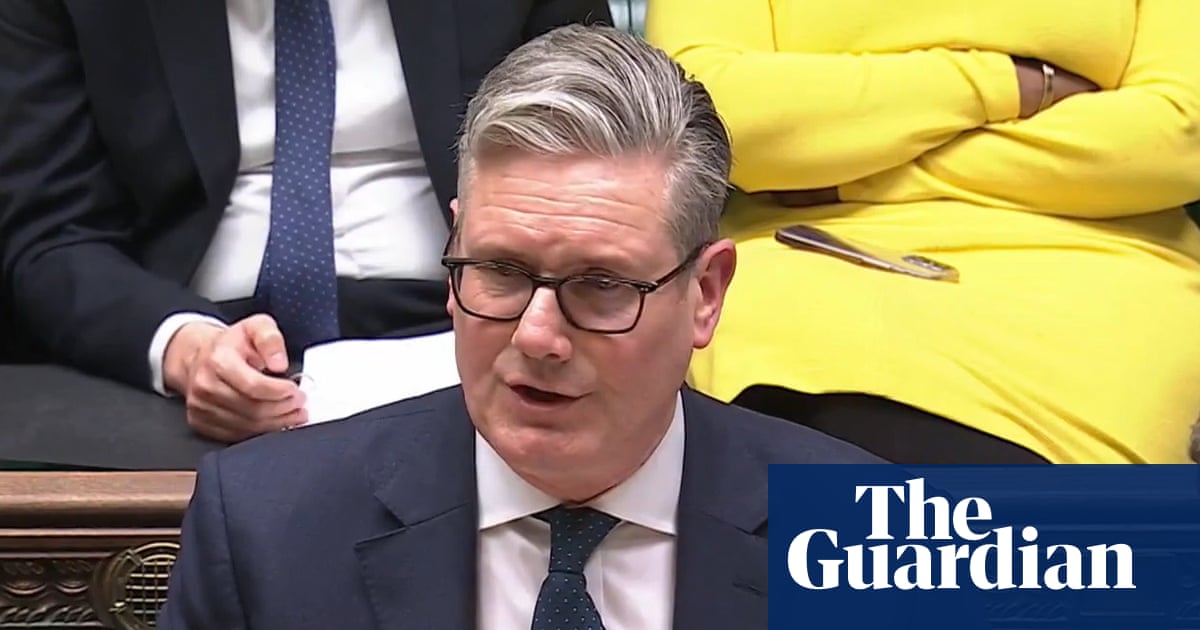
Schröder’s ears must be burning non-stop at the moment. His name is everywhere. The latest trigger came last week when the current German vice-chancellor and co-chair of the SPD, Lars Klingbeil, spoke about an ambitious package of reforms to “modernise” the country. This included some economically liberal, and therefore rather un-SPD-like, demands, such as reducing state subsidies and increasing incentives for people to work more. The last SPD man to introduce a controversial package of pro-business reforms was Schröder, with his sweeping and highly contentious “Agenda 2010”. So the press ran with the theme.
“Klingbeil does a Schröder,” one German newspaper reported. Another wrote that the SPD leader was “channelling Schröder”. The Financial Times also reported a “Schröder moment”. A journalist from Süddeutsche Zeitung even visited the former chancellor to hear the analogy from the horse’s mouth. “The country now needs a new Agenda policy,” agreed Schröder himself. The alignment seems apt, too. Klingbeil’s political career began when he joined the then-chancellor’s constituency office almost exactly 25 years ago.
What’s remarkable about this kind of coverage is its positive tone. It was only last year that the 81-year-old gave up his court battle to retain his publicly funded ex-chancellor’s office. It seemed that his tenure at the helm between 1998 and 2005 was sliding out of Germany’s rearview mirror. That, too, is unusual. Germany traditionally reveres its elder statesmen. Take Helmut Schmidt, SPD chancellor between 1974 and 1982, who remained a prominent public intellectual almost until his death in 2015. By contrast, Schröder became a pariah due to his unrepentant stance on Russia.
While in office, Schröder became the architect of the Nord Stream pipelines, shackling Germany’s energy needs to Moscow’s goodwill. Then, just 17 days after his chancellorship had ended, he became chair of the Nord Stream shareholders’ committee, and eventually chair of the board. He also took on leading roles in the Russian companies Gazprom and Rosneft. After Russia invaded Ukraine in 2022, pressure on him intensified. He left the supervisory board at Rosneft and paused his plans to join the Gazprom board, but continued to defend the Nordstream project. A 2022 poll found that three-quarters of Germans wanted him expelled from the SPD. Among SPD voters, this rose to 79%.
And now? “Sure, the friendship with Putin is a real problem,” wrote a reporter who visited Schröder last week, “but now that there is a deep crisis and a great need for reform, there is a certain longing for Schröder among some in the SPD.” What Schröder’s party yearns for most is his popularity. He won the 1998 and 2002 elections with 41% and 39% of the popular vote, respectively. By comparison, the SPD gained just 16% in last year’s federal elections, its lowest result since the 19th century. In the past few weeks, there have been more terrible results in two state elections, and Klingbeil’s SPD is now polling at 15% or below, third behind the CDU and AfD. The party is fighting for its very survival.
Viewed in this light, the longing for Schröder is somewhat understandable. The man undoubtedly had charisma. I was a teenager living in Germany when he won the 2002 election, and I vividly remember why. A terrible flood devastated vast parts of central and eastern Germany that year. Chancellor Schröder seemed to be everywhere in his wellies, consoling crying people who had lost everything, listening sympathetically, promising help. He was the kind of politician who could pull this off authentically. It’s widely accepted that this won him the election.
Today, the SPD lacks people like Schröder, who grew up raised by a single mother in impoverished circumstances. This gave him a grounded appeal that served his party well. His earthy charisma also made him unusually popular in the formerly socialist East Germany. Today, nearly 90% of SPD MPs have a university degree, and the far-right AfD has become the most popular party among working-class Germans.
But the SPD has no intention of replacing its party functionaries with more charismatic or even more pragmatic figures. Instead, Klingbeil hopes that Agenda 2010-type reforms might save the SPD. In 2003, Schröder tried to shift Germany out of economic malaise with welfare cuts and policies that encouraged flexible, lower-paid work and aimed to make hiring and firing easier. The current SPD leader seems to want to emulate this. One German newspaper claims that “optimists in the SPD already call him ‘Gerhard Klingbeil’”.
Undoubtedly, the SPD needs to change course to avoid the electoral abyss, but the focus on Schröder is misguided. After all, he lost the 2005 election, and even some senior figures in the SPD now assume that Agenda 2010 played a part in its subsequent decline – because his policies contributed to the creation of a large low-wage sector, increased the number of the working poor and broadened income divergence. They may have improved the overall economy, but not the economic security of the party’s core voters.
In addition, Germany’s prosperity depended increasingly on fossil fuels from Russia, and on dropping defence spending to below 1.3% of GDP. Both were grave mistakes, and have come to define Schröder’s legacy. That so many in the SPD seem ready to forgive and forget says more about their party’s identity crisis than about a constructive approach to learning from the Schröder years.
The SPD should focus on finding present-day solutions to present-day problems. When Schröder was chancellor, the AfD didn’t exist, migration wasn’t the big electoral issue it is now, Russia hadn’t invaded Ukraine, and the US was still a staunch ally for Germany. It was a different world. Klingbeil isn’t even the chancellor. If he really wants to make his mark, he has to work within the parameters of the new order and the realities of the SPD’s position, drawing only selectively and cautiously on the past for inspiration.
Of course, the SPD can still learn from Schröder, not least on how important it is to connect with voters on a human level. But Schröder has made too many grave mistakes to deserve a restoration of his place in Germany’s postwar pantheon. Klingbeil isn’t Schröder, and neither should he aim to be.
-
Katja Hoyer is a German-British historian and journalist. She is the author of Beyond the Wall: East Germany, 1949-1990. Her latest book, Weimar: Life on the Edge of Catastrophe, comes out in May