.png) 3 hours ago
3
3 hours ago
3
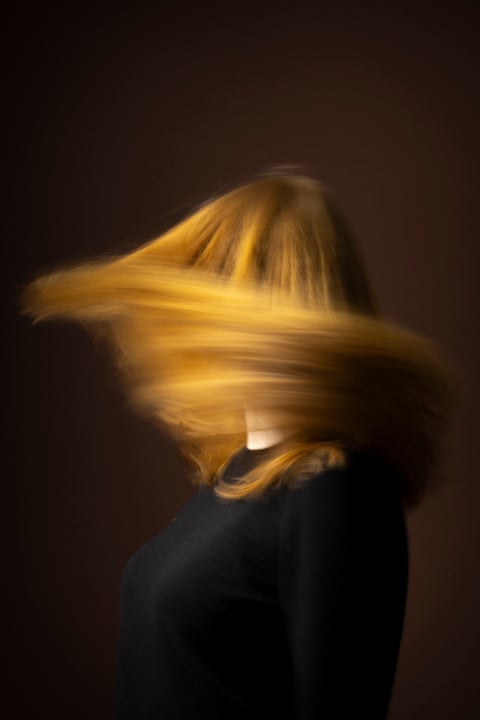
For his latest in a series of work photographing people with red hair, photographer Kieran Dodds interviewed and made portraits of hundreds of people with ginger hair, with widely varying backgrounds and heritage, across the US between 2024 and 2026. Dodds asked each interviewee the same question at the end of the interview: What unites the states? We hear some of the responses
-
A new book of this work is available to preorder here
‘Although almost everyone featured in the project is ginger, it is not really about hair. It is structured around themes raised time and again in the conversations I had with portrait sitters, and which I reflected on during my travels in the states’ – Kieran Dodds
Wed 2 Sep 2026 08.00 CEST
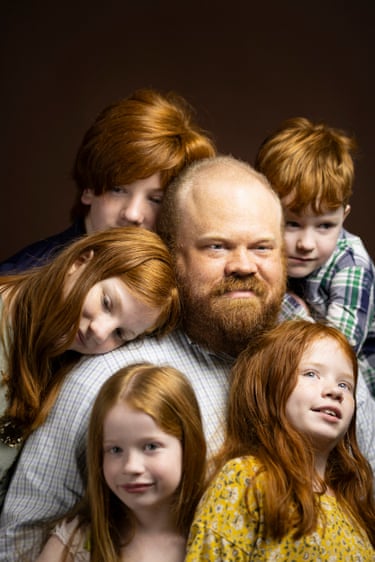
Colton, Bennett, Emmeline, Christopher, Amelia and Genevieve Smith | Burke, VA | b. 2010, 2018, 2012, 1985, 2016, 2014
Christopher: ‘You feel just now there isn’t a lot that unites people. In a lot of ways it feels like America is being pulled apart at the moment rather than being pulled together. One thing that pulls us together, probably more than anything, is the differences. Just the diversity and the differences. Everybody has a unique story of who they are and where their family’s from. And that’s something that you can ask anybody and everybody, because everybody has a different viewpoint, a different history, a different culture’Photograph: Kieran Dodds/Panos Pictures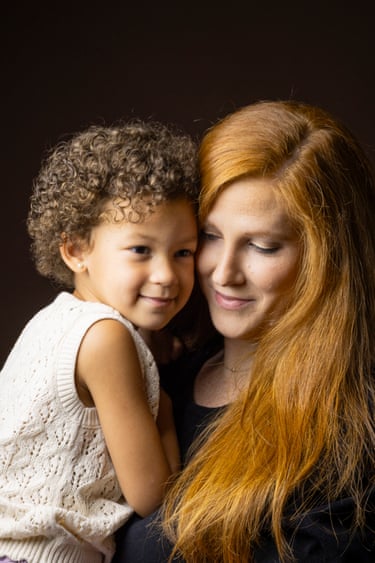
Rachel and Liliana Releford | Birmingham, AL | b. 1992, 2021
‘When I take my daughter to the grocery store, sometimes people will think that I’m a nanny or her babysitter. I’m like, nope, she’s mine! I think you still get some people who grew up with the mindset that things need to be segregated. Some of my grandparents’ friends were a little hesitant when they found out I was dating my husband: “You’re really going to let her date someone of a different race?” But my grandparents were like, “Go for it. He’s a cool guy, he’s a sweet one.” I love him for who he is. He’s a great human being’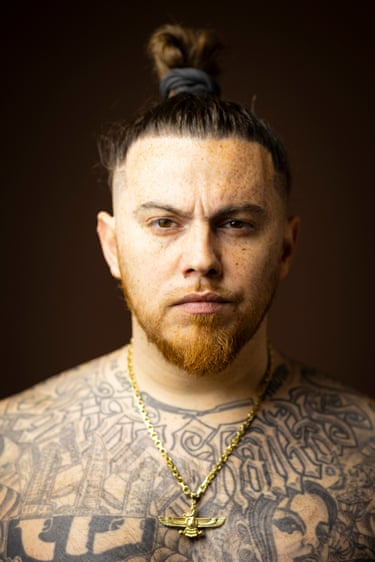
Nicholas Modaressi | Germantown, MD | b. 1988
‘Dad refuses to get his genetics done because he says: “I’m Persian.” He grew up in Iran. He migrated to DC in 1973. The first day he got here, he was unloading a TV from a U-Haul and someone smacked him in the head with a baseball bat. He still has his scar. That was DC in the 70s.’ Nic’s Iranian dad’s hair shop was called Salon Red after his ginger mom, Julie. Nic followed in his father’s footsteps once he got out of jail in 2014. ‘I found out I was going to be a dad, and I became a barber’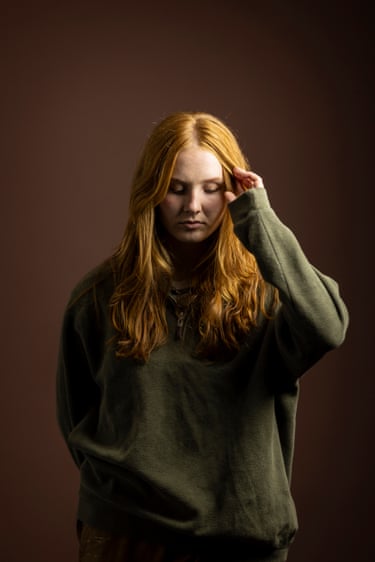
Whitman Halvorson | Lookout Mountain, GA | b. 2004
‘America is anything but an ethnically unified country. We’ve been talking about this in school, and one of the conclusions that we’ve come to is that none of us is really from here, and that is typically a bonding factor’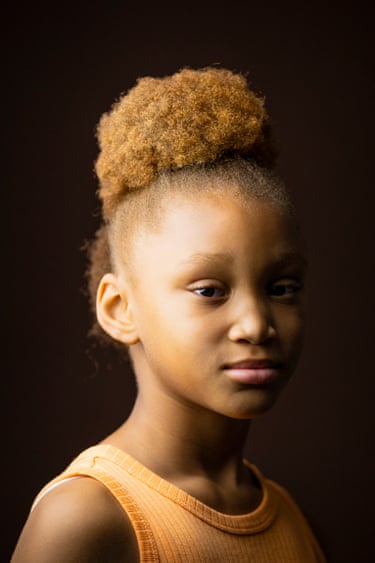
Nadia Weathersby | Trussville, AL | b. 2017
‘I would say my hair changes. Sometimes it’s reddish, other times it’s brownish, but more brown. When it’s sunny it’s more orange. It comes from great-great-grandma.’ Nadia’s mother (Regina Weathersby): ‘On my father’s side, we did a little research, and we were able to trace a lot of Alabama people in more recent generations, but prior to that, they were from Virginia. Then it got a little murky before that, because slavery was happening’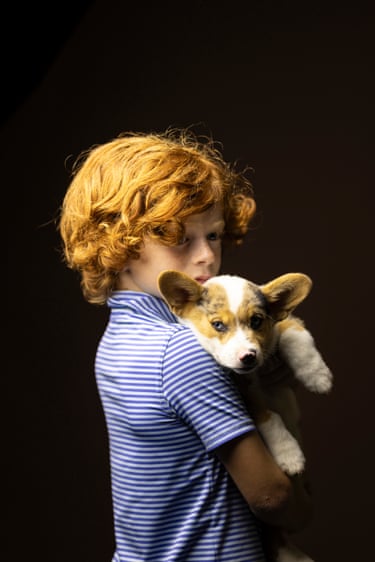
Connor Lloyd | Lookout Mountain, TN | b. 2016
‘I’m from Tennessee. The dog’s name is Boudreaux. We’re originally from Louisiana, so I chose a Louisiana name. People say they like my hair’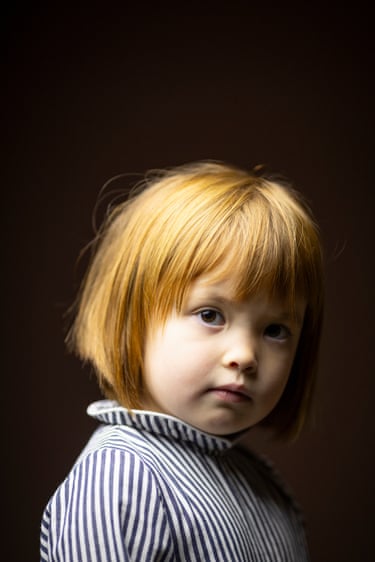
Randa Henry-Smoke | Portland, OR | b. 2019
Margaret Henry was surprised when her daughter was born, because Randa’s biological father is native Alaskan. ‘He has black hair. The Koyukon Athabaskan people are very far north in Alaska, like Fairbanks. He has two other children who also have red hair: all three half-siblings have it. That’s a very strong recessive gene! America right now is very polarised. I would say that we’re losing [middle ground] a bit, but I think community is where you get it back. You talk to your neighbours and [they] are friends, despite what their political group may be’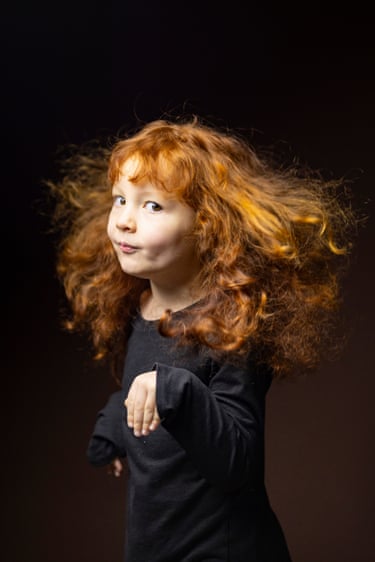
Rosalie Moore | Salem, OR | b. 2020
Mother (Jill Moore): ‘[Ginger hair] is common in our family, but my husband’s side of the family is Asian. So it’s sort of a unique happenstance, I guess. His mom was Chinese, but she was born and raised in Thailand’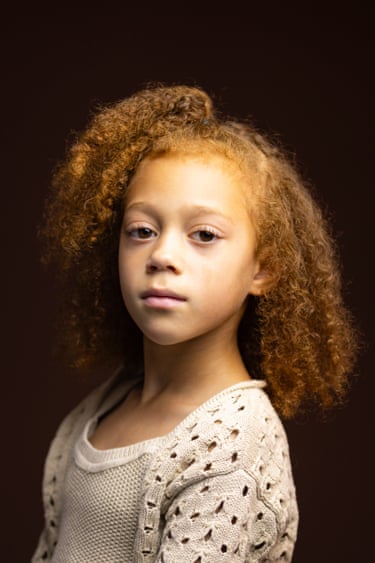
Alannah White | Centerpoint, AL | b. 2018
Grandmother Tracey White: ‘Mostly our family is African American, and then both my brothers’ daughters had red hair, which prompted me to be like: “Wait a minute,” because they have different moms. And my nieces each have a baby boy with red hair. I was like: “Let me start looking into that.” Alabama has a lot of southern history, some good, some bad, but also a lot of hospitality, a lot of good home cooking of southern food, and mostly polite people’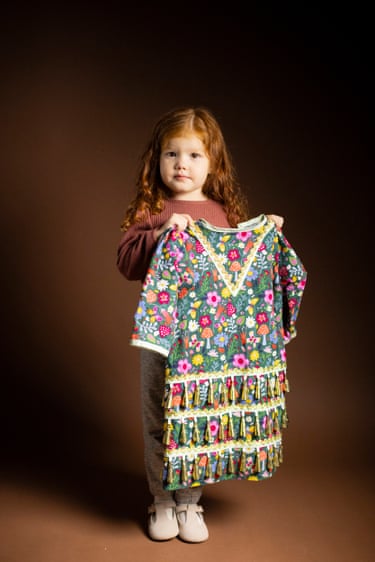
Lottie Wahkinney | Comanche Nation | Oklahoma City, OK | b. 2020
Lottie’s father (Jared Wahkinney): ‘Lottie is holding a jingle dress. At powwows there are different categories of dancing. A jingle dress is a healing dance. A lot of northern tribes have used that sort of dancing for a long time, and because she’s Oneida as well we wanted to recognise that she has jingled.I was born and raised here – in our Comanche ways. My dad is Comanche, raised here in Lawton, Oklahoma. My mom is from Scotland, born and raised over there. That’s why my Lottie has a good mix of everything going on’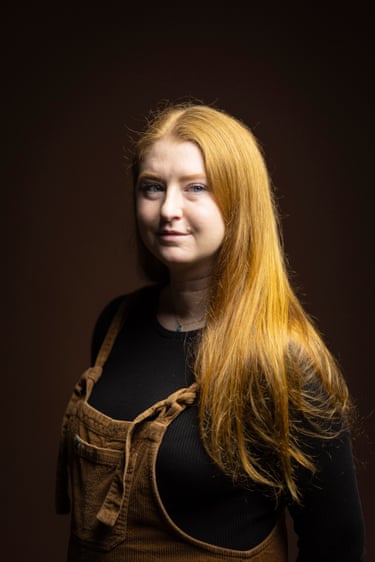
Leyla Ersan | Oregon City, OR | b. 1995
‘I have my own winery, but I’m also the general manager of a winery in Dundee. Both mine and my boss’s are natural wineries. We don’t have vineyards, we just source from organic and biodynamic vineyard sites. Oregon is just the perfect climate to grow wine in, and this is where some of the most spectacular wine of the world is now being made. My dad’s from Turkey. And he’s convinced he’s 100% Turkish. My mum is from Scotland. The Borthwicks all moved to Iowa and became farmers there. Corn farmers’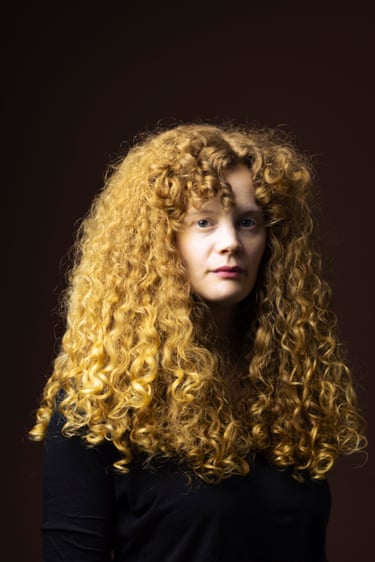
Marjie Belcher-Shemanski | Brooklyn, NY | b. 1987
‘I grew up in a dogmatic religious traditional family and was kind of stifled, it mattered a lot how you appeared. My dad was a pastor, so I had to always be hugging the old people and looking happy every day. I taught violin in Detroit, I taught in Chicago, I taught in Philadelphia and lived there for a while. New York is the only place I’ve lived where people don’t care how you look. They care what you say’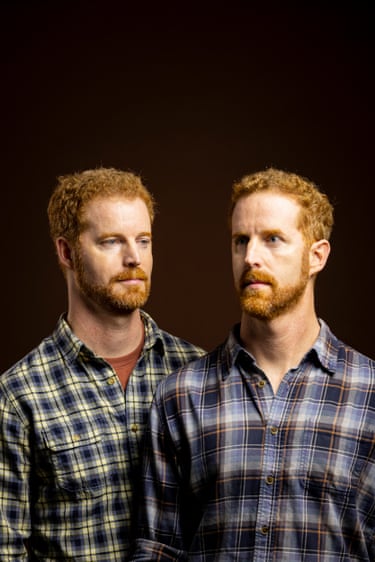
Brian and Dave Devine | Portland, OR | b. 1972
Brian: ‘Dad is full Irish. He grew up in Northern Ireland, just outside a small town called Strabane, in County Tyrone. He left in the 1950s. His parents couldn’t afford to live there. They had no jobs and no way of making a living. So they came to Philadelphia. Growing up in Philadelphia, we were definitely a package deal, the Devine brothers, that was kind of our brand. I think when we were in third grade, about eight years old, we switched to a new school. Being the new kids, redheads and skinny, we just stood out’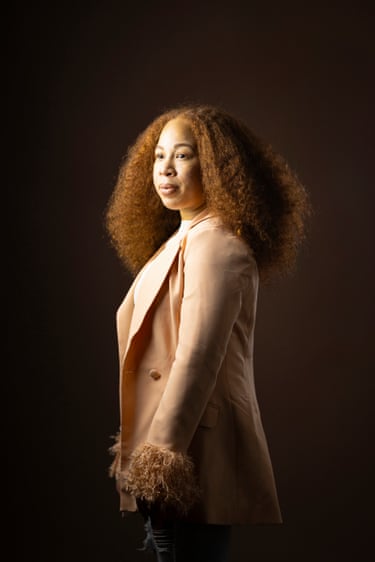
Gabriella Cray | Washington DC | b. 1993
‘For the longest time Prince George’s County was the richest Black county in the US. A lot of people who’ve never been are like: “Whoa, all these Black people!” It’s shocking to them. Especially for people who are used to being the majority, it can be intimidating. You’ve got athletes, doctors, lawyers and politicians … If you were to pluck through random strands of my hair, you would find three different colours. I don’t think there is a thread holding us in the United States together right now, to be honest’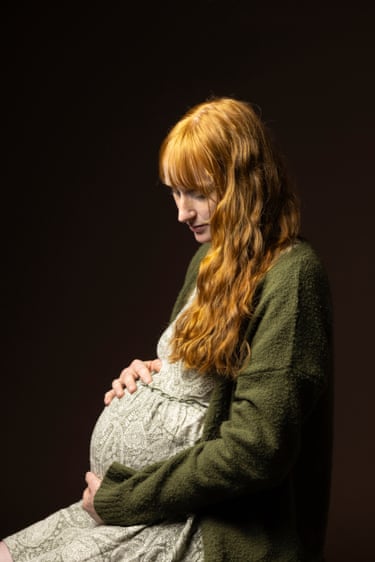
Aarin Langford | Portland, OR | b. 1996
‘Our community brings us together. The preschool we own creates a community of families that feel included. Building a support system with kids is important, because it’s hard here to find someone who grew up in Oregon, and specifically Portland. They’ve all moved from other places, so they don’t have familial support. People from diverse backgrounds grow to become family.My daughter’s going to be ginger. I mean, there’s always hope! I would love to pass that down. We will see.’ Aarin’s baby was born a week later and does not yet show ginger hair!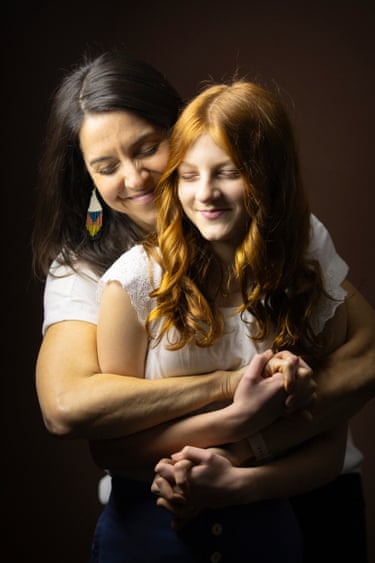
Stephanie and Priscilla Robson | Cheverly, MD | b. 1979, 2011
Stephanie: ‘I think where we live, it feels more national in the local. Everyone is here because of politics, and they work in politics. They work in the federal government, or they try to bring federal issues down. When you talk about the United States as a whole, what defines us, what I think brings us together is a sense of freedom and free exercise of our rights’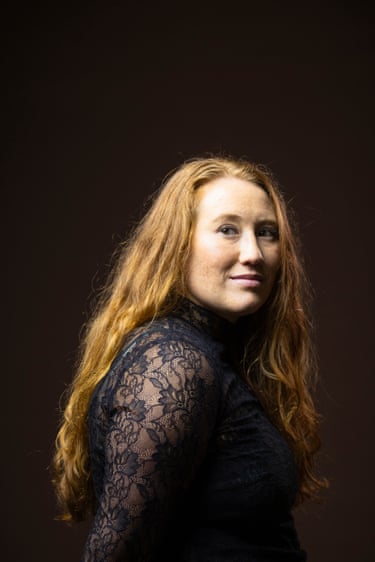
Keisha Engley | Portland, OR | b. 1994
Keisha Engley was a rare redhead growing up in the apple orchards of rural Washington State in the 1990s surrounded by Vietnamese American relations. Her American grandfather fought in Vietnam and met her grandmother there, love blossomed and they returned to the States together after the war. Then her grandmother’s family came to live and work on the farm. ‘I grew up with all of my aunts and uncles living right next to each other in the middle of an orchard,’ she says. ‘People are very proud of where they come from, and they really love where they live’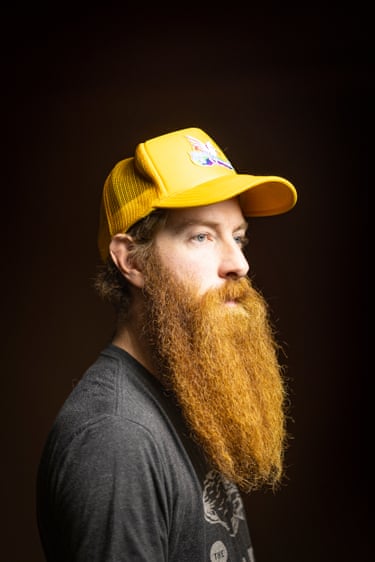
Jonathan Haynie | Portland, OR
‘I spent a lot of time up in Alaska. I was a wilderness guide up there, and funnily enough, my nickname was Firebeard. So that’s my nickname with a lot of my friends now. I started growing my beard before I went to Alaska. And then when I got to Alaska and got my Firebeard nickname, I was like, alright, well, it’s part of me. Even my wife hadn’t seen me without a beard. If I shaved it off, I’d be like, should I get the hell out of here?’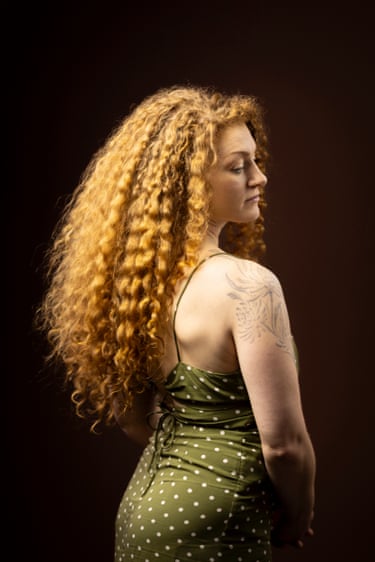
Allison Dubinski | Brooklyn, NY | b. 1984
Allison Dubinski was the only redhead in her class in Indiana, and was labelled as such. ‘There was a woman who always called me Rusty. She said my parents left me out in the rain, so my hair turned rusty. A couple of kids called me Rusty because of that.’ In New York, her hair colour is now a key asset to help her stand out in the competitive acting world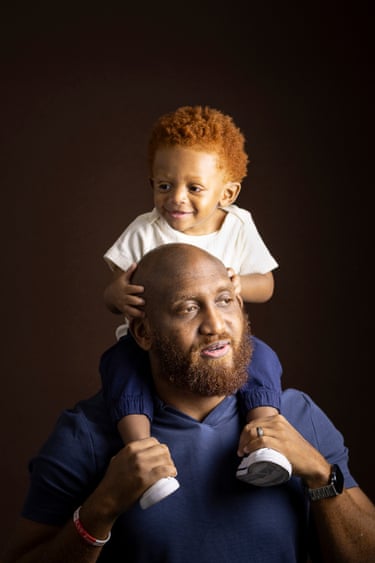
Henry Davis and Henry Davis II | Calera, AL | b. 1996, 2023
Henry Davis: ‘It’s funny, because my hair was the same colour. Literally everyone says he’s the spitting image of me when I was little. We’re not really sure where it comes from. My dad is turning grey now. He’ll get some red in his beard, and then it kind of goes grey. So I guess it’s from his side.’ Henry Davis II’s mother (Kadeshia Davis): ‘My doctor literally pulled him out and said: “Oh my god, he has red hair like his dad.” I said, “What!?” Henry: ‘[People say], “Oh my gosh, look at him, can we take a picture of him? Can I touch it?” All the weird things you can think of. “I want to rub his hair!”’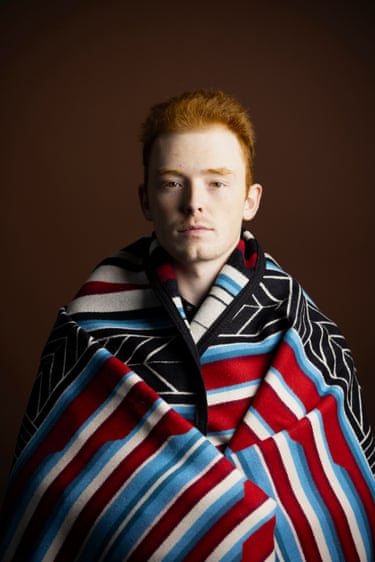
Joshua Elliot | Muscogee (Creek) Nation Broken Arrow, OK | b. 2001
‘People do have expectations of what I should look like, but I had those on myself. Initially because I didn’t want to be a “pretendian”. I realised, though, that it’s not really about that at all, not a matter of your blood quota. Our chief’s wife told me it’s about your involvement in your community and your tribe, the people around you and what you put back into it. Which I really took to heart. My mom’s side has always been involved with the Muscogee tribe, tribal lands and traditions. I’ve grown up around it. Some of my mom’s relatives were German, so that could be where the hair comes from. On Dad’s side they are English with some Swedish’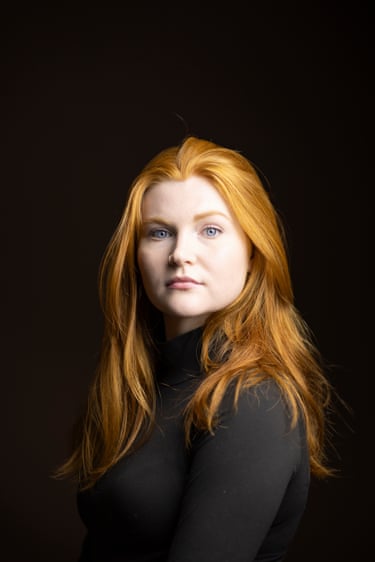
Heidi Hetrick | Lookout Mountain, GA | b. 1999
‘The scars of history are still visible. I feel like there’s probably a lot more dissonance and negativity than there is connectivity between the states. There’s a unity in the fact that everybody has state pride and compares themselves with others. I think that’s a uniquely American thing. Everyone is definitely American in thinking that they’re probably better than everyone else. It’s very sunny in Atlanta. My sister has lovely olive-brown skin. I should honestly get a brand deal from how much sunscreen I use.’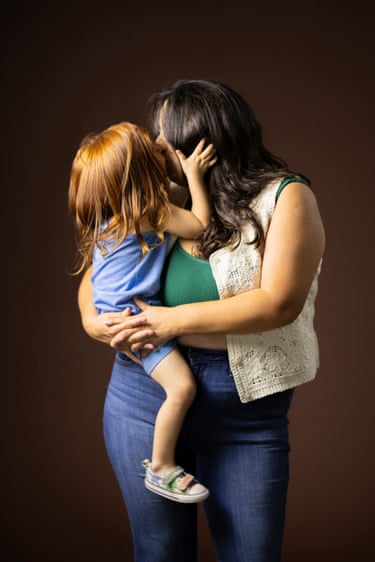
Vander Hero and Sydney Asencio | Santa Maria, CA | b. 2022, 1990
Sydney Asencio: ‘When I go to other countries, I would just say I’m American. I’m from the United States. We call ourselves states, but it’s really like little countries. That’s not enough for people. They want to know your family history. So then I say Mexican American. “Oh, you’re from Mexico,” they say. Actually, I’ve never even been to Mexico. I don’t have any family in Mexico. My family’s been here for several generations. That’s what makes me Mexican American’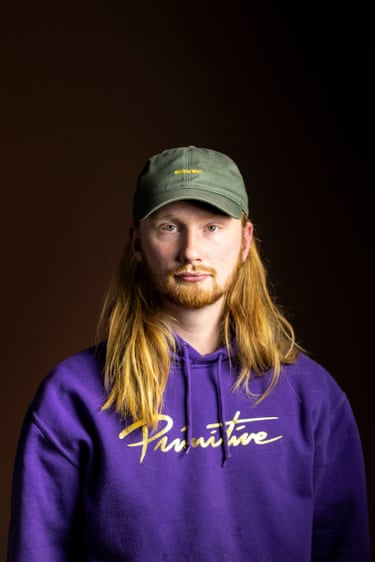
Malachi Milligan | Chickasaw Nation | Ada, OK | b. 2003
‘We’ve been to stomp dances. We go to a cultural centre and hang out. I’ll be around a lot of people that are very dark and definitely look Native, just like my dad. Then I feel that nobody will believe I’m a Native person because I look like this. In that sense, I don’t fit, but I still take pride in it’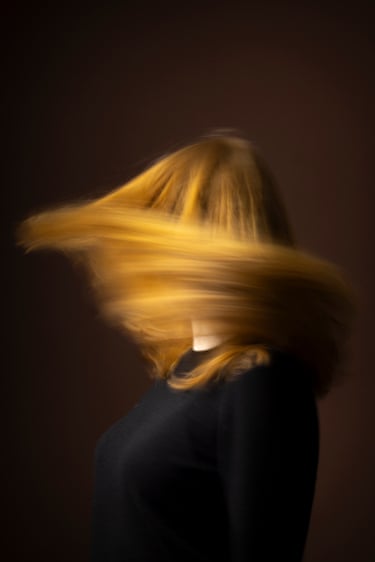
Megan Byrne | Brooklyn, NY | b. 1974
‘New York is a city of immigrants. My hair shows that I came from somewhere else. I’ve carried on this wonderful legacy of my ancestors. So much of the spirit of America is represented in New York. There’s a nature of working hard, of trying to survive and to make things better for the next generation. I think that’s changing, we’re in a scary time right now in America’Explore more on these topics