.png) 3 months ago
69
3 months ago
69
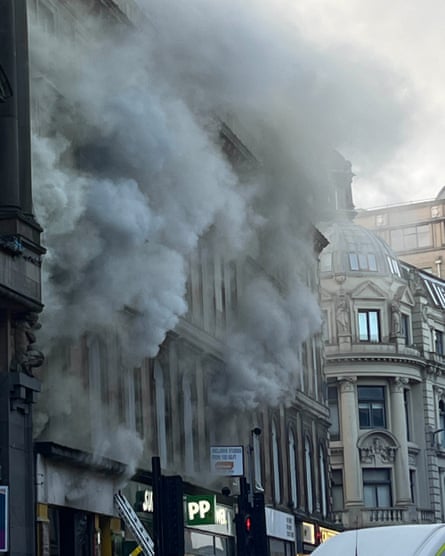
It was a spectacle of weary familiarity for many Glaswegians: a crowd gathering to watch a conflagration in progress, streets clogged with emergency vehicles, the city skyline blurred out with smoke.
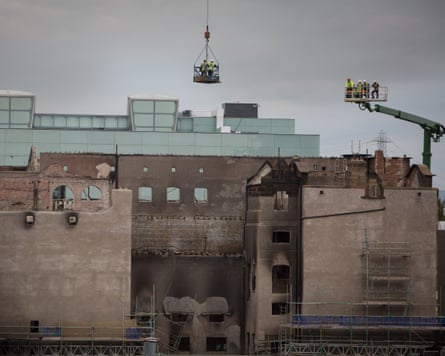
For many who saw the fire next to Glasgow Central railway station, which broke out on Sunday afternoon, the acrid smell of smoke dampened by the Monday morning drizzle recalled the blazes at Glasgow School of Art’s Mackintosh building, which remains a burnt-out shell after two devastating fires in 2014 and 2018.
But the loss to fire or other neglect of the city’s Victorian heritage is becoming a semi-regular occurrence – take the collapse of B-listed (buildings that are major examples of a particular period, style or building type) tenements around Albert Cross, Pollokshields last summer, or the derelict building blaze in Carlton Place, the once elegant Georgian terrace on the south bank of the River Clyde, in 2024.
“Yesterday’s fire looks like a tragic accident but it highlights a brutal reality: Glasgow historic architecture is extremely vulnerable and too often those who make this point are called out as nostalgia buffs,” says the architect and critic Rory Olcayto, who published a call-to-arms essay on the state of the city in 2024.
“Until Glasgow treats its built fabric as part of its social fabric, these crises will keep happening,” he warned. “Too many senior decision‑makers in Glasgow still act as if the city has to choose between looking after people and looking after its buildings.”
He acknowledges the city council is beginning to put money into fortifying heritage architecture, such as long‑abandoned B‑listed tenements in the city’s west end being brought back into use as affordable homes – proof, he says, that Glasgow can address social need and protect its historical fabric at the same time.
And there are other examples of active care in the city centre – opposite the site of Sunday’s fire are the Egyptian Halls, the vast A-listed (buildings that are outstanding examples of a particular period, style or building type) commercial space designed by Alexander “Greek” Thomson. It has been empty for 15 years, shrouded in grubby scaffolding, but recently the council has sought to use its compulsory purchase powers in tandem with a developer to renovate the building for restaurants and hotel space.
The hollowing out of the city centre – now a mess of gap sites and stalled renovations – is familiar across the UK. The decline in footfall and rise in online shopping, accelerated by the pandemic, has hit hard, while the rapid inflation in construction costs and interest rates means much-needed residential conversions have stalled.
There are 143 buildings in the city centre on Historic Environment Scotland’s “at risk” register, and the council established a built heritage commission two years ago with the express purpose of managing and restoring the city’s vacant and derelict properties. The hosting of the Commonwealth Games this summer will be another galvanising moment when global media will again be focused on the city.
Niall Murphy, the director of Glasgow City Heritage Trust and a specialist conservation architect, has some sympathy for the council. “Everyone assumes that this is a council problem. In actual fact, it’s the owners of the building – they’re the ones who are meant to be maintaining the building.”
Murphy says the trust has been working for some time to change the culture of maintenance of historic buildings in the city centre “so that we become proactive rather than reactive”.
“You can appreciate the city’s problem,” he says. The council is keen to use the 3.3m sq ft of vacant commercial space in the city centre to bring people back into the city, retrofitting it for residential use. But nearly 30% of that vacant space is in pre-1919 buildings, like the one that burnt down on Sunday.
These traditionally constructed buildings cost much more to turn into housing and are unlikely to have compartmentalisation, where there is a proper separation between the shops and the upper floors.
The Scottish Labour MSP Paul Sweeney, a longtime campaigner for Glasgow’s neglected heritage buildings, says the original Glasgow School of Art fire was similarly the result of high-risk materials used in a historic building – in that case someone was using combustible foam with the projector – and called for stricter safety protocols for pre-1900 buildings.
But while the initial cause of the Glasgow Central fire remains unclear, one fire science expert, Prof Guillermo Rein at the department of mechanical engineering, Imperial College London, says the presence of lithium-ion batteries in the vape shop where the fire is thought to have begun may be significant.
He argues the safety problems with the batteries may be more important than the building’s design. “This may not have been a conventional shop fire,” he says.
“Lithium-ion battery fires tend to be unusually resistant to suppression, because they are designed to be protected from water but generate intense heat, reignite, and in large numbers can result in fire conditions that are difficult to bring under control. That could help explain why even a highly trained and well-equipped force like the Scottish fire and rescue service faced such difficulty in suppressing the initial fire.”