.png) 3 months ago
85
3 months ago
85
Compensation payments will rise for people affected by the infected blood scandal, including an extra £35,000 each for former pupils who were experimented on at school without their knowledge, the paymaster general has announced. The government has allocated £1bn for the payments.
The final report of the inquiry into what has been described as the biggest treatment disaster in NHS history was published in May 2024. The compensation scheme that followed has also been blighted by controversy.
People who were infected, and their relatives, had complained about delays, qualifying criteria, the size of payments and the complex application process.
Among those angry at the amount they were offered were former pupils at Treloar’s college, a specialist school in Hampshire for haemophiliacs, where they were infected in experimental trials.
On Tuesday, the paymaster general, Nick Thomas-Symonds, announced the government’s response to the public consultation on proposed changes to the infected blood compensation scheme. The compensation pot was set at £11.8bn in the 2024 autumn budget, with the announced changes estimated to cost £1bn.
Thomas-Symonds said: “While this government understands no amount of money will make up for the suffering endured by the infected blood community, I hope that these changes to the compensation scheme demonstrate our commitment in ensuring this community receives the compensation they rightly deserve.”
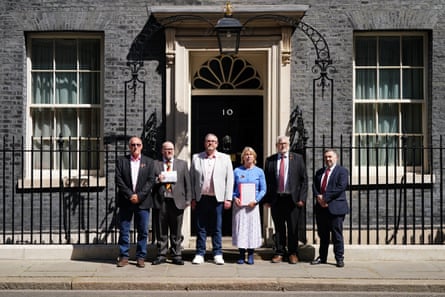
He said the amount of core compensation would increase for infected people and also for some other affected people, such as relatives.
More than 30,000 people in the UK were given treatments before 1996 that were infected with HIV, hepatitis C or hepatitis B – or a combination of them – and more than 3,000 people have died.
Thomas-Symonds told MPs the “unethical research” awards would be increased. “This includes increasing the £25,000 for those who attended Treloar school to £60,000 as well as introducing a new unethical research award for those treated elsewhere for a bleeding disorder during childhood at a rate of £45,000.
“We’re also tripling the award for those treated for a bleeding disorder in adulthood to £30,000.”
Gary Webster, who was infected with HIV and hepatitis C while he attended Treloar’s in the 1970s and 80s, said that of the 122 haemophiliac boys who had attended the college, more than 80 were now dead.
He told the Press Association: “I’m glad they have listened and I’m glad they have included all haemophiliacs throughout the UK. It’s an increase from the £25,000 but is £60,000 enough for a life? It’s better, but I’m not jumping up and down.”
Thomas-Symonds told MPs that infected people “who can show they either had a job offer or recently started a job where the salary was higher than the median salary, but had their progress impeded by their infection” would receive the offer of a £60,000 lump sum on top of the core award.
Core injury awards would increase for parents whose child died before they turned 18, as well as for bereaved partners and children and siblings affected under the age of 18.
The Liberal Democrat Cabinet Office spokesperson, Lisa Smart, said there were people who “continue to feel that the scheme does not go far enough”.
Kate Burt, the chief executive of the Haemophilia Society, said: “We’re disappointed that the enduring impact of harsh hepatitis C treatments have not been fully recognised. There is a lot of work still to do to achieve a fair compensation scheme for everyone impacted by the infected blood scandal.”
A Hepatitis C Trust spokesperson said: “These changes have been heralded as significant but when you look at the detail, they are in fact very minor. So while some positive steps have been taken, we are very concerned that the community will find the response bitterly disappointing.”
As of 7 April, 3,273 offers of compensation had been made, totalling more than £2.6bn, and 3,161 people had accepted their offers.