.png) 3 months ago
79
3 months ago
79
Gulf states, encouraged by Donald Trump, are on the verge of ending their neutrality in the war against Iran in reprisal for Tehran’s repeated “reckless and indiscriminate attacks” on their territory and infrastructure.
The calls, led by the United Arab Emirates from inside the six-country Gulf Cooperation Council, are for the Arab states to act in self-defence against Iran, but it would be a huge step for Gulf leaders in effect to side with Israel in a war that will determine the future shape of the Middle East, probably to the advantage of Israel.
A video meeting of GCC foreign ministers on Sunday made no explicit reference to such a plan but stated the “option to respond to Iranian attacks” to protect regional security and stability remained on the table.
Iran had expended huge diplomatic effort in the past two years trying to convince the Gulf states that Israel, not Iran, is the chief destabilising force in the region, but much of that painstaking work in speeches, conferences, and diplomatic visits appears to have fallen apart in a matter of days.
Ali Larijani, the secretary of Iran’s supreme national security council, has justified Iran’s tactics as an attack on US forces based in the Gulf states. “We do not intend to attack you. But when the bases of your country are used against us and the United States operates in the region with its own forces, we target them,” he said.
But Tehran’s justification has lost traction as hotels, apartment blocks and oil refineries have come under attack in what is regarded as a disproportionate barrage. For some Arab leaders, Iran’s tactics reveal the latent arrogance with which it has always viewed other countries in the region.
Iran’s strategic aim in what it bills as a battle of wills appears to be to maximise the economic disruption in the Gulf states so that they plead for Trump to end a war he started without their support.
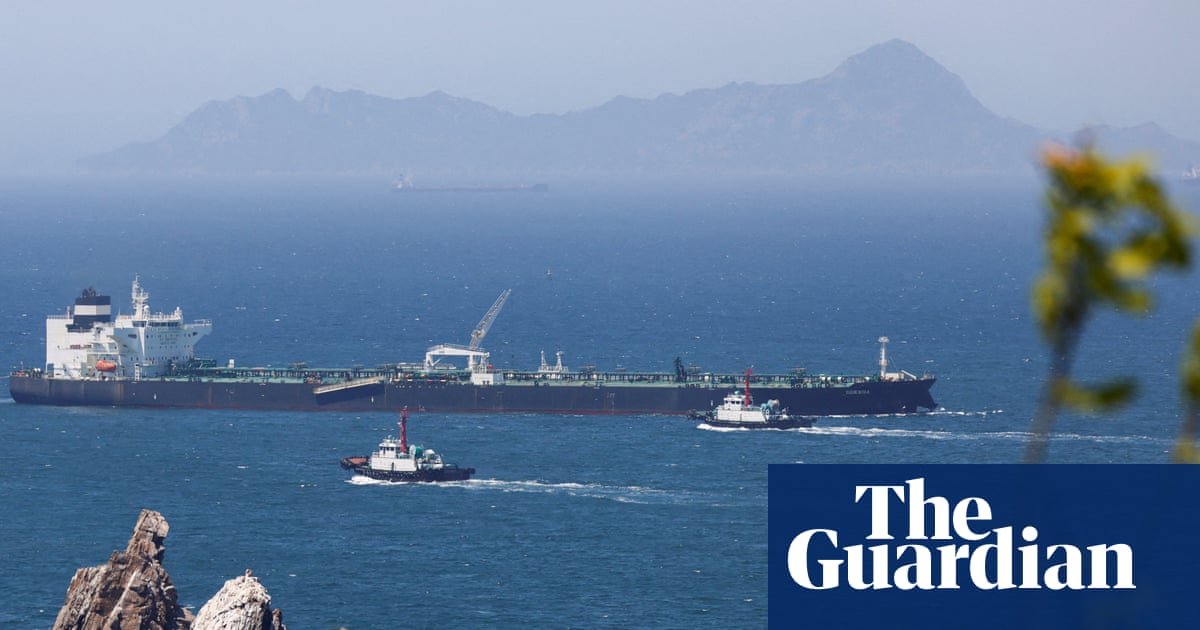
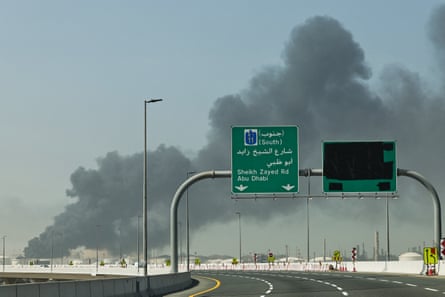
Apart from an Iranian drone strike on Saudi Arabia’s Ras Tanura refinery, Oman has reported an attack on an oil tanker 50 miles off the coast of Muscat, and Qatar’s defence ministry has reported that two drones struck energy facilities in the industrial city of Ras Laffan. Iran has denied attacking Saudi energy facilities.
Majed al-Ansari, the foreign ministry spokesperson for Qatar, one of the countries better disposed to Iran, said: “This cannot go unanswered; a price has to be paid for this attack on our people.” Doha shut down its liquified natural gas production in response to the attacks.
Qatar’s former prime minister, Hamad bin Jassim bin Jaber al-Thani, warned that Iran had “lost through this action the Gulf sympathy that was pushing with every possible effort towards de-escalation” and “sowed doubts that will be hard to erase” in its future relations with GCC states.
Yasmine Fariouk, Gulf and Arabian peninsula project director for the International Crisis Group, said: “The Gulf countries now are at a point where there’s a lot of anger at Iran. Many of them have invested a lot in the detente with Iran and in mediating and trying to find solutions only to find that Iran still sees them as a platform for its bigger war with the US and with Israel.”
There is also some dismay at the US. One Saudi Arabian official complained to Al Jazeera about US priorities. “The United States abandoned the Gulf states and redirected its air defence to protect Israel. They left all the Gulf states that host American military bases at the mercy of Iranian strikes,” the official said.
Nevertheless, the overwhelming focus of resentment from the Gulf states is directed towards Iran. They point out that they had given undertakings to Iran – with which they had abided – debarring the US from using its bases or airspace to attack Iran.
It was widely expected, and trailed by Iran, that the Iranian military would respond to a US attack by hitting US bases, as it also did when it mounted a near-symbolic attack on the US airbase in Qatar at the close of the 12-day war in June.
But the scale, speed and breadth of the Iranian attacks has caught Arab leaders by surprise. The UAE has withdrawn its ambassador from Tehran in protest and claims Iran has launched more attacks on its territory than on Israel. It reported that 174 ballistic missiles launched toward the country had been detected, with 161 of them destroyed, while 13 fell into the sea. A further 689 Iranian drones were detected and 645 intercepted, while 44 fell within the country’s territory. Eight cruise missiles were detected and destroyed, resulting in three fatalities and 68 minor injuries.
Kelly Grieco at the Stimson Center has put the financial cost to the UAE at close to $2bn (£1.5bn) since the cost of intercepting a drone is five times higher than their dispatch.
In a joint statement on Monday, Bahrain, Iraq (including the Kurdistan region), Jordan, Kuwait, Oman, Qatar, Saudi Arabia and the United Arab Emirates all warned that “targeting civilians and countries not engaged in hostilities is reckless and destabilising”.
The attacks seem even to have led to a suspension of the deepening rift between the two rival Gulf monarchies, the UAE and Saudi Arabia. They had fallen out after taking opposing sides in Sudan and Yemen, a rivalry that spanned commercial and political interests. But in a sign of a rapprochement, the Saudi crown prince, Mohammed Bin Salman, and the UAE’s Mohammed bin Zayed spoke for the first time in months.
Saudi authorities also rejected a Washington Post report that it had covertly encouraged the US and Israel to mount an attack on Iran in the week leading to the attack. The damaging charge, if it stuck, would leave the Saudi royal family in difficulties domestically since it has accused Israel of committing genocide in Gaza. The public and private position of the Gulf states had been to urge the US to show restraint and stick to the diplomatic path of negotiating a deal with Iran on its nuclear programme.
Such is the anger directed towards Tehran, the Iranian foreign minister, Abbas Araghchi, came close to apologising for the Islamic Revolutionary Guards Corps attack on a US facility in Oman, the country that has acted as a mediator on the nuclear talks, and argued that Iran had made unprecedented compromises by offering zero stockpiling of highly enriched uranium. Araghchi claimed that Iran’s military command had been devolved as part of an effort to ensure command and control did not collapse if the military headquarters was destroyed.
So far there has been little sign of a public debate inside Iran’s hierarchy as to whether the intended economic chaos is worth alienating the Gulf states or if there is a risk of Gulf military reprisals, which would make the regime’s survival even more perilous.
Rob Geist Pinfold, a lecturer in defence studies at King’s College in London, told Al Jazeera that Iran “knows exactly what it’s doing” by attacking the Gulf countries.
“It’s picking the Gulf countries because it sees them as a soft target. They’re easier to hit than Israel,” he said. “These countries have less of an appetite for a fight, because at the end of the day, this is not their war.”