.png) 3 months ago
73
3 months ago
73
There aren’t many current choreographers more respected and in-demand than the multi-award-winning Crystal Pite. The Canadian founded her contemporary dance company, Kidd Pivot, in Vancouver in 2002, but she’s also made visually splendid works for the Paris Opera Ballet and the Royal Ballet among others.
What stands out in all of Pite’s work is its humanity. These are never just bodies moving for movement’s sake. Her supple choreography is genius at illuminating relationships and emotional grey areas. But she’s also unafraid to tackle the big questions of our times: refugee crises (Flight Pattern), the climate crisis (Figures in Extinction), warmongering and political power struggles (The Statement), often using text in experimental ways.
In opposition to the intimate scale of her duets, Pite has also created a strand of work that uses massed ranks of dancers moving in unison to awesome effect. Elements of all of these strands come together in Pite’s piece Body & Soul (Part 1), which will be performed by English National Ballet at London’s Sadler’s Wells and Plymouth’s Theatre Royal this spring. Here, she talks us through that landmark work along with the rest of her back catalogue
Body & Soul (Part 1) is at Sadler’s Wells, London, 19 to 28 March, then Theatre Royal Plymouth, 30 April to 2 May.
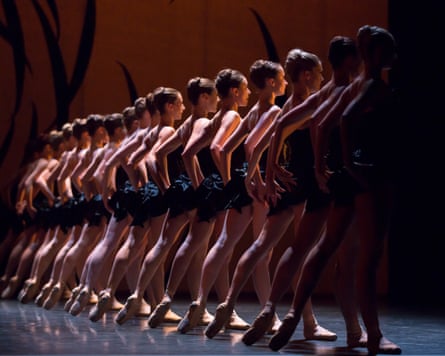
Emergence
National Ballet of Canada, 2009 (image above is from the 2016 production by Scottish Ballet)
“This was my first time being invited to create a work for a big ballet company,” says Pite. “It felt like entering a different planet. There’s something thrilling and chilling about seeing a large group of people aligned in their task. So when you see things in nature and in the world that are in sync, there’s something in that which touches you deeply. And yet it can really have a malevolent quality. It feels beautiful and it feels dangerous.”
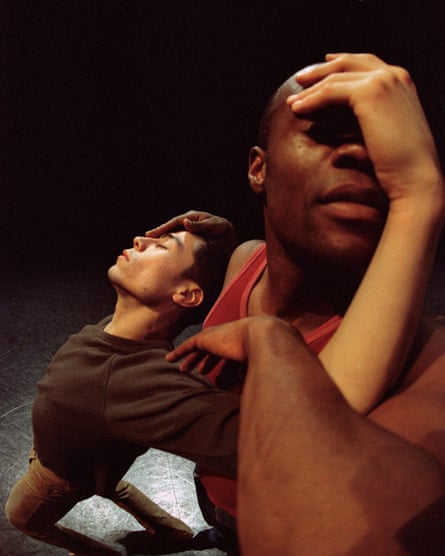
Lost Action
Kidd Pivot, 2006
“The third show I made for Kidd Pivot. I was still dancing at the time, and thinking about the ephemerality of dance – dance always being in a state of vanishing. Dance has no artefacts. I think dance’s impermanence gives it its power.”
Betroffenheit
Kidd Pivot, 2015
“Betroffenheit means a shock or impact in the face of a violent event, where we become aware of the limits of language. We had the amazing and complicated task of writing a play where words fail, and where the attempt to navigate a loss or trauma is not possible through verbal language. The place was born from my co-creator Jonathon Young’s own story of loss [his daughter and two of her cousins died in a fire], but we really wanted it to move outwards into that universal question of human suffering. It was a powerful experience to make the work.”
Flight Pattern
Royal Ballet, 2017
“I didn’t set out to overtly make a piece about the Syrian refugee crisis. It was more the larger questions of what it means to be caught at a border. I always feel so tiny in the face of these enormous questions. I feel as if I’m stretched just a bit too far, but somehow in that stretch there’s a spark of creativity. There’s a place for outrage – and sometimes outrage may be the most appropriate response to something that’s happening in our world. But I think it’s more generative to approach these questions with curiosity and love.”
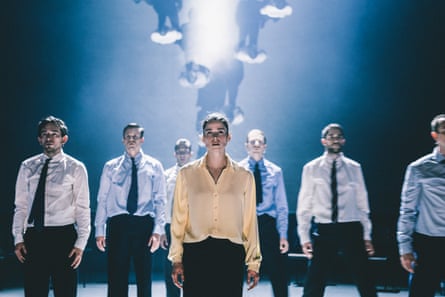
Figures in Extinction
Nederlands Dans Theater/Complicité, 2022
“I saw Simon McBurney of Complicité performing The Encounter [about a photographer’s experiences with Brazilian rainforest tribes] on Broadway, which was a life-changing experience. We decided to do a collaboration together with NDT. It was very easy to settle on the subject: Simon and I both felt deeply compelled to approach the climate crisis and to see if we could distil that colossal subject into something we could reckon with in the theatre. In the first act, I was interested in doing these portraits of flora and fauna and natural phenomena that had disappeared, and to create a kind of elegy, or a way of cataloguing them, where the dancers embody the creature itself and the human emotion around its loss.”
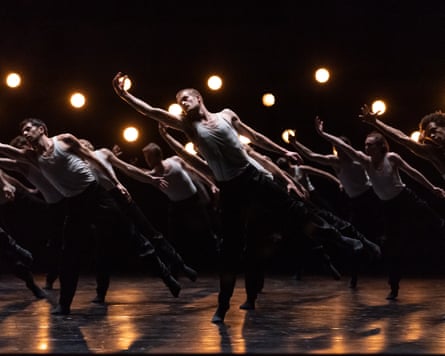
Body & Soul
Paris Opera Ballet, 2022
“The work started from a series of stage directions, in voiceover. So you’ll see the scene embodied by two dancers in a way that feels like a fight. And then you’ll see the same scene embodied by two figures where you feel something more intimate, such as a breakup. You’ll see it embodied by two enormous groups of people, in conflict. And then a conflict between a single individual and an entire group. I got really interested in how the meaning of the text changes depending on how it’s embodied.”
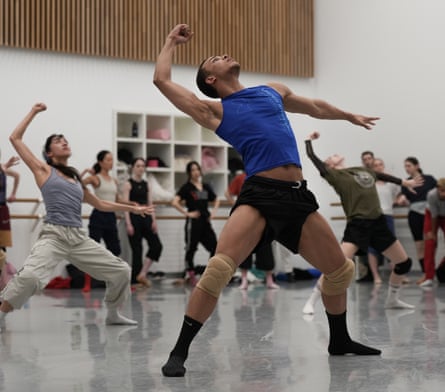
Body & Soul
English National Ballet, 2026
“A lot of the work I do is alone. But the best, most beautiful part of this work is always the relationships with other people. Sometimes my approach to the studio, with a group of 36 dancers waiting for me, is just heavy with dread. But then I get in there and I’m actually face to face with these other humans, and I just feel completely exhilarated and energised and hopeful. Dancers are incredible people.”