.png) 4 hours ago
5
4 hours ago
5
Mohammad Ramzan was on the night shift at the cement factory outside Karachi when he answered a phone call from home. His 20-year-old daughter, Khalida Chandio, had been shot dead in their village in Pakistan’s southern Sindh province.
Now back home, with Khalida’s mother, Nabul, at his side, the devastated couple are trying to comprehend what happened. Nabul struggles to hold back tears. She says her daughter had been taken out from their home under the cover of darkness and killed just a few hundred metres away.
The murder was filmed and has been widely watched on social media, including by her helpless parents.
“Her screams still echo in my ears,” says Nabul. “We couldn’t save her.”
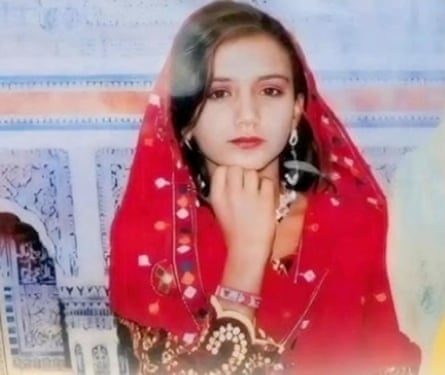
Police say Khalida was killed after being declared kari – a Sindhi term used to accuse a woman of having an illicit relationship and one commonly used by perpetrators to justify so-called “honour” killings.
Police allege that her grandfather and her mother’s brother carried out the shooting on the orders of a tribal elder. Three suspects have been arrested and another is being sought. The case is due to go to trial.
“If they believed my daughter had done something wrong, they should have handed her over to the police,” says Ramzan, 55. “She would still be alive today. She could have been with us, or living in a shelter home.”
Five years earlier, Khalida had married her cousin, the son of another of her mother’s brothers. But late last year, about five months before the murder, Khalida’s husband, a factory worker in Karachi, failed to come home. With no one able to find him, Khalida returned to her parents’ home in Tando Masti, a village in Khairpur district about 280 miles (450km) from Karachi.
According to investigators, on the night of 10 April, a gathering of male relatives and villagers accused her of having a relationship with another man. Police say the accusation was taken before local elders – a jirga – where she was declared kari.
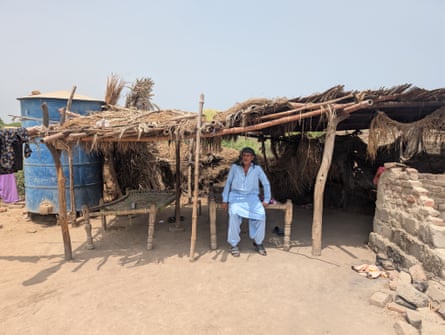
Investigators say that it was after this verdict that three men then dragged Khalida from her home and murdered her.
Pakistan’s courts have banned jirgas from adjudicating on criminal matters, but human rights groups say informal tribal assemblies continue to influence disputes involving women in rural Sindh.
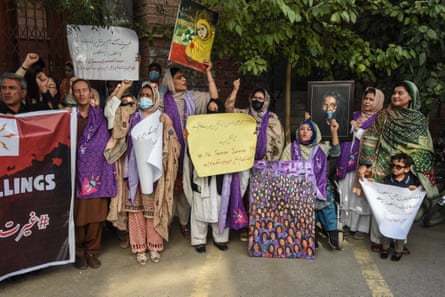
Khalida’s death reflects a wider pattern of violence against women accused of bringing “dishonour” to families. According to the Human Rights Commission of Pakistan (HRCP) and the women’s rights organisation Sindh Suhai Sath, there were 112 “honour” killings of women in Sindh between 1 January and 20 June this year.
Citing police figures, HRCP documented at least 470 “honour” killings in Pakistan in 2025, 126 of them in Sindh. Rights groups say the true toll is likely to be higher, particularly in remote districts where deaths may go unreported or be misclassified as suicides or accidents.
Sindh Suhai Sath says the bodies of 30 unidentified women were recovered from the gates of the Sukkur barrage irrigation system in 2024. It believes some of the women may have been victims of “honour-based” violence, although the circumstances of their deaths remain unclear.
Asad Raza, the deputy inspector general of police who has served as district police chief in Ghotki, Kashmore and Jacobabad, says “honour” killings are rooted in deeply entrenched patriarchal power structures in which women are often treated as the property of male relatives.
Allegations of kari, he adds, are still sometimes used to settle disputes over land, inheritance or tribal rivalries.
“A woman may be declared kari not because of any evidence, but because it provides a pretext to kill her and seize property or extract compensation,” Raza says.
Raza says the same patriarchal attitudes often shape criminal investigations. “The victim is a woman, the accused is usually a man, those making the accusation are men, community elders deciding the dispute are men, and often the investigating officer is also a man raised within the same social mindset,” he says.
Greater involvement of women in investigating and adjudicating gender-based violence cases is needed, he says. “Increasing punishments alone will not end these crimes. What matters is ensuring that the law is consistently enforced.”
Shazia Nizamani, a senior lawyer who has represented victims’ families, says prosecutions are especially difficult when the accused is a close relative. Witnesses often became reluctant to testify, while families can face pressure to withdraw cases or reach informal settlements.
after newsletter promotion
Khawaja Naveed Ahmed, a retired judge, says “honour killing” prosecutions are often undermined by weak investigations and poor prosecution at the trials. Some cases, he says, are directly or indirectly linked to powerful feudal interests, with tribal chiefs and landlords able to wield political influence.
“There needs to be a coordinated mechanism between investigators, prosecutors and the judiciary if those responsible are to be held accountable,” he says.
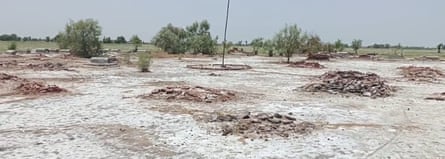
Khalida was buried in her family’s village, but some 50 miles from there lies the remote Fattu Shaheed cemetery, known as Kariyan-jo-Qabristan – a cemetery for women declared kari. Dozens of weathered, largely unmarked graves stretch across the dusty burial ground.
A Sindh journalist says burials of women declared kari have become less common in recent years, but the cemetery remains a stark reminder of the violence. When burials do take place they are often carried out at night, with the graves left unmarked. No one is willing to speak on the record, saying they fear the influence of powerful tribal figures.
Not all women accused of kari are killed – some manage to escape. Shahzadi*, a 35-year-old schoolteacher, fled her village after marrying the man she loved against her family’s wishes. She says a jirga decided that she and her husband deserved to die, forcing the couple into hiding.
For years, they have moved from one rented home to another with their three children, rarely telling neighbours their real names. “I don’t know if I’ll still be alive tomorrow,” she says. “Every knock on the door makes me think they have finally found us.”
She once dreamed of educating girls in her village. Now, her only priority is keeping her own children safe. “There is no place where I feel secure,” she says. “We don’t stay anywhere for long because we know they are still looking for us.”
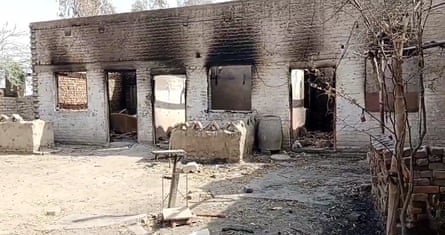
In another case, in May this year, after a couple married in Jacobabad district, armed men allegedly torched more than 100 homes in the bridegroom’s village, the Dawn newspaper reported. The attack illustrated how disputes over marriage and “honour” can escalate into collective punishment, leaving entire communities to bear the consequences.
Naseer Memon, a writer and social analyst, says killings are not about honour but about controlling women and, in some cases, denying them inheritance and property rights. The practice persists, he says, because violence carried out in the name of tradition continues to find acceptance in some communities.
“Karo-kari is not an ‘honour’ killing,” he says. “It is an unchecked brutality committed without fear.”
Asad Iqbal Butt, chair of the HRCP, says murder in the name of honour reflects the state’s failure. “If the state establishes the rule of law and fulfils its responsibility to protect women, many of these lives can be saved,” he says.
Back in Tando Masti, Nabul says she will never get over her daughter’s murder.
“People say time eases the pain,” she says. “But how can a mother ever forget that her daughter was killed? I live with that pain every single day.”
* Name has been changed to protect her identity