.png) 2 months ago
63
2 months ago
63
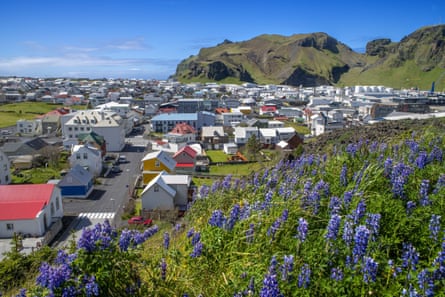
It was only when huge areas of Iceland started turning purple that authorities realised they had made a mistake. By then, it was too late. The Nootka lupin, native to Alaska, had coated the sides of fjords, sent tendrils across mountain tops and covered lava fields, grasslands and protected areas.
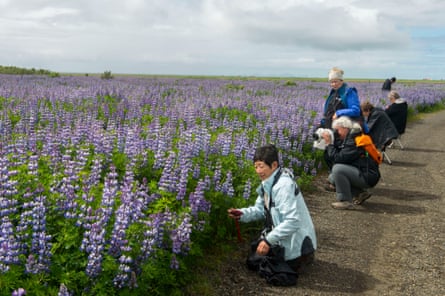
Since it arrived in the 1940s, it has become an accidental national symbol. Hordes of tourists and local people pose for photos in the ever-expanding fields in June and July, entranced by the delicate cones of flowers that cover the north Atlantic island.
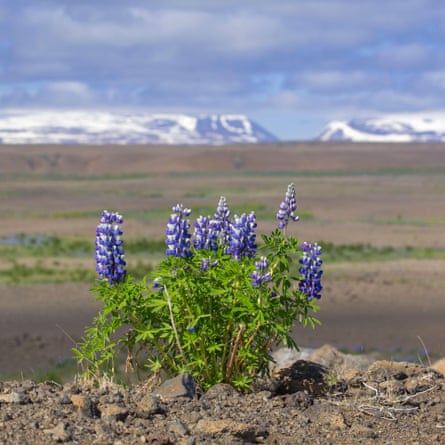
“The tourists love it. They change the dates of when they come to time it for the lupins. The flowers have become a part of Iceland’s image, especially in the summer,” says Leszek Nowakowski, a photographer based near Reykjavik.
“When people go to a waterfall or a glacier, they want to be stood around the flowers in photos. It makes it look epic … I had one guy who wanted me to photograph him proposing in the lupin fields with the waterfall in the background,” he says.
But despite the scramble for photos each summer, Icelanders have become divided about the flowers – and scientists are increasingly concerned that they pose a threat.
The lupins were first introduced in an attempt to hold the country’s dark volcanic soils together. A huge amount of soil was being driven into the Atlantic by ferocious winds and rain each year – a problem that endures today, with two-fifths of land now classified as significantly degraded.
The purple-blue blooms were the brainchild of Hákon Bjarnason, Iceland’s chief forester at the end of the second world war, who had seen them on a trip to Alaska. He believed the plant could stop the earth eroding by repairing the soil and fixing nitrogen into the ground. One day, many hoped, the soil quality would reach a point that could allow the island’s forests to return.
Now, there is broad agreement among most Icelandic scientists that the experiment has gone too far. The lupin occupies just 0.3% of Iceland, according to the most recent satellite assessment in 2017, but it is classified as an invasive species and continues to spread around the island at a rapid pace without human help, often squeezing out native plants and grasses. Scientists expect lupin coverage to have tripled by the next assessment in 2027, turbocharged by a warming climate. In the coming years, one study estimates that the species could grow to cover nearly a sixth of Iceland.
“The history of the lupin in Iceland is one of good intentions and unexpected consequences,” says Pawel Wasowicz, director of botany at the Natural Science Institute. “Back in 1945, nobody knew about invasive species. The term didn’t exist. Nobody had an idea of climate change. You could get free packets of seeds at petrol stations to spread it. That’s how the invasion started. They thought it would be a medicine that solved their problems, but it has spread far more than expected,” he says. There are no serious efforts from Icelandic authorities to control its spread nationally.
Many Icelanders have fallen in love with the plant and the ever-expanding burst of summer colour, however. Fields of lupins have become a go-to backdrop for local newlyweds posing in the midnight summer sun. Some have even clubbed together in Facebook groups in defiance of government efforts to control the invasive species, celebrating its beauty and pledging to continue its spread.
“Because it’s so beautiful, it is often used in adverts for the country by tourism companies,” says Guðrún Óskarsdóttir, a plant ecologist working in eastern Iceland on the impacts of the plant.
Those who love the lupin argue that it has successfully helped regenerate plant cover over time, just as Bjarnason intended when he brought it back from Alaska. Up to 40% of Iceland was covered in forest when the Vikings arrived in the ninth century, but more than a millennium of deforestation and sheep farming has resulted in significant desertification. Advocates say the lupin is helping. But Óskarsdóttir says it is not so simple.
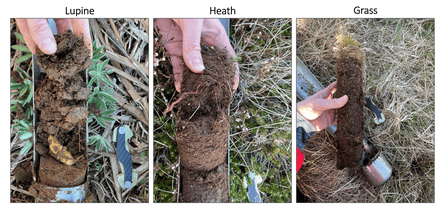
“Revegetating land with lupins is like fixing a toothache with a rock. It’ll work, but you’ll most likely damage a whole lot of other things that weren’t damaged to begin with,” she says, explaining that the spread of lupins in some mountainous areas at the expense of native plants has been linked to landslides in some cases due to the effect on soil strength.
In areas where the lupin was first sown in southern Iceland, the moss layer beneath the flowers developed to the point that the flowers lost the ability to reproduce, giving way to native plants again. But scientists say this process will only play out in some parts of Iceland, meaning the lupins will continue to spread and dominate. For now, scientists say it is too late to eradicate the flowers. Instead, the best option may just be holding them back from some of the most biodiverse and precious areas.
“It won’t crash. The number of lupins will just peak and plateau,” says Wasowicz. “The question is not whether it is good or bad, probably. When you look at the lupins in June, it’s really beautiful. But how much change are you willing to accept? And what will follow? That is the problem.”
Find more age of extinction coverage here, and follow the biodiversity reporters Phoebe Weston and Patrick Greenfield in the Guardian app for more nature coverage