.png) 4 hours ago
6
4 hours ago
6
The factories were just part of the landscape for Hélène Duguy growing up in the heart of an area known as France’s “Chemical Valley”.
“Those factories are visible from my mother’s apartment,” says Duguy, 34, whose mother still lives in St-Genis-Laval, south of Lyon.
Until recently, her mother did not accept that there might be any danger associated with living in close proximity to chemical factories. “She just trusted the municipalities to do their job,” Duguy says. “I think it remained something quite remote for her – she understood there was a problem, but Pfas is invisible, so it’s very hard to understand the reality of it and what it could mean for you.”
It was only after a warning was issued about the safety of homegrown food and locally produced eggs that the scale of the contamination became more tangible. “She’s now even considering selling her flat,” Duguy says. “I was with her last weekend and I told her that for me, the contamination she is exposed to continuously is extremely worrying […] Here I feel very close to people who I was raised with, so this makes the issue very relatable, very tangible, and also it makes the fight more concrete.”
Today, as an ambitious young lawyer, Duguy is part of a team taking the companies running the factories to court.
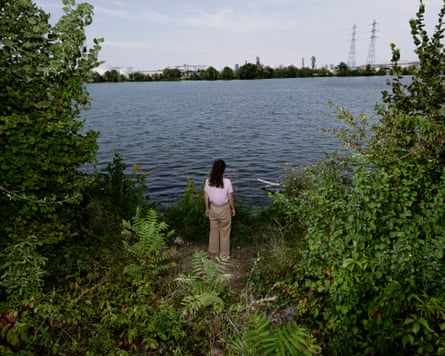
“I have a very deep sense of justice and law has really become the way for me to express that,” says Duguy, who joined the ClientEarth legal team six years ago.
The NGO, which describes itself as “one of the world’s most ambitious environmental organisations”, has brought legal action against some of the biggest and most polluting companies in the world, from the fossil fuel firm Shell to the agricultural company Cargill.
Now it has set its sights on the chemical industry, and Duguy has been appointed to lead the charge. ClientEarth is challenging the EU’s reapproval of one of the most controversial pesticides – glyphosate. It also recently filed a complaint to the European Committee of Social Rights arguing the Belgian government has violated its residents’ rights to protection and health by failing to prevent widespread Pfas pollution.
Pfas are a class of thousands of chemicals used in a wide range of household products. They have been linked to cancer, birth defects, decreased immunity and other serious health problems. They are often described as “forever chemicals” because they do not break down in the environment.
Their use and production are associated with widespread environmental contamination, with pollution recorded at an estimated 17,000 sites across the UK and Europe. “We’re creating sacrifice zones for the sake of a toxic industry that has no place in a European society,” says Duguy. “Our goal is not just to get compensation, but to force regulators to act, and that’s why this litigation path is very strategic.”
As well as working on these cases, Duguy advises and supports lawyers across Europe. She advised lawyers on the Miteni case in Italy, in which 11 former executives from the chemical company received jail sentences of up to 17 years after they were found guilty of polluting the water and soil in a 100 sq km area with Pfas.
She is also supporting lawyers in France who are taking the chemical companies Arkema France and Daikin Chemical France to court for allegedly causing widespread pollution in St-Genis-Laval, at the heart of “Chemical Valley”.
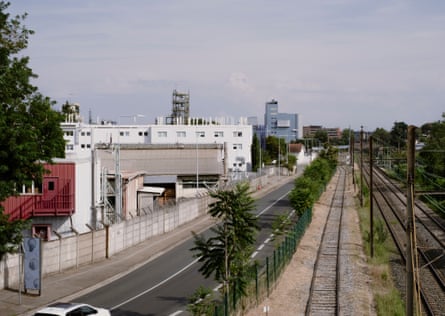
The scale of the pollution in the valley has unravelled over several years after journalistic investigations revealed the extent of the problem. Investigations have found Pfas in the air, soil and water, and in the blood of local people.
after newsletter promotion
Residents in towns around these factories, including in St-Genis-Laval, have been advised not to consume locally produced eggs or poultry meat. And yet despite these risks, locally led environmental campaigns have faced barriers over concerns the cost of the cleanup could affect jobs. This is a narrative Duguy believes has been “built by the industry”.
“When you think about creating a toxic-free environment or a toxic-free society, you need to look at everything holistically. If you have less jobs in those toxic industries, you could create new jobs in safe industries. While we keep providing opportunities for those toxic industries to thrive, we prevent other safe industries from really becoming important for the economy,” she says.
Still, Duguy acknowledges the argument can be hard to make when jobs are on the line. “I think NGOs often don’t really understand what’s happening at the local level,” she says, remembering the pride she herself felt at coming from somewhere that felt like a “hub of innovation”.
It is not just her personal background that Duguy believes makes her well placed to work on these cases. Before she joined ClientEarth, she worked at the law firm Squire Patton Boggs, providing advice to the very companies she is now seeking to hold to account.
In this role, Duguy was part of the firm’s public policy division, where she advised the industry on chemical and environmental law and how they could “limit the impact of those requirements on their businesses”.
While clearly conflicted by the time she spent doing this work, Duguy says the experience gave her an insight into why corporate actors think the way they do.
After one year in the role, she moved to ClientEarth and has set up a network of some of Europe’s best environmental lawyers. “We support each other, find synergies and collaborate,” she says. “It’s incredibly rich and also shows how much people are looking to access justice and to change things at all levels.”
For Duguy, the goal is simple: turn complex legal battles into real-world accountability before the damage becomes irreversible. “The problem with Pfas is that it’s something that you cannot grasp, but hopefully those actions that we’re launching will trigger some kind of emotion that can lead to action,” she says. “If not, we will just continue to face really awful consequences and then try to think of solutions when it’s too late.”