.png) 3 months ago
50
3 months ago
50
A protest movement in Iran that started as a small demonstration by shopkeepers in Tehran over a weakening currency has exploded into the largest nationwide uprising in years against the country’s theocratic leaders.
Fearing a threat to its decades-old grip on the country, the government has responded with deadly force. Rights groups have reported that hundreds of people have been killed by security forces and the state-backed Basij militia.
In an attempt to isolate the movement, authorities have shut down the internet and telephone networks.
Here is a guide to the Iranian protests:
Cars and buildings on fire as protests continue Iran’s capital – videoHow did the protests begin?
Demonstrations initially focused on economic issues after the rial went into freefall, losing half of its value against the dollar last year. The currency crash compounded an already dire situation, with high prices on basic foods and a worsening inflation rate that had been well over 30% for years.
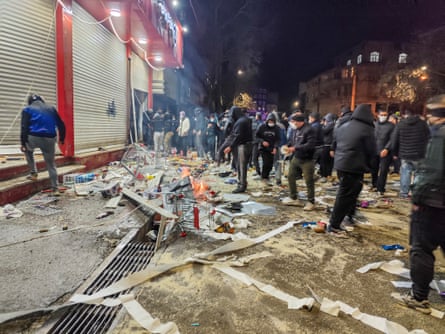
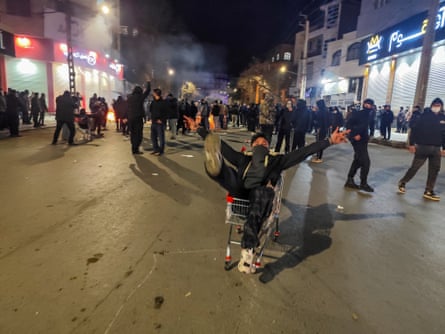
As the demonstrations spread they became more overtly political, with protesters chanting “death to the dictator”, a reference to the supreme leader, Ayatollah Ali Khamenei. Photos from the demonstrations show burning cars and smashed up shops.
What has been the regime’s response?
Security forces have killed hundreds of protesters and arrested thousands, according to exiled rights groups that are in contact with Iranian activists.
These figures are hard to independently verify in a closed media environment. The global media watchdog Reporters Without Borders (RSF) says Iran is “one of the world’s most repressive countries” for press freedom, and places it 176 out of 180 on its World Press Freedom Index.
Still, protesters have managed to post videos of the rallies – and footage of dead bodies – online using satellite internet services.
Gunshots heard amid sound of banging on pots and pans in Mashhad protests – videoPro-government rallies were also held in central Tehran on Monday, according to state media. These are being encouraged by the authorities.
How do the rallies compare to previous protest movements?
Iran has been ruled by autocrats since 1979. For the past two decades, there has been wave after wave of protests – often led by students – calling for regime change.
Significant moments include a public outcry over the disputed 2009 presidential election and the crackdown on the 2022-23 “Woman, life, freedom” movement that was sparked by the death in custody of Mahsa Amini, who had been arrested for allegedly wearing her hijab the wrong way.
Anti-government observers say the protests are growing in size and concentration, but it is difficult to verify those claims without independent observers on the ground.
One noteworthy aspect of this year’s protests has been references to Reza Pahlavi, the exiled son of Iran’s deposed shah. Videos have shown crowds calling for the return of the shah, who is based in the US, although it is unclear how widespread the support is for the former monarchy.
What is the international response?
Iran’s president, Masoud Pezeshkian, who came to power 18 months ago vowing to reform the economy, has accused “rioters” and the government’s arch-enemies – the US and Israel – of being behind the uprising.
Donald Trump has said he is considering “very strong” military action against the regime, and there are fears that violent intervention by Washington could inflame the situation. The US president is reportedly weighing a range of options including using cyber-weapons and widening sanctions.
The US and Israel openly call for regime change. Last summer, Israel waged a 12-day bombing campaign against Iran that targeted top military commanders and destroyed air defences. The US joined the war, bombing nuclear facilities.