.png) 1 month ago
43
1 month ago
43
I’m aware that, fittingly, I’m dancing across hot coals by tackling souvlaki: in her book Taverna, Georgina Hayden devotes an entire page to the subtle differences between Greek and Cypriot barbecued meat kebabs (souvla, souvlaki, kalamaki, kontosouvli … the list goes on), yet, as Carolina Doriti observes in her beginner’s guide, “the beauty of souvlaki, Greece’s most popular street food, is its simplicity”. Though I’d steer you elsewhere for a more definitive explanation of what qualifies in different places, the name comes from the word souvla, or “skewer”; souvlaki is the diminutive, and it’s usually cooked on small skewers rather than on a big spit. That’s all you need to know, because – although what’s on there, how it’s seasoned and what accompanies it changes according to region and season – the ancient pleasure of smoky, juicy, grilled meat (as featured in the Iliad!) or indeed vegetables, remains the same wherever you go.
The meat
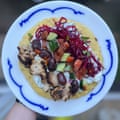
Pork and chicken are the most popular choices, though I’m assured lamb souvlaki is increasingly available; for meat-free alternatives, Olive magazine has a recipe with halloumi, and Lambrinaki in Athens serves a mushroom version. Though I decide to focus on chicken, which is, in my opinion, the meat that benefits the most from a bit of help in the flavour department, you could substitute a quick-cooking cut such as leg or loin of pork for the chicken below.
Hayden and chef Stuart Ralston both use chicken thigh, but breast seems more popular. Both are tasty – what chargrilled protein isn’t? – but the higher fat content of the thigh keeps it juicier. (Using a combination would work well, too, but ideally thread them on to separate skewers because they cook at a different rate.)
Though there’s no need to get out the measuring tape, chunks of about 3cm are ideal. Unless you’re also lucky enough to have a proper foukou charcoal grill, chef Theo Michaels’ 5cm cubes start to burn on the outside before they’re done in the middle, while anything smaller risks drying out. (This is the fault of my equipment rather than Michaels’ recipe. He does make it abundantly clear that: “As soon as it is cooked through, remove from the heat. I can’t emphasise this enough.” Can’t say I wasn’t warned.)
The marinade
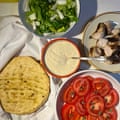
Akis Petretzikis reckons that the “secret ingredient in this recipe is the brine”, which he infuses with lemon juice, bay leaves, parsley, thyme, garlic, pepper and honey, and goes on to describe his version as “the best chicken souvlaki you ever tried”. The chicken, nicely seasoned though it is, has what one of my testers describes as a slightly “rubbery” texture. I know what she means: despite being perfectly cooked, there’s a definite bounciness between the teeth that I put down to the extra moisture it has absorbed.
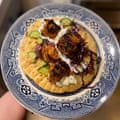
Hayden, meanwhile, uses a yoghurt-based marinade seasoned with garlic, lemon zest and olive oil, which does a remarkable job of softening the chicken even in a mere 30 minutes and proves more popular than Yvonne Ruperti’s bracingly acidic marinade for Serious Eats, which, while it does sterling work as a salad dressing, dries out the meat; mine looks halfway cooked after being left to steep for two hours. Ralston, meanwhile, whose recipe in his book Catalogued Ideas and Random Thoughts is inspired by the gyro stands of Astoria in Queens, New York, marinates his meat in a mix of garlic, smoked paprika, cumin, garlic powder, coriander, cinnamon, fresh oregano, mint and dill, all brought together with olive oil but without any tenderising acid, which is perhaps wise, given that he recommends leaving it to sit overnight. The results are very nice too – complex and smoky – but, like Michaels, I’m going to keep things even simpler: he uses lemon juice and zest, garlic, smoked paprika and olive oil, while I’ve gone for a sprinkling of salt, and seasoned the meat with garlic, oregano and lemon zest, all mixed with oil and left for just half an hour to do its magic, though, as Michaels observes, you could “just get on with it”.
The cooking
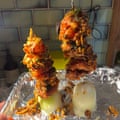
These really need to be cooked on skewers to qualify – metal for preference, because that will conduct heat better through the centre – because it’s hard to replicate the same charred yet juicy results without snuggling the meat together, concertina fashion. Traditionally, of course, and in millions of restaurant kitchens and back yards to this day, this was done over a charcoal grill; like Hayden, I’ve lived in areas of London where, “on any given Sunday, you can walk the streets and be greeted by the smell of souvla” – and if this option is open to you, it’s always going to be the best one, especially if you have the aforementioned foukou. The second best, however, is a smoking hot griddle pan; oil it first, and keep an eye on the meat, turning it regularly so it doesn’t burn. A very respectable third method, to my surprise, is Ralston’s genius idea of sticking the skewers of meat into half an onion and roasting them upright in a hot oven, which to some extent replicates the effect of a gyros cooked on a vertical rotisserie. Plus, you can eat the onion afterwards.
The accompaniments
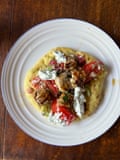
According to Hayden, order souvlaki in northern Greece and you’ll receive just the skewers, “straight up”, whereas, as I can confirm, in Athens and the south they’ll usually arrive encased in a fluffy pitta with salad and sauces (in Cyprus, she says, souvlaki can refer to either). Even the bread isn’t simple: Cypriot pittas are thinner, and can be opened into pockets, more like the Arabic version widely sold in British supermarkets, while the Greek variety are thicker and fluffier, and designed to be folded around the filling. I was lucky enough to find them in the freezer at a local Greek cafe, but both are fairly easy to make at home should you wish to upgrade from the long-life ones (personally, I’m team fluff, because it’s far better for soaking up all the lovely juices from the meat).
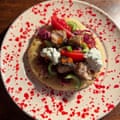
Hayden, Michaels and Ruperti all serve their souvlaki topped with tzatziki; Petretzikis makes a sweet and tangy, honey-and-mustard, yoghurt-based sauce; and Ralston serves his with hummus, presumably in a fond nod to the gyro trucks of Astoria. All are, of course, delicious, but I can never pass over tzatziki, which feels like a sauce and a salad in one – though there’s always room for some ripe tomatoes, crisp slices of cucumber and Hayden’s lovely, crunchy, shredded cabbage with onion on top. Personally, I can take or leave Petretzikis’ lettuce in this situation, but other options include spring onions, Ruperti’s crumbled feta and picked parsley, and Hayden’s barbecued black olives, pickled chillies and chilli sauce (chilli sauce is rarely a bad thing to have on the table). You could add chips, too, but that’s up to you.
Perfect chicken souvlaki
Prep 15 min
Marinate 30 min
Cook 15 min
Serves 2, and easily doubled
4 skinless, boneless chicken thighs
Salt
1 unwaxed lemon
1 tsp dried oregano
1 garlic clove, peeled and crushed
Oil, to grease
1 wedge white or red cabbage (optional)
¼ red onion
1 ripe tomato
⅙ cucumber
2 pitta, or similar flatbreads
Chilli sauce of your choice
Tzatziki, to serve (optional; my recipe is here)
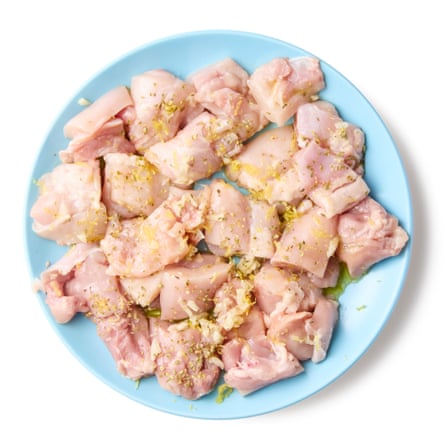
Cut the chicken into roughly 3cm cubes. Put on a plate or shallow bowl and lightly sprinkle with salt, turning so it’s evenly distributed. Zest the lemon and mix the citrus peel with the oregano, crushed garlic and a tablespoon of oil, then stir into the chicken. Cover and leave, preferably at room temperature (unless the day is very warm), for 30 minutes. Light the barbecue, if using (if you’re using a griddle pan, oil it lightly and heat it over a high flame just before cooking).
Meanwhile, if serving the cabbage, finely shred it and sprinkle lightly with salt. Peel and finely slice the onion and squeeze over the lemon juice. Leave both to sit.
Once you’re ready to cook, thread the chicken on to metal skewers, pushing the pieces together. Lay these on the grill and cook for 15-18 minutes, turning as necessary, until cooked all the way through – keep checking towards the end of this time and, as soon as they’re done, take off the heat and set aside to rest.
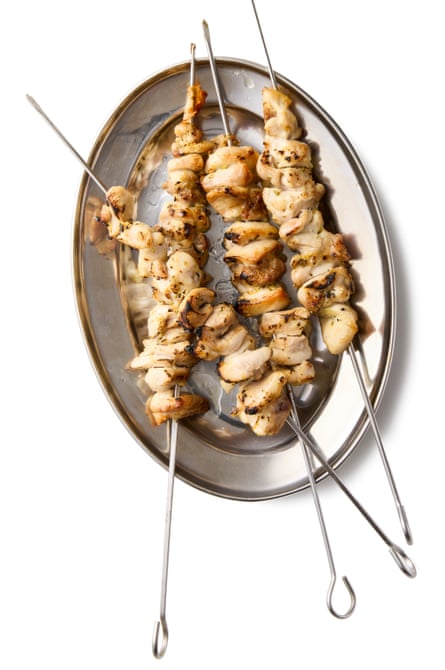
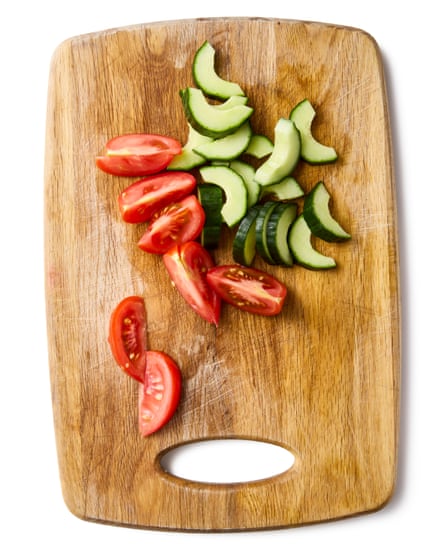
While the chicken is cooking, toss together the cabbage and onion mixtures. Slice the tomato into wedges. Cut the cucumber into two long halves, scrape out and discard the seeds, then cut into chunky half-moons.
Sprinkle the pittas with water and heat them on the grill or griddle. Serve with the other ingredients to assemble at the table.
-
Souvlaki, kalamaki, gyros – what are your favourite Greek and Cypriot things on sticks, and how do you make them? Or, if you have a favourite source – whether it’s the restaurant around the corner or somewhere you visited on holiday a decade ago – please do share!