.png) 2 months ago
69
2 months ago
69
I had heard the name Alessandro Casolari on and off for years. From 2016 onwards, when I was researching my book on Italy’s ultras – a cross between English football hooligans and Hells Angels – the nickname “Caso” kept coming up. In the late 80s and early 90s, he had led the ultras in Ferrara, whose football club is known as Spal.
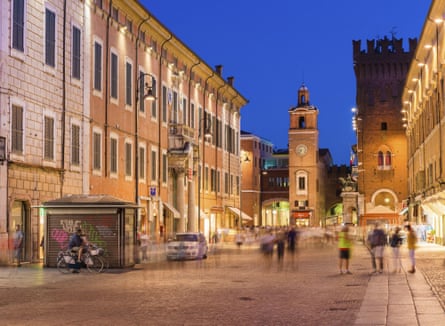
A red-brick city in northern Italy between Bologna and Venice, Ferrara has always felt sidelined, languishing in a marshy land of fog and floods. I used to go there quite often, drawn by its festivals and famous writers and film directors. A few years ago, when I started writing another book, about the Po River, I hung out there again, but I never bumped into Caso.
Then, in December 2024, he called me out of the blue, having got my number from a mutual friend. He was talking non-stop, weaving together stories about Caracas, Medellín, cocaine and Kosovo. He was jumping from one story to the next, and they were all connected by a dozen subplots he had to explain at length. Every other sentence ended “hai capito?”: “you get it?”
I picked up that there had been a murder in 1998, which was how he had ended up at a funeral next to a man who had just won the lottery. That money allowed them both to go to Colombia, which is how Casolari met his wife and made contact with the Farc guerrillas (Revolutionary Armed Forces of Colombia), started working in hostage negotiation and then ended up importing hundreds of kilos of cocaine to northern Italy. It sounded far-fetched, but he seemed to know the whole jungle-to-mirror journey of cocaine. Getting a question in was like chucking a paper plane into a gale.
Around the hour mark he slowed down a bit. He told me had just been “held captive” (his term for prison) for 177 days. “Eighty-two in solitary, hai capito?” That was why he was phoning: he wanted me to write an article denouncing human-rights abuses in Italian prisons. He had, he said, suffered “a broken nose and a compound fracture of the right cheekbone”, thanks to beatings by guards. “When I was arrested, I weighed 74kg; by the end I was a larva, weighing just 61kg.”
“Hang on,” I said. “Why were you in prison?”
“I only gave someone four slaps. That was it.” He said he would send me links to the newspaper coverage, but he wanted me to know it was mostly rubbish because “the police, the judiciary and the Italian institutions are a mafia-infested wormery”. As “a Marxist-Leninist communist revolutionary”, he had declared himself “a political prisoner”.
He only ever spoke the truth, he told me. “My calling card is unequivocal: I’m a loyal person, an extremely sincere person. I never exaggerate or downplay my experiences.” His language – “larva”, “wormery”, that “unequivocal calling card” – was beguiling, even though I was aware he had avoided telling me that bit about the four slaps. (I later learned that the formal accusation – since cable ties, guns and a Taser were involved – was aggravated robbery, kidnapping and the transfer of explosive devices.)
It was a world I thought I knew. I teach and mentor a few ex-offenders. And I often write about criminals. I know how the journalist-criminal dynamic usually ends: one of us betrays the other. Sometimes they feel as if I’ve stolen their story. Or I discover, too late, that I’ve been sold a story that exists only in their head.
So I assumed that with Casolari the relationship, or the story, might be built on sand. But I was fascinated by him because he seemed to take the ultra philosophy – that there has to be confrontation, there must always be a fight – to the next level, while disguising it with charm and eloquence. “He’s verbally very sophisticated,” Maresciallo Maggiore Giuseppe Fenuta, the officer who arrested him after the “four slaps” incident, warned me.
Casolari and I even had a few things in common. His politics wasn’t so far from mine (he a communist, me a communalist). We had both married outside our nationality and had children in their teens and 20s. Like me, he was a freelancer of sorts, another lone hustler. I was interested in what my life might have looked like if the kaleidoscope of fate had been turned a few degrees. So in January 2025 I went to Ferrara to meet him.
Casolari was under house arrest, pending his trial. Because he had a new lover, his wife had kicked him out of the family home and he was renting a small flat just south of the city walls. He was showily courteous. His tough look – skinhead, stubble, boxer’s nose – was somewhat undermined by his goofy smile.
When we got down to business, he started pacing like a trapped animal, talking double-quick, just as he had on the phone. I couldn’t pin down the details on any of the previous stories because he was constantly launching into new ones. He spoke about his time in the army and in prison, about Marx, Bobby Sands, Jesus, Che Guevara and Hugo Chávez. If I butted in, he stopped and listened, examined the idea, and then set off again.
I quickly noticed a logistical problem. We were facing different directions: I wanted to hear all about his past, but he was using me as a sounding board to figure out his next move. There was an Italian being held hostage in Caracas whom he thought he could “bring home” in return for a pardon. Or maybe he would become a mercenary. Or a peacekeeper. He was going to call his friend, Renato Curcio – founder of the far-left terrorist group the Red Brigades in 1970, who had set up a publishing house while he was in prison – to pitch the idea of writing a prison diary. This wouldn’t have been Casolari’s first foray into publishing: he had already co-authored a book about his ultra gang, Gruppo d’Azione. Did I have any advice about royalties? Rather than writing about his life, I felt I might become his careers adviser.
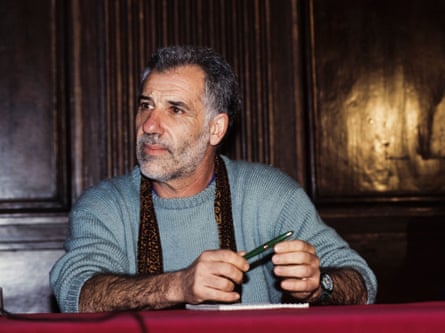
But over the months that followed, each time I found myself in Ferrara for other reasons, I would want a bit more of the story and go back to Casolari’s bedsit. After his house arrest ended in autumn 2025, he began driving me round the city and sometimes we would have lunch with his two sons. We went to Rome together for a conference organised by Curcio’s publishing house.
I was fascinated by him as a character study: he was both a misfit – a short-fused tough growing up in rich and bourgeois Ferrara – but also, in a fairground mirror way, a distorted reflection of this traditionally leftwing city.
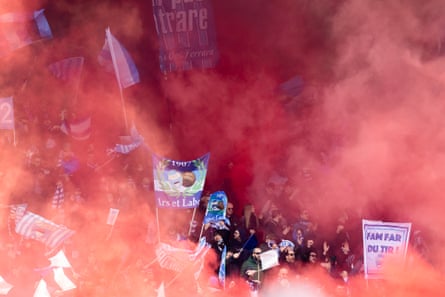
He was born in Ferrara in June 1966. His father was the son of local farmers, his mother the daughter of a Sicilian lawyer. He spent 11 years in the private convent school of Sant’Orsola and studied languages – Latin, French and English – at the city’s Ariosto lycée. He read a lot. He had been going to the football on and off with his father since the age of nine, but at 16 he had started hanging out with the Spal ultras (Spal is an acronym of Società Polisportiva Ars et Labor). A subculture born in the 1960s, the ultras were macho fist-fighters. Unlike British hooligans, they were structured hierarchically and were experts at inserting themselves forcefully into local politics. Casolari enjoyed the riotous atmosphere and, with his new friends, developed a lifelong taste for cannabis.
After leaving school in 1984, aged 18, he spent his nine months of military service with the Italian parachute regiment in Livorno. Every six weeks he came home on leave and talked about bringing together the archipelago of Spal’s ultra groups – the Nutty Boys, the Legion of Hooligans, the Estense Ditch, Stoned Again, the Fringe, Astra-Alcohol and many more – into a single unit, thereby making them a better fighting, and lobbying, force. Uniting them all under one banner took cunning and muscle. “Caso was pure charisma,” remembers one of his many exes, who did not want to be named.
On 2 November 1986, at the away game against Padova, a new banner was unfurled, reading: “Gruppo d’Azione”. This “action group” was to be the “military wing” of the west terrace. They were set up to fight ultra gangs from other teams. For home games, they had a different banner, 50 metres long: “Gioventù Estense”, meaning “Estense youth”. (“Estense” is the adjective for the Este family that ruled Ferrara in the middle ages.)
With his black curls, faded denim and maxed-out megaphone, Casolari led the terrace chants. His boys were called “gremlins” because they wore green bomber jackets. Their mottoes – “Hit everything, educate no one”, “City fights and getting shit-faced” – made their interests clear: drugs, violence, thrill-seeking. Every Tuesday, from 9pm, the ultras gathered in Bar Astra. There might be anything from 50 to 200 there, herded by eight members of the “board”. “I always took the final decision,” Casolari told me. In rival cities, the ultras looked to cause maximum carnage as they sang their anthems, “Di legno Siam” (“We’re made of wood”) or – to the tune of Red River Valley – “… the city will be destroyed”. Already off their faces, they would break into chemists to top up on Valium or Rohypnol. Since the birth of the ultra movement, at least 19 people have died in football-related violence in Italy.
Casolari picked up seasonal work weighing and unloading sugar beet in the local factory. He supplemented his income through petty theft. He was first arrested in 1986 for mugging the son of a policeman. He was sentenced to 12 months but never served due to a general amnesty for minor crimes, to reduce the prison population. A year later, aged 21, he began a relationship with a 14-year-old, Annina*. (The age of consent in Italy was, and is, 14.)
Casolari’s men took positions on local issues. In 1989, they staged protests against the city’s plan to bury hazardous waste in local landfills. Casolari organised marches and – a sign of how much the ultras were seen as spokesmen for local grievances – was even welcomed into schools to talk with teachers and students. On one occasion he and his followers interrupted a city council debate to protest against the hazardous waste dumping. “He led a popular revolt,” another ex-girlfriend told me. “He always knew how to talk, what to say.” It made no difference, though. The toxins were buried in a landfill outside the city, and other sites across Emilia-Romagna.
In 1990, he was arrested again, after a fight in a pub, though he didn’t serve a custodial sentence. His time as an ultra boss came to an abrupt halt two years later, at a European under-21s game played in Spal’s stadium. Police had confiscated a box of smoke flares from the ultras, but someone retook possession of the box and the flares were quickly passed around. When Casolari unscrewed the bottom of his and pulled the cord, instead of coloured smoke, it fired a nautical flare that struck a young woman standing nearby, causing serious head injuries.
It emerged from the subsequent investigation that the company, Parente, from which the flares had been bought, had a sideline in other materials and the smoke flares had become mixed up with the nautical ones. The injured young woman and her parents sued Casolari, Parente, the ministry of the interior and Spal. In March 1996, the family was awarded damages of 200m lire (about €174,000 in today’s money). A later ruling divided the damages between the accused, leaving Casolari with 70% of the total to pay.
His life fell apart. He was banned from the stadium. All his future earnings would be taxed for that compensation. He and Annina split up. His parents had a tobacconist in the centre of town selling cigarettes, watches and pens. Later they had a jewellery shop. “I was a dimwit,” he said, “dipping into my father’s wallet, stealing blocks of cigarettes.” “It was always his family,” his younger brother Luca told me wearily, “who paid the price for his adventures.”
Casolari continued to smoke weed and have regular run-ins with the police. In 1995, he was arrested for holding a Nigerian sex worker hostage and was sentenced to nine months, later commuted to “conditional liberty”. (After a year with him in which he admitted to pretty much everything of which he was accused, his denial of this one – he said it was a case of mistaken identity – stood out.) He was sent to prison from May to August that year for fighting a carabiniere when – after a long night partying – he drove the wrong way down a one-way street.
At that point, he was just another petty criminal, a street-fighting stoner with sticky fingers. But during those months in prison Casolari met a Colombian who would be the reason he ended up in Medellín, becoming a husband, father and amateur drug lord.
Casolari likes to see himself as a good guy. In his telling, even his wildest escapades begin with an act of kindness. In prison, he met Julio, a Colombian who had been convicted for cocaine smuggling. When Julio’s prison supplies of sugar and pasta kept getting stolen by other prisoners, Casolari and an old ultra mate decided to attack the thugs who were stealing his supplies. From there, a friendship grew.
Casolari introduced Julio to his uncle, a lawyer, who managed to get him transferred to an open prison. They corresponded for years, Julio sending postcards written in courteous English. Casolari has kept them all. There are boxes of archives – diaries, letters and photographs – that pile up in cupboards like a tribute to his career.
On his release in 1996, after working a series of factory jobs, Casolari decided to enrol in the Italian army. “Being a soldier is a proletarian job,” he told me. “The officer class had a few fascists but apart from them, I didn’t struggle with the hierarchy.” He went twice to Kosovo and Bosnia and claims to have served in Afghanistan (though I had trouble verifying the latter). The appraisals from this period – at least the ones he showed me – are, surprisingly, glowing: “lively … loyal … constructive … esteemed”, though one report alludes to his “irritability”. He got shot in the arm in Kosovo. He is now the beneficiary of a veteran’s pension of €1,200 (£1,000) a month.
The army also gave him long leaves of absence. In October 1997, he was at a funeral in Ferrara of an ultra, Luca Sgambellone, who had murdered an old man and then overdosed. At the funeral Casolari met a man who confided that he had just won 66m lire (the equivalent, now, of about €56,000) on the football pools. Casolari suggested that they should go to Colombia to see Julio.
It all seems fantastical: a murder, a lottery win, an international adventure. Casolari appeared to have a super-human ability to bend destiny to his will. Or maybe – I wasn’t sure – it was just manipulation, using people as stepping stones in his grand schemes.
On New Year’s Day 1998, one of Julio’s relatives picked up the Italians at Bogotá airport. They spent a week in the capital and then two in San Andrés, a Colombian island in the Caribbean. It was there that Casolari met his future wife, Ana Eneida Mena Arias. She worked in marketing, one of the few Black people in her cohort of trainees, and was very successful on the doorstep. “I think customers were surprised or curious,” she said.
For a year after they met, Eneida received postcards from Casolari. She lived in a flat in Medellìn that shared a staircase phone and her neighbours sometimes told her that “an Italian” had called. Eventually Casolari got through and they spoke. “He seemed drunk,” she said, “telling me I could be a translator for Nato on a monthly salary of 3m lire [about €2,400 today].” He called her almost daily and she was slowly drawn into his vision for their future. She came to Ferrara in February 2001. In May they married, Casolari wearing his rifleman’s uniform. “It all happened so quickly,” Eneida said.
The following year their first son was born. The Spal president gave Eneida a job in his cleaning firm. (Club presidents often give ultras and their families jobs to keep them sweet.) In 2005, Casolari left the army, and he and other radicals in Ferrara set up an association with his ultra mates called Uno Sguardo Verso Sud (“A glance to the south”), which aimed to raise awareness of the global south through debates and events. (Many ultra groups have charitable arms, although it is not always clear how much charity actually goes on.)
In 2007, when Eneida was pregnant with their second son, the family spent four months in Colombia. Always an avid reader, Casolari came across a newspaper article about Gustavo Moncayo, the father of a Colombian corporal who had been kidnapped by Farc, the communist guerrilla movement, 10 years earlier. Moncayo was now walking all over the country in chains to raise awareness of his son’s captivity. Casolari phoned the paper, obtained Moncayo’s contact details, and the two met in Bogotá. It emerged that Moncayo was about to embark on a European tour to publicise the plight of Farc hostages. Casolari invited Moncayo to stay in Ferrara, and that autumn the two men spent a week together in Ferrara and Rome.
Casolari became involved in the ever-expanding group of Italians, both politicians and priests, lobbying for the release of hostages. He befriended Don Matteo Maria Zuppi, who is now archbishop of Bologna. He held meetings with the Red Cross and the Vatican embassy in Colombia. In December 2007, Casolari was part of a delegation, along with Moncayo, that visited Hugo Chávez in Caracas. Venezuela had long been an escape route for leftwing insurgents, and Chávez saw a chance of international acclaim if he could negotiate the release of hostages.
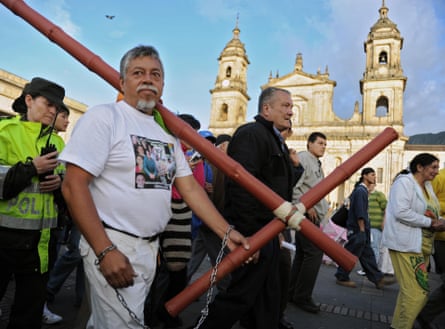
Photographs and letters attest to Casolari’s presence at various meetings with politicians and hostage relatives, both in Italy and South America. But it’s impossible to confirm the precise role Casolari played in the negotiations. “It was never completely clear what he was doing,” said Eneida. “He always has so many ideas and projects.”
Whatever the truth, in 2010, Pablo Moncayo was released after 12 years in captivity. Having publicly escorted his father, Gustavo, around Italy, Casolari could now boast, in provincial Ferrara, that he was an international hostage negotiator.
Over the months I spoke to Casolari, factchecking his stories became an increasingly fraught business. I spent weeks trying to find Julio, his old prison friend, to no avail. Casolari began to get angry when I pestered him for proof. “I’m not the sort of person who puts up with unwarranted rudeness,” he said in one of his long voice notes, “so I don’t know what to say to you.”
Yet despite these tensions, and the wild implausibility of what he said, I was surprised to find that much of what he told me checked out. In 2011, for instance, back in Ferrara, Casolari had another reinvention, moving from poacher to gamekeeper: the new president of Spal, Cesare Butelli, awarded Uno Sguardo Verso Sud the contract for setting up and manning matchday crowd-control barriers. Spal was then in Serie C, the Italian third division. Casolari acted on behalf of the club to negotiate repayments to restaurants who had been left with unpaid bills by players or the club president. I visited one of the restaurants seeking confirmation and the owner simply said: “Yes, that happened.”
With his newfound cash and Colombian contacts, the slide into cocaine-smuggling was almost inevitable. Casolari started moving just a few hundred grams, but since the delivery cost of €7,000 was the same whether moving 100 grams or a kilo, it made economic sense to step up the quantities. In 2017, he created a sort of criminal cooperative: former ultras and local heavies would pool their money and share the earnings.
He estimated that he smuggled “around 400 kilos”. Between 2018 and 2023 there were drops all across northern Italy: Sassuolo, Brescia, Verona, Padova and Bologna. “We never went south,” Casolari said. “They have different parishioners there, hai capito?”
For five years, Casolari lived the high life. He took to carrying “three to five thousand” in cash in the front left pocket of his jeans. He travelled the world with Eneida and his two sons: Iceland, Greece, the US, Canada, Colombia, the UK. “He was staying in top hotels, jumping in taxis,” one friend remembered. “He would buy any pair of trainers his kids wanted: bam, bam, bam.”
Technically he wasn’t even living in Ferrara. From 2018 to 2024 Casolari was resident in London, the director of a dummy company with a clumsy name: Italians Eat It Better. It was supposed to import olive oil, parmesan and wine to the UK. An Italian restaurant in a northern city of the UK offered to supply fake invoices.
Casolari claimed that what he was actually doing was bringing cash into the UK: every time he or associates visited the UK, they would take a bag containing up to €10,000 in notes, to add to his stash. Casolari claimed the accumulated money was banked with the Italian restaurateur in the UK, who is now looking after “around €1m”. (The man in question declined requests for an interview.)
His private life became messy: he claimed that in 2018 he fell for a Haitian escort and, when he couldn’t stand the idea of sharing her with other clients, paid her €2,000 a month to keep her to himself. Eventually he took up with another woman who lived a few doors down from the family home.
He was getting meaner. As the father of two biracial boys, he flipped if he ever heard racist language. One time, in the UK, someone made a comment. “Boom,” remembered the man dining with him. “He stood up and took this guy outside. You can tell he’s been in the army.” Casolari admited to his temper, but gilded it by saying it’s only provoked by injustice. He claimed that, when two young lads were disrespectful to his sons on a bus, he hunted them down, took them to the woods and put a pistol in their mouths to scare them. “I was in that criminal dynamic,” Casolari said. “If anyone pissed me off, I could call someone.”
“When he gets angry he’s capable of the worst,” said one of his friends. “He has to control everyone,” said one Spal ultra. “There’s a lot of ego,” another acquaintance of his told me. “He liked that people were scared of him. That’s what led to his downfall.”
Here’s what happened. One of Casolari’s coke clients, S, owed him €60,000. There were rumours that the debtor had a bitcoin fortune. On 22 August 2023, the man was lured to a flat by four of Casolari’s accomplices. Casolari came in with a balaclava and gloves. In the ensuing fight, Casolari’s balaclava was pulled off and S saw his face. “I gave him four punches in the mouth,” Casolari said (those were the “four slaps”). S was tied up and Casolari threatened him with a Taser and unloaded pistol.
Casolari left, expecting his men to discover the bitcoin code. But the operation became a farce. S wriggled free of the cable ties and jumped out of the window of the flat. The men chased him, took €100 from his wallet and used his bank card to withdraw €40. Those were the entire takings.
Investigators traced one of the kidnappers and recorded his phone calls. Casolari was put under surveillance. On 1 April 2024, he was arrested. Police confiscated 104 bullets, a sawn-off shotgun, 85 cartridges and 83 grams of cocaine.
Casolari spent almost six months in prison, much of it in solitary. “He was desperate,” remembered a visiting pastor, Giacomo Casolari (no relation). “He’s a man of great contradictions: he wants to be the best man in the world, but he’s got this battle-hardened, violent side.” He picked fights with guards and was, the pastor said, “brutally beaten up”.
When he was released from prison pending trial, Casolari’s relationship with his wife broke down. “I wouldn’t be silent any more,” said Eneida, adding that she now dared to interrupt his monologues, “and we fought a lot. Even physically, in front of our boys.” In September 2024 the couple formally separated. Six months later, in spring 2025, they were divorced.
In the year I spent with Casolari, I saw his plans shift continually. He wanted to claim political asylum in Venezuela, then in Cuba. He claimed to have contacted the Russians, offering to fight for them in Donbas (a strange choice for a communist opposed to imperialism). Sometimes he would tell me he was desperate to reconcile with his ex-wife (he even moved back into the family home, sleeping on a camp-bed in the garage). Other times that he was about to marry his new girlfriend.
Maybe that’s what being a career criminal is: endless improvisation. But it felt as if he was in the midst of an identity crisis. He was constantly trying to persuade himself he was, at heart, on the side of the angels. “I was only ever an ethical dealer,” he told me many times. “I only ever sold coke to people over 40, hai capito?” He talked about being a Robin Hood, but sometimes he saw himself as more like the sheriff of Ferrara, the bad guy. At other times he admitted to having suffered “a delirium of power”. “I fell into the trap of all shitheads,” he said. “I allowed myself to be adulated.”
During the months he awaited sentencing, being sent back to prison was his greatest fear. In his mind, prison turned him not into a culprit but a victim. He even went on a sort of hunger strike for 21 days (eating only walnuts and honey) while awaiting his sentencing, losing 9kg (1st 6lb). The Red Brigades veteran Renato Curcio’s publishing house has commissioned him to write that book about the injustices of Italian prison.
That’s why he had contacted me in the first place: to denounce prison abuses. And every time I accompanied him to a court appearance (related to the “four slaps” charges), the spectacle was the same: he was a box of hornets. In his flatcap and tweed suit from Scotland, he would go round his co-accused and their lawyers, hissing questions. He told me he would flee the country if given another custodial sentence.
He’s seeing a psychologist and has had some personal insights. “My inhibitory brakes often don’t work,” he admited. “And I don’t let other people speak. I am a bit of a megalomaniac.”
This introspection can be contagious. After spending so much time with Casolari I began to wonder why he wanted to share his life story with me. Was I being used to launder his reputation? He certainly wanted me to launder his money. He would frequently tell me about that “milioncino” (“a little million”) stashed in the UK, and twice he offered me 10% to bring it back to Ferrara. Spend enough time with criminals, and it becomes tempting to believe their tales. The way he told it, Casolari is only a suitcase away from getting back to the high life. His ex-partners perhaps see things more clearly. “He has his fantasy world,” said one, “and he wants to believe his fantasies are real.”
* Name has been changed