.png) 2 hours ago
5
2 hours ago
5
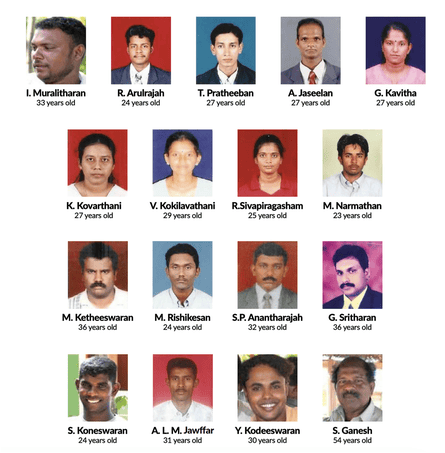
By the time their colleagues were able to reach them, their bodies had been lying in the dirt for around two days and were starting to decompose in the heat. On 6 August 2006, 17 Sri Lankan workers for the international NGO Action Against Hunger were found dead in the organisation’s compound in Muttur, Sri Lanka. They had been lined up and shot.
Many were recent graduates, brought on board to help with the NGO’s increased workload in the aftermath of the Boxing Day tsunami of 2004. All but one were Tamil. Four were women. Two were father and daughter.
Twenty years on, nobody has been held accountable. But there is hope that the Sri Lankan government’s recent decision to sign a global declaration on protecting aid workers may finally offer a chance for justice.
“It’s a terrible incident in my life,” says one former staff member who saw the bodies and spoke to the Guardian requesting anonymity. “Still I can’t sleep.”
Several investigations have implicated Sri Lankan security forces, although they have denied responsibility. Witnesses and family members say they have faced intimidation to stay silent.
Action Against Hunger (known by its French acronym, ACF) sent an official request to the Sri Lankan government in June requesting it open a fresh, impartial investigation. It has yet to receive a response.
The lack of justice “sends a signal that such attacks can go unpunished”, says Perrine Benoist, co-director of ACF France. “Today, we are witnessing a rise in attacks against humanitarians on an unprecedented scale. It is imperative that Sri Lankan authorities provide answers and justice is finally served.”
The ACF team had gone to Muttur by ferry from Trincomalee, their base across the bay, on 1 August to deliver aid. It was a trip they took regularly. But ongoing fighting between Sri Lankan government forces and rebel Tamil fighters meant the ferries had halted and the team was stuck in Muttur. They sheltered in the compound as much of the civilian population fled the town.
The last radio contact between the group and Trincomalee was on the morning of 4 August 2006.
Then, terrible rumours started to circulate. The former staffer recalls receiving a phone call from a local in Muttur who said there were human bodies in the ACF courtyard being attacked by crows and dogs.
The next two days were filled with desperate attempts by ACF colleagues to reach Muttur. When they finally made it to the compound, they found 15 bodies in front of the main building with bullet wounds to their heads, indicating they had been kneeling when shot. Two further bodies were found further away, behind a vehicle. All were wearing clothes that clearly identified them as ACF staff.
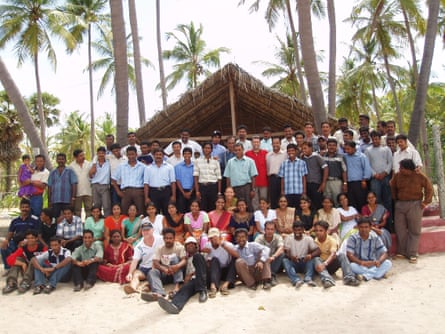
A colleague, Fabrice Carbonne, remembers the team as a dedicated one, volunteering to work at weekends when something needed fixing. When he had first arrived, he had been puzzled by how late local workers stayed at the office, before realising he was essentially hosting a “social club” where young men and women took the chance to escape strict social norms and mingle under cover of working late.
He had left his position as head of the Trincomalee base a month before the attack and was in Paris when he received a call from a former colleague, so upset he was almost incoherent. He recalls writing down the names of the dead on a scrap of paper.
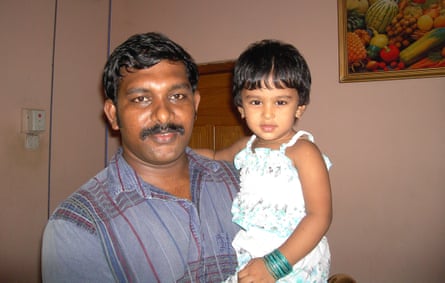
One was a particular friend – SP Anantharajah, 32, who had a two-year-old daughter. He had “no filter”, Carbonne says, recalling how, as a 26-year-old Frenchman, he had arrived in Trincomalee and introduced himself as the new boss, inviting questions. Most of the staff stayed quiet, but Anantharajah had asked: “How old are you, exactly?” And then, “How long are you going to stay? Because the last guy, he stayed three weeks and he’s gone. We want to know if we need to learn how to pronounce the complicated name you have or if it’s not worth it.”
Amuthan Sivajnanam, now 52, lost his sister, Kovarthani, 27, in the attack. She had joined ACF two years earlier, travelling to villages devastated by civil war to help families with safe drinking water and sanitation.
“She believed that humanitarian work was not simply a job. It was a calling. She was unmarried and dedicated her life to serving strangers who had lost everything,” he says.
Sivajnanam also worked for ACF, as a security guard. “We believed that humanitarian workers were protected by international law and by the basic conscience of humanity,” he says.
after newsletter promotion

Investigations by the Sri Lankan state in the two years after the massacre were marred by allegations of witness intimidation and evidence tampering. In 2013, ACF published a report alleging that the aid workers were killed by members of Sri Lankan security forces.
An investigation established by the UN Human Rights Office in 2014 agreed that “there are reasonable grounds to believe that members of the security forces committed the extrajudicial executions of the ACF staff”, although it also noted that the security forces blamed rebel Tamil fighters.
That investigation found that witnesses and legal officials working on the case had been threatened and harassed.
Even today, many former ACF staffers and family members will share their stories only anonymously, describing instances of continued witness intimidation.
Sivajnanam says families faced “enormous pressure not to speak to international journalists or human rights organisations … The message was unmistakable: remain silent or face the consequences.” Eventually, he fled to France, where he lives today.
Now, he says: “I refuse to remain anonymous because fear has already taken too much from us. I want the world to know my name, my sister’s name and the names of the 16 others who died with her.”
He wants international governments and organisations to press Sri Lanka for a credible investigation into the deaths.
Sivajnanam believes Sri Lankan security forces killed his sister and colleagues. “She was targeted, I believe, because she was a Tamil humanitarian worker whose life could be erased without consequences. That is what ethnic hatred does. It strips people of their names and professions and reduces them to an identity that can be eliminated without accountability,” he says.
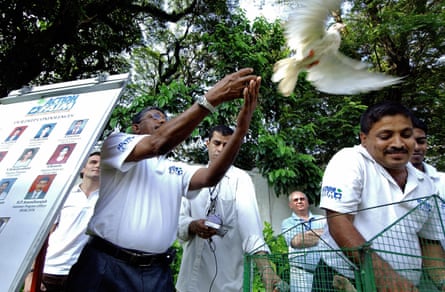
Sri Lanka is one of 118 countries that has signed the Declaration for the Protection of Humanitarian Personnel launched last year, which includes a commitment “to put an end to impunity and to ensure accountability for all attacks on humanitarian personnel”.
“Accountability processes are often long and difficult, particularly where domestic efforts have failed. That said, the passage of time does not diminish the obligation to investigate serious violations, or the rights of victims and their families to truth, justice and reparation,” says Antonia Mulvey, executive director of Legal Action Worldwide, an implementing partner of the declaration.
“With the recent change of government, Sri Lanka now has the opportunity to ensure accountability and justice for the families of the victims,” she adds.
Sri Lanka’s Ministry of Justice was approached for comment.