.png) 3 months ago
76
3 months ago
76
Roughly four hours after the first strikes hit Iran, the country was again plunged into a full internet blackout – severely curtailing the information that has left the country and the ability of Iranians to communicate with each other.
A small fraction of this blackout appears to be a result of infrastructure damage caused by US or Israeli strikes, possibly to a fibre optic cable, according to Doug Madory, at the internet analytics firm Kentik. There appeared to be several small outages affecting multiple networks, which could be caused by technical failures such as a fibre cut or power outage, he said.
But the blackout appears mostly to be the result of an intentional move by a regime desperate to keep a grip on power.
“It’s about control and it’s about even possibly slowing down the demise [of the regime],” said researchers at Project Ainita and the Outline Foundation, who focus on internet infrastructure and providing solutions against digital censorship.
“Because if all of a sudden you give in, and you give everybody connection and access to everybody else, then they could very easily come together and finish the job, so to speak.”
Iran first fully shut down its internet on 8 January, weeks into escalating anti-government protests over the price of currency. That full shutdown lasted nearly three weeks, until the government appeared to relax – but not fully end – restrictions on internet access on 28 January. It enabled Iran’s authorities to partly conceal a bloody crackdown on Iranian protesters that is estimated to have killed tens of thousands of people.
The latest blackout was almost as total as January’s shutdown, said the researchers, who work on Iran’s digital censorship and internet infrastructure. Mobile phones appear to be working inside the country but, apart from that, all of Iran’s connection to the outside world has been extinguished. Those without access to Starlink or alternative ways to communicate are cut off.
The communication blackout had increased the confusion inside Iran, said the researchers. On the one hand, it could lead more people to stay at home – Iranians may fear going out on to the streets if they are unable to reach each other or learn where is safe and where is not. On the other hand, it may cause people to congregate, because they are otherwise without information.
“You’re taking away people’s ability to check on one another,” they said. “But there’s always an element of risk, both for the government and for the people.”
Iran had long sought to control the flow of information within its borders, said the researchers, going so far as to blast microwave signals over rooftops in Tehran in recent years, in order to jam signals and prevent Iranians from tuning into foreign television and radios.
“They really tried hard with any and all means possible to block those channels even if it had major health ramifications for the country,” said the researchers.
This current cutoff recalled the days of fear after the fall of the shah and a decade of war in which it was nearly impossible to get information about missing family members, or the outside world, they said.
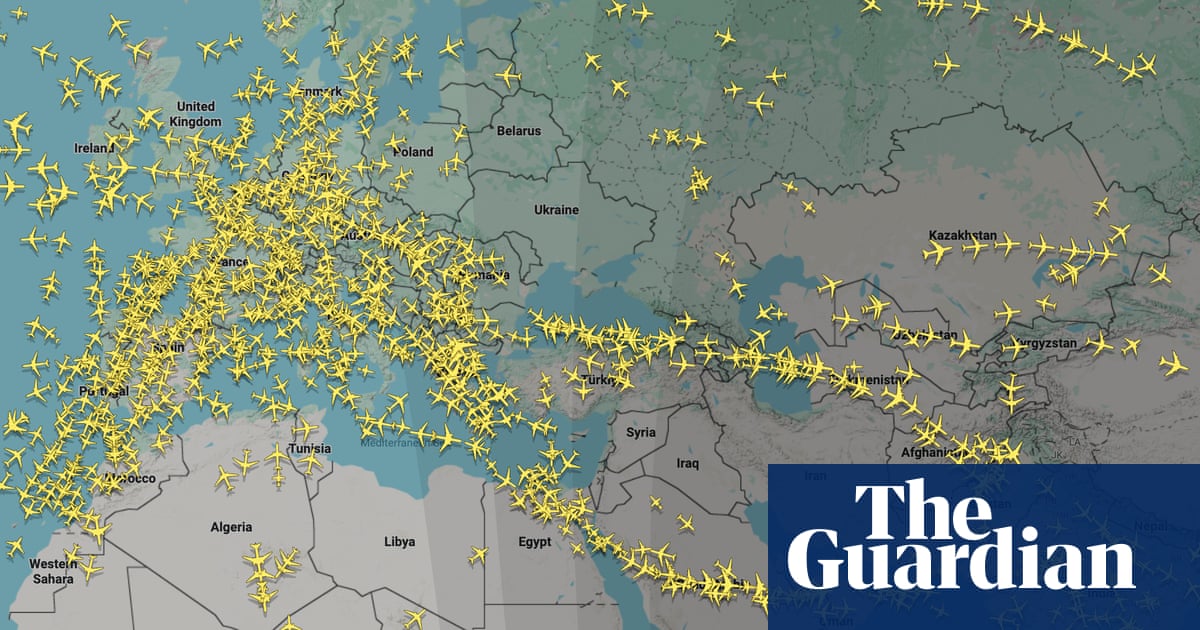
The internet blackout has added to an increasing feeling among normal Iranians of there being no escape, even as Turkey closes its land border and the airspace is shut.
“You have a sense of being trapped, right? On a normal day before all of this, where were the Iranians able to go without … getting a visa?” they said.
“There’s no escape route. And when you shut down the airspace, when you shut down the flights, when you close the borders, what else is there but entrapment?”