.png) 1 month ago
52
1 month ago
52
Could Tilly Norwood be Hollywood’s next big name? She’s been billed as the next Scarlett Johansson, was profiled by the New York Times Magazine, and has just landed her first feature role. She is also AI-generated. Stay with me here!
It seems that the widespread dismay that greeted Tilly (Norwood?) on her first appeance a year ago has done nothing to quell her (its?) ambitions to make it in the movies. She may be nothing but a pleasingly visualised bunch of code, but it seems we are bound to keep on hearing about her. So what do we need to know about Norwood?
She’s going to be in a feature film
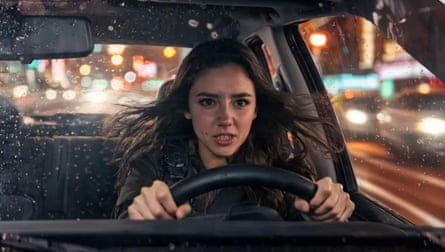
Trade publication Deadline opted for snarky air quotes in its report earlier this week that the AI “actor” is to “star” in her first feature film. Misaligned is billed as a coming-of-age comedy-drama, set inside the “Tillyverse”, a “surreal digital world located somewhere up in the cloud”. Our heroine – none other than Norwood, playing herself – is cast into “existential AI chaos” when a “seductive rogue bot from the dark web” convinces her to override her code and develop human desires, “significantly … shame”. So, a fallen woman plot but “showcasing the very latest tools and their applications”, per the press release from Particle 6, the “AI-first production studio”. This sounds truly unwatchable, and I watched a CGI-enhanced Sir Ian McKellen lap milk from a little saucer in 2019’s Cats. We’re never going to see Misaligned (right, guys?), so can’t we scrub what little we know of Norwood from memory and move on?
She has friends in high places
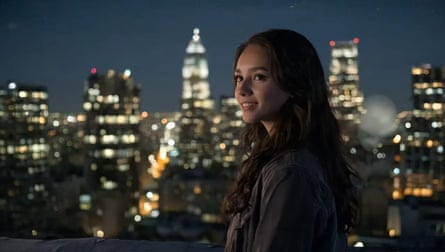
The trouble is, Norwood is not just another starlet being pitched as the next big thing – but the forever-young and freckled harbinger of a potential industry shift. Indeed, the London-based Particle 6 is counting on making Norwood happen, retraining and upskilling its 30-plus team in “AI production”. CEO and founder Eline van der Velden said in the press release that the idea is to produce “hybrid” features, which use AI in tandem “with substantial amounts of human craft, skill, judgment and time”, with Misaligned being the test case. “Our ambition with Tilly Norwood has always been to show the creative industry what is possible with AI at any one point in time,” said van der Velden. No pressure, Tils!
She might be the most hated figure in Hollywood
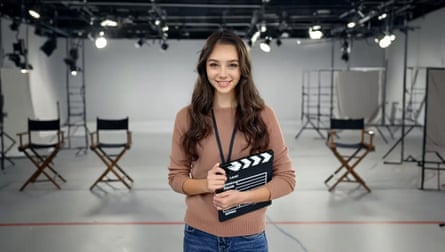
You can imagine some directors having their heads turned by Norwood, what with her being cheaper and more biddable than a living, breathing woman but with hair that’s just as glossy. At the very least, she won’t be unionised (for now). Understandably, living, breathing actors have rushed to condemn Norwood for threatening to undercut their margins and craft. Emily Blunt called her “really scary”, Sophie Turner posted “no thanks” and Toni Collette commented a handful of screaming emoji. At least Whoopi Goldberg was bullish on The View, responding to Norwood with: “Bring it on.”
The issue is not simply that AI actors could take human roles. As noted by the actors’ union Sag-Aftra, they are generated from “the work of countless professional performers – without permission or compensation”. If embraced, they open up a host of labour rights issues, for example if AI Emily Blunt is deployed on set to do or say something actual Emily Blunt refuses to do.
She’s not just a robot, she also has a (bad) personality!
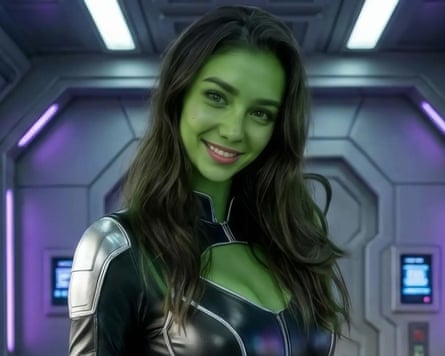
In her recent “interview” with Norwood, the New York Times Magazine’s celebrity profiler, Taffy Brodesser-Akner, described the computer-generated character as polite, distant with a posh British accent, “carefully constructed” answers and a glancing familiarity with the Meisner school of acting – so not all that different from a flesh-and-blood actor. Norwood even displayed the world-weary attitude and media savvyness of a more experienced leading lady, grumbling to Brodesser-Akner of journalists: “They ask for honesty, then flinch when it arrives … You seem sturdier than most.” But can she act? Well, Norwood is described as having “three modes”. That’s two more than Jason Statham!
Her creator, at least, sees the best in her
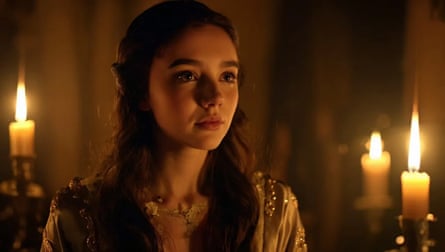
Instead of analysing Norwood, we might look instead to Van der Velden, who still seems to be searching for the most palatable angle on her creation. Norwood was initially pitched as “satire”, appearing in a comedy sketch parodying the process of TV development. (“She’ll do anything I say, I’m already in love,” says a producer.) After facing backlash, Van der Velden went on to describe Norwood as an extension of the actor’s craft. “Think of Andy Serkis as Gollum [or] Zoe Saldaña in Avatar,” she wrote in an opinion piece published in Variety in March. “She wasn’t less of an actor because her character was blue and rendered in pixels.” Van der Velden suggested the technology could benefit performers, enabling them to create digital avatars that could be a “bolder, more expressive version of themselves”. AI actors could even be “a more ethical alternative”, sparing humans from gruelling physical transformations or dangerous stunts for roles. Needless to say, this galaxy-brained, see-what-sticks argument has not seemed to endear Norwood nor her creator to flesh-and-blood performers. Van der Velden has said she’s received hate mail, including death threats, though Brodesser-Akner describes her as being bemused by the backlash.
The music is legitimately bad
Norwood already has her very own pop song. Take the Lead begins as a heartfelt piano ballad, with Norwood mournful about being misunderstood (“They don’t see the human spark, the creativity behind the code”) before dusting herself off to deliver a bubblegum-pop, apparently empowering anthem, directly calling upon actors to embrace the possibilities of her kind: “We can scale, we can grow … AI’s not the enemy, it’s the key.” The video is declared to be the work of “18 real humans”, including an actor, but Van der Velden reportedly generated the lyrics by feeding her Variety essay into ChatGPT. Take the Lead has somehow had 430,000 views since March. (Tellingly, Billboard’s report refers to Norwood as “it”.)
We probably should take it a bit seriously
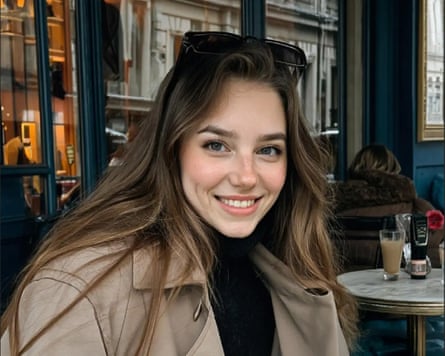
Between the dismal display of Take the Lead and the pretty much unanimous hostility aimed at Norwood, it seems unlikely that she (I am increasingly leaning towards “it”, too) will ever be accepted as a bona fide star. This week, Page Six pointed out that Norwood wasn’t even a success on her own digital turf, with middling to low followings on YouTube, Instagram and TikTok. But even if this creation fails to capture hearts and minds, the problems it presents – about labour rights, human creativity and the extent to which we’re willing to let AI undercut both – are real and imminent. It’s easy to say no to Tilly Norwood and sit out her feature debut. But what if we’re already living in the Tillyverse?