.png) 1 month ago
50
1 month ago
50
James Burrows, who has died aged 85, was one of the most influential figures in US television sitcoms for more than four decades. He was the co-creator and primary director of Cheers, one of America’s most beloved and successful sitcoms, which ran for 11 seasons between 1982 and 1993 and won 28 Primetime Emmy awards. Its final episode was second only to that of M*A*S*H as the most-watched of all time.
However, unlike producer/writers such as Nat Hiken, Norman Lear or Larry Gelbart, who had stamped their marks on previous generations, Burrows’ influence came entirely as a director. As such he was intimately involved in the creation of many shows, and enjoyed long runs on sitcoms such as the Cheers spin-off Frasier, Friends, and Will and Grace. For years he was the first-choice director of pilot episodes, used to sell programmes to the networks; he did almost 100 of them, including two versions of some, if the first produced only a lukewarm response.
Burrows was one of the first sitcom directors to use four cameras on his shoots, and was renowned for his careful lighting of sets. The extra camera allowed him to block out scenes more precisely, and to get better interaction on one-liner zingers. It was reminiscent of vaudeville or the best Broadway comedy – the cameras and editing leading the audience the way they would follow the performers on the stage. What was the Boston bar in Cheers but a single set on which the comedy played out?
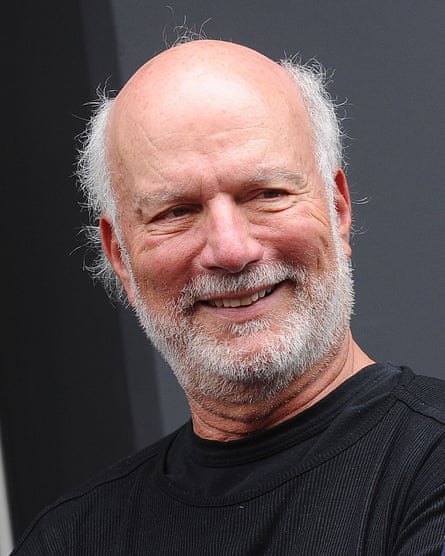
It took one season to make Cheers an overnight success, but much of it was down to Burrows’ direction. “I’m not a film director,” he explained. “The camera, I leave that to Spielberg and Scorsese. I’m a theatre rat. I stage a play every week, a 20- to 25-minute play, and then my camera comes in and covers it. I understand characters, I understand what’s funny, I understand the essence of keeping it moving and keeping the energy going. It’s all theatrical. If it doesn’t happen on that stage, it’s never gonna happen on film.”
And he had a sense for how actors would play their scenes. When the final cast of Friends had been chosen, Burrows was so confident in them that he took them away for a weekend, warning them that their lives would never be the same again.
Much American television, not just sitcoms, is structured like a family, and, Burrows said: “I guess I have a knack for creating families.” He may have come by his knack for directing sitcoms from his own family. Born in Los Angeles, he was the son of Ruth (nee Levinson) and Abe Burrows (ne Abram Borowitz). His father, at the time, was a writer and comedian in Hollywood. The family moved back to New York where Abe became a major figure on Broadway, writing and directing shows such as Guys and Dolls, Can-Can, and How to Succeed in Business Without Really Trying.
James attended the city’s High School of Music and Art, but, as he put it, “not wanting to compete with his father”, he took a degree in government at Oberlin College in Ohio, before earning a master’s in theatre writing from Yale School of Drama in 1965.
His first job was as dialogue director on the Burl Ives sitcom OK Crackerby!, which his father had created. By 1967 he was an assistant stage manager on the musical version of Breakfast at Tiffany’s, originally titled Holly Golightly, which starred Mary Tyler Moore. After directing and stage managing in New York, in 1974 he wrote to Moore and her then husband Grant Tinker, who had created The Mary Tyler Moore Show. Tinker started him directing episodes of Mary Tyler Moore and of The Bob Newhart Show, mentored by Jay Sandrich, whose own father had directed some of Fred Astaire’s best movies.
Burrows also directed MTM spinoffs such as Rhoda and Phyllis, as well as other 70s hits including Laverne and Shirley, and Taxi, of which he directed 75 episodes, working with the writer/producers (and fellow MTM alumni) Glen and Les Charles. They formed Charles-Burrows-Charles, and after Burrows’ only feature film, Partners, a comedy about undercover cops seeking a killer stalking gay men, was released in 1982, Cheers made its debut.
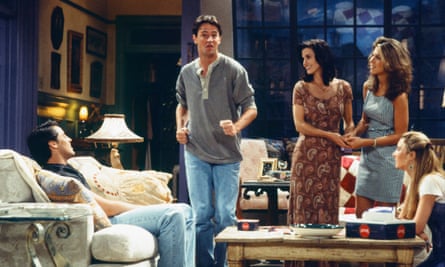
Burrows directed 240 of the 275 episodes of Cheers, as well as a rare 11-minute promotion for government savings bonds using the early Cheers cast. He remained peripatetically busy, doing pilots and episodes of shows that interested him, as well as 32 of Frasier and 15 of Friends. In 1998 he also directed John Mahoney (who played Frasier’s father, Martin Crane) on stage in a Chicago revival of The Man Who Came to Dinner.
For the producer Chuck Lorre he directed the pilots of 3rd Rock from the Sun, and Mike and Molly. He was also executive producer while directing Will and Grace, for its eight seasons and its three-season revival, a total of 246 shows. In all, he directed more than 1,000 television programmes, with his last credits being four episodes of the Frasier revival and, in 2025, 10 episodes of Mid-Century Modern.
Between 1980 and 2005 Burrows was nominated every year but one for a Primetime Emmy award for directing. He won 11 of them, plus five Directors Guild awards as best director. He received a lifetime achievement award from the Guild in 2014; his memoir, Directed by James Burrows (written with Eddy Friedfeld) was published in 2022.
He is survived by his second wife, Debbie Easton, a hair stylist in the TV industry, whom he married in 1997; his three daughters, Kat, Ellie and Maggie, from his first marriage to Linda Solomon, which ended in divorce in 1993; a stepdaughter, Paris; and seven grandchildren.