.png) 2 months ago
63
2 months ago
63
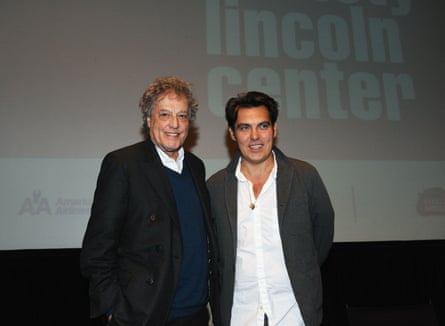
In 2010, I was preparing to direct Anna Karenina and told the producer, Tim Bevan, that if anyone should adapt Tolstoy’s novel, it should be Stoppard. Surprisingly – because he was already a hero – Tom agreed to meet.
I went to his apartment and we talked about the novel and the idea of love as a form of madness. It was a theme that was quite personal to him. I think he’d lived that a few times, and it became the thesis for the adaptation. Tom very simply went through the book and removed anything that didn’t relate to it.
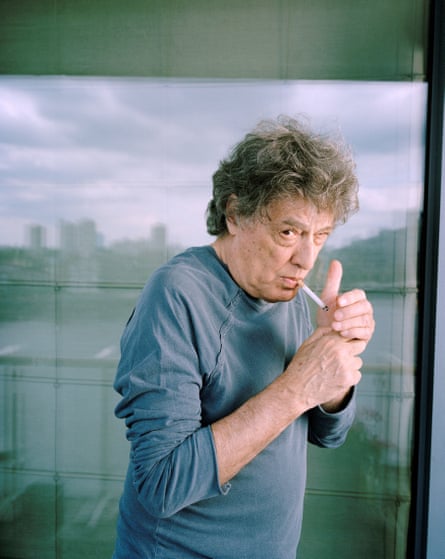
On that first meeting, it was immediately clear that he liked smoking, a lot – which was something we shared. He also liked wine gums and, like all great smokers, knew the trick of keeping sweets close at hand, to use as palette cleansers between cigarettes. He loved sweets, smoking, words and women – probably in the reverse order.
At the time, I was expecting my first son and staying with my then in-laws in Encinitas, north of San Diego. Tom came out there to work on the script with me, which was very gallant of him. He always travelled with a mobile library he’d had made for himself: a wooden case with a top that opened and folded out, full of the latest hardbacks.
We tried to book him into the nicest hotel in the area but it didn’t have rooms with balconies and therefore he wouldn’t have been able to smoke, so he ended up somewhere quite grotty instead.
Every day, he would come to my in-laws’ garage where we’d work. It was really not fancy. One day we went up to Los Angeles and had lunch with Mick Jagger, which was fancy. But Tom was perfectly at home at the most fancy end of the spectrum and the least fancy end. In Encinitas he was never recognised; elsewhere he was, but those people who knew who he was didn’t rush up and bombard him. Rather, they laid themselves gently before him.
The entire screenplay was written by hand in blue ink on a foolscap pad, with very little crossing out. The scenes were formed in his head and then he wrote them down. The script was then given to his assistant and typed into screenplay form. He would then annotate it with notes, hand it back, and she would deliver a typed screenplay.
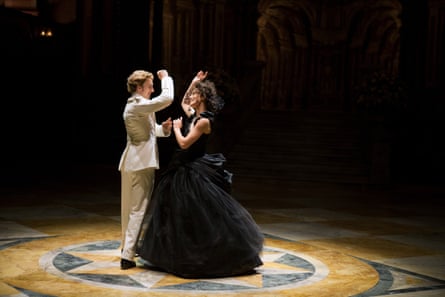
He wrote the film as a straight, naturalistic drama. But then, because of budget pressures, we turned it into something quite different, mostly taking place in a theatre. He was incredibly supportive and liked the idea that we were articulating his text in a different form. He came to the set a few times, but didn’t like being there as he didn’t have a role to fill. I think he found it all a bit noisy and busy.
And then, around that time, he fell in love with Sabrina Guinness and it was wonderful. I remember a magical long walk in Manhattan with them. It was one of those gorgeous autumnal evenings in the city and they both shared stories from their incredible lives. There was no co-dependency, just a mutual love and admiration – and a connection that allowed them the freedom to be themselves.
My relationship with Tom was easy and clean, with no baggage and no terrible mistakes. My life at the time was a bit of a mess and I think he recognised that and was never judgmental. During the course of our relationship, I tried to subtly coerce him into being a surrogate father – my own father died when I was 18.
It didn’t work. I’d ask Tom for personal advice but he’d always resist giving it, saying: “I don’t know anything about that.” But later on, he would sometimes come up with a little story that would relate to the question you’d asked; an anecdote from his life that might help.
We made each other laugh. I think he thought I was vaguely ridiculous and I’d treat him with a level of respect, but not too much deference. I liked teasing him, just a little bit, about things like his knighthood. I remember how the porter in his apartment block called him Sir Tom – and Tom didn’t tell him not to. I also asked why he had a Czech accent given that he left the country aged two. “How come you still talk with this sexy eastern European voice? I think you’re putting it on.” He would chuckle at that. There was a mischief about him.
As someone who had left school at 16 with no qualifications, I was really inspired that a person as smart as Tom hadn’t been to Oxbridge. He never stopped learning. Everything was of interest to him and every person he met was a teacher in some way. There are those clever people who make you feel small; he was one of those very clever people who make you feel much, much bigger than you are.
He had this talent for raising you up and making you feel empowered intellectually just by his attention. He listened with an amazing gentleness, which is why I think people – women especially – so loved him. Tom was just a really beautiful human being who liked being loved. And I loved him.