.png) 4 hours ago
7
4 hours ago
7
After a 12-year wait, Mount Olympus, the mythical home of the ancient Greek gods, has been inducted into a hall of more modern fame as Unesco announced it would be added to its world heritage list.
Greece’s highest mountain made the list alongside the second world war D-day landing beaches in northern France and the ancient Japanese capitals of Asuka and Fujiwara. South Sudan’s Boma-Badingilo landscape, host to one of the world’s largest land mammal migrations, also won a designation – a first for the east African country.
The nominations were among dozens reviewed at a Unesco committee meeting in Busan, South Korea, on Sunday.
In the case of Olympus, inscribed as a mixed world heritage site in recognition of its cultural and natural significance, the news was met with near euphoria in Greece.
Immortalised as the seat of Zeus, king of the 12 Olympian deities, the mountain rising 2,918 metres from a base near sea level had been on a tentative list of sites since 2014.
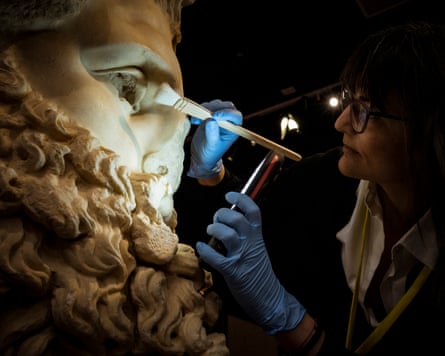
The head of Greece’s Unesco delegation in Busan, Georgios Koumoutsakos, hailed the decision as one that would ensure the site’s preservation.
“It reaffirms our unwavering commitment to safeguarding Mount Olympus for the benefit of present and future generations,” he said. “As Greek mythology wisely reminds us, it is always best to remain on good terms with the gods.”
The region’s mayor, Evangelos Geroliolios, said before the announcement that the site’s induction would “place greater responsibility on our part to protect the [local] environment”, not least its extraordinary biodiversity.
The committee’s annual meeting, which ends on Wednesday, is expected to examine about 30 nominations. Those successful will join 1,248 sites across 170 countries admitted to the world heritage list for their “outstanding value to humanity”.
Inscribed monuments can provide a vital boost for their preservation under an international convention overseen by Unesco, which also gives advice and financial support. Other world heritage sites include the Acropolis in Athens, the Great Wall of China, the pyramids of Giza in Egypt and the Taj Mahal in India.
As with Mount Olympus, efforts to get the D-day beaches in Normandy inscribed had gone back years.
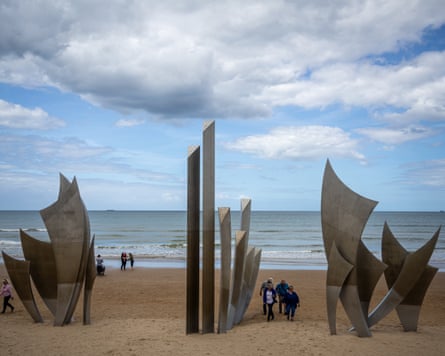
Included in the French bid were all five of the beaches – Omaha, Utah, Sword, Gold and Juno – where more than 150,000 allied troops came ashore on 6 June 1944, and the Pointe du Hoc cliff that was also a focal point of the assault.
The largest amphibious operation ever mounted, in which 4,000 soldiers died, was decisive in the battle to liberate Europe from Nazi occupation.
France first nominated the 50-mile (80km) stretch of coastline in 2008. Reacting to the decision, the country’s permanent delegate to Unesco, Ahlem Gharbi, said the designation carried particular weight at a time of such international tensions.
The president of the Normandy region, Hervé Morin, who had championed the cause, maintained that inclusion on the list would represent “immense recognition” for the soldiers who had sacrificed so much to defeat Nazism.
after newsletter promotion
Echoing Greek officials, he said: “This decision places a responsibility upon us. It compels us to preserve this site, to protect it, to cherish it even more, and to promote its value.”

The international council on monuments and sites, one of the bodies that recommends additions to the Unesco list, had previously warned of the threat posed to the Normandy sites by tourism, climate change, rising sea levels and nearby windfarm development, and had called for stronger monitoring and preservation.
The coastline is covered with extensive remnants of the time of the landings, including concrete German bunkers and gun positions, sunken vessels and allied installations.
Unesco said in a statement that the beaches formed an “exceptional cultural landscape shaped both by the events of 1944 and by their enduring remembrance”, all of which justified further protection. As with Mount Olympus, the landing points have attracted record numbers of tourists in recent years.
The agency’s move to include places associated with conflict has fuelled controversial debate over whether “sites of memory” are befitting of world heritage status and Unesco’s stated mission to “foster a world of greater equality and peace”.
Three sites used by Cambodia’s Khmer Rouge regime for torture and execution were inscribed last year.
After so many years of campaigning, Greek officials said Sunday’s decision had been made all the sweeter given signs of further delays.
In the draft agenda of this week’s meeting, Unesco had signalled the Mount Olympus file would be referred back to the country for further details, spurring fears that proved to be baseless when the nomination won unanimous support.