.png) 3 months ago
77
3 months ago
77
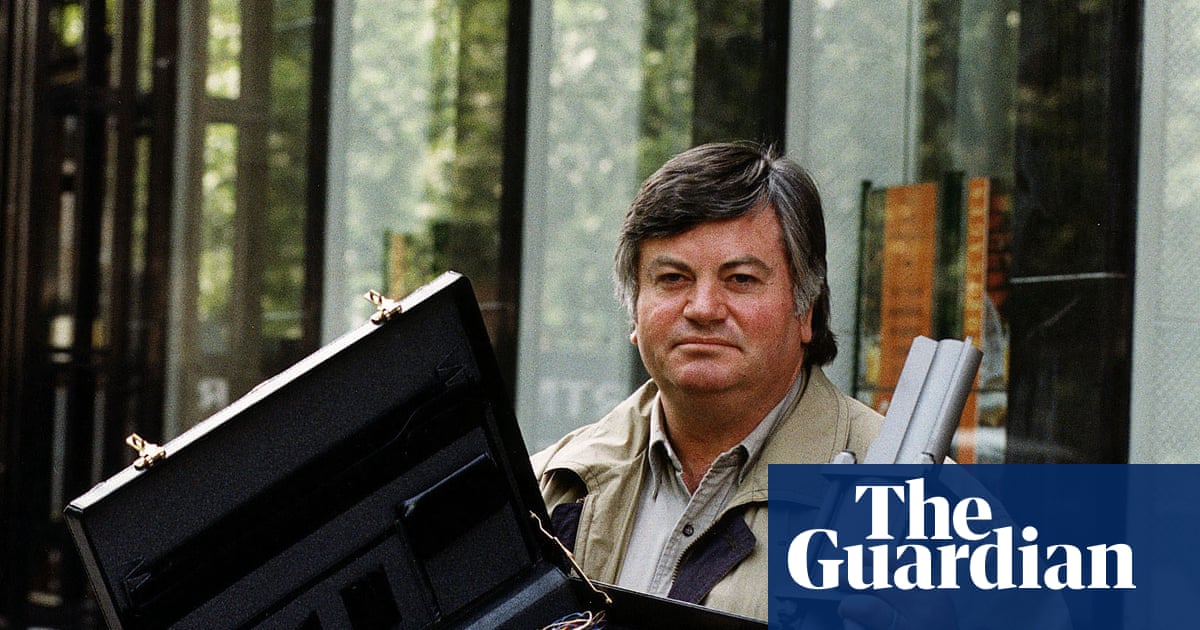
Kenith Trodd, who has died aged 90, was one of Britain’s most successful television drama producers, commissioning contemporary, cutting-edge plays from writers such as Colin Welland, Jim Allen, GF Newman, Stephen Poliakoff and Simon Gray. However, he will be best remembered for his long-running partnership with the writer Dennis Potter in productions that extended the landscape and creative possibilities of drama on the small screen and often challenged moral values.
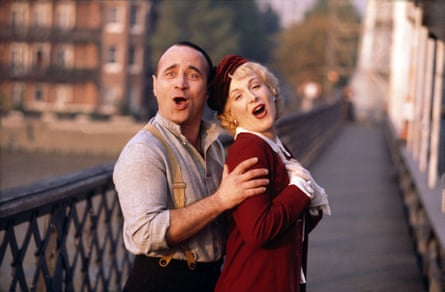
Their shared interest in popular music of the 1930s and 40s bore fruit most productively – and controversially – in the serials Pennies from Heaven (1978) and The Singing Detective (1986) after Trodd gave Potter the chance to switch from writing single plays to “television novels”. In the former, a seller of song sheets (Bob Hoskins) travels the country cheating on his wife as he steps out of the drama to dance and mime to sentimental numbers of the 1930s whose optimism provides relief from the Depression.
The Singing Detective found a crime fiction writer (Michael Gambon) in a hospital bed suffering from a skin condition that afflicted Potter himself, and recalling his wartime childhood and songs of the 1940s. The play provoked outrage with a scene of Gambon’s character, aged nine, watching from a tree as his mother commits adultery.
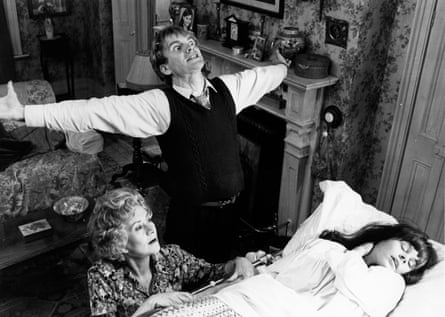
The pair were mired in their biggest controversy with Brimstone and Treacle (1976), in which a brain-damaged young woman is cured after being raped by a charismatic “demon” visitor. The BBC refused to screen the play, so Trodd and Potter remade it as a 1982 cinema film. Five years later, the TV production was eventually broadcast.
Groundbreaking drama and innovation were at the centre of their work. Blue Remembered Hills, a 1979 Play for Today production, featured Welland, Helen Mirren and other adult actors as seven-year-old wartime children displaying both innocence and acts of cruelty, revealing little distinction between childhood and adulthood.
Trodd, who flirted with the Socialist Labour League (later called the Workers’ Revolutionary party), and Potter, a failed Labour parliamentary candidate, had similar political convictions. However, Piers Haggard, director of Pennies from Heaven, saw them as “the odd couple”, adding: “They’d fight and bicker and be rude and bitchy, and Dennis, who was more lethal and wicked and had the ultimate power, would tease Ken inexhaustibly, calling him a Trotskyite and so on.”
In 1978, the pair set up the independent production company Pennies from Heaven to make Potter’s future work, but a rift followed a decade later when Potter hired Rick McCallum as joint producer on Blackeyes (1989), and Trodd resigned. Nevertheless, the pair were reunited in time for Trodd to produce Potter’s final two serials, the companion pieces Karaoke and Cold Lazarus (both 1996), written as he was dying of cancer.
Shortly before Potter’s death in 1994, he was visited by the producer, who recalled him “slugging Courvoisier, fortified by liquid heroin and morphine” and said: “After an hour, he seemed to crumple and he said, ‘I do have one very real fear of death. It is that you might get asked to speak at my memorial service.’”
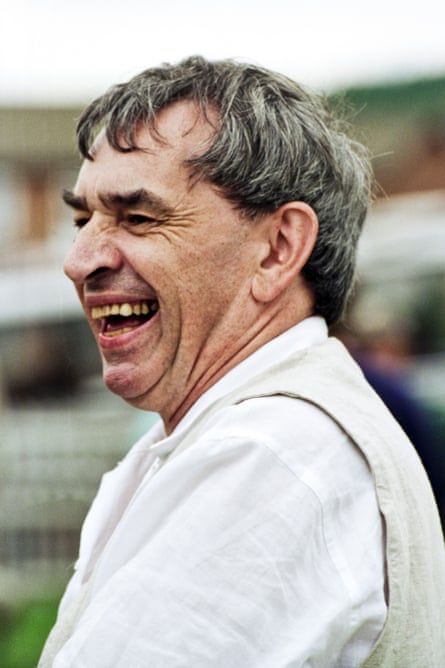
Trodd, who had known the writer since they both did national service in the Intelligence Corps (1953-55), then at Oxford University, later upset Potter’s family with an interview he gave to Humphrey Carpenter, Potter’s biographer. He said that Potter told him in 1962 that he slept with sex workers. Later, in an Arena documentary, Trodd explained the context: “He wanted it to end, for me to hear it and to respond, and for him to then tell his wife.”
Kenith was born in Southampton, to Winifred (nee Pitfield) and Benjamin Trodd, and educated at the city’s King Edward VI grammar school. His father was a crane driver-turned-maintenance electrician at Fawley oil refinery, and both parents were members of the strict Christian movement the Plymouth Brethren.
After national service, Kenith won a scholarship to University College, Oxford (1955-58), graduated in English and taught at universities in west Africa. Then, in 1965, he was invited by Roger Smith, story editor on the Wednesday Play, to become his second assistant, alongside Tony Garnett.
He was instrumental in launching Potter’s career in 1965 with the political dramas Stand Up, Nigel Barton and Vote, Vote, Vote, for Nigel Barton. As a fully fledged story editor, he worked on Potter’s Where the Buffalo Roam (1966) and Message for Posterity (1967), as well as David Mercer’s Let’s Murder Vivaldi (1968).
He and Garnett were then wooed by the new ITV company LWT to make plays for its Sunday Night Theatre slot, forming their own collective, Kestrel Productions, along with Clive Goodwin – Trodd and Potter’s agent – Mercer and the director James MacTaggart. Given his first chance to produce, Trodd made, among other dramas, Potter’s Moonlight on the Highway (1969), about an aficionado of the 1930s dance-band crooner Al Bowlly, a forerunner to their greatest works.
Trodd also commissioned the French director Jean-Luc Godard to make British Sounds (1970, later retitled See You at Mao), a documentary about a British car assembly line and class conflict filmed in the wake of student protests and worker strikes across western Europe, which LWT banned from broadcasting. Shortly afterwards, he and his Kestrel colleagues ended their association with the company over the sacking of its managing director, Michael Peacock.
A short stint at another ITV company, Granada, saw Trodd produce Welland’s Roll on Four O’Clock (1970) and Julia Jones’s six-part serial Home and Away (1972), about a woman asserting her independence. He then returned to the BBC as the producer of 30 Play for Today dramas between 1973 and 1982. Among them was Welland’s Leeds – United! (1974), about a textile factory workers’ strike, directed by another Trodd regular and political comrade, Roy Battersby, as was Roland Joffé, who directed Jim Allen’s United Kingdom (1981) for the producer.
In 1976, BBC management refused to renew Trodd’s freelance contract – at a time when MI5 secretly vetted its employees and branded the producer a “security risk” because of his leftwing politics – but James Cellan Jones, the head of plays, changed their minds.
After Pennies from Heaven, there was another brief sojourn at LWT when Trodd made three Potter plays, most notably Cream in My Coffee (1980), where his casting of Peggy Ashcroft and Lionel Jeffries was just one example of his astute contributions to the playwright’s works over the years.
He then returned to the BBC to mastermind its Screen One and Screen Two drama strands, where his own plays as a producer included After Pilkington (1987), one of his 10 collaborations with Gray.
He also made Jimmy McGovern’s Needle (1980), Poliakoff’s Caught on a Train (1980), Mike Leigh’s Northern Ireland play Four Days in July (1984), Newman’s prison-reform trilogy For the Greater Good (1991) and feature films – Potter’s Dreamchild (1985), William Trevor’s The Ballroom of Romance (1983), Gray’s adaptation of JL Carr’s novel A Month in the Country (1987), Andrew Davies’s screenplay of Maeve Binchy’s Circle of Friends (1995) and Paul Greengrass’s The Fix (1997).
Trodd won the Royal Television Society’s silver medal (1987) and Bafta’s Alan Clarke award (1993).
He is survived by his wife, Andrea (nee Cassidy), whom he married in 2002.