.png) 3 months ago
79
3 months ago
79
Ministers are to repeal powers imposed by the Conservatives that allowed them control over the elections watchdog, after warnings they could be abused by a future government with authoritarian ambitions.
Steve Reed, who as communities secretary is overseeing a new elections bill, announced the move to MPs, saying he would “repeal in full the power for government to impose a strategy and policy statement on the Electoral Commission”.
The powers, laid out in the Conservatives’ Elections Act from 2022, were criticised as giving ministers the chance to interfere politically in the work and enforcement priorities of the commission, which is meant to be independent.
A series of groups and MPs had urged Keir Starmer’s government to reverse this in its representation of the people bill, saying the powers could be exploited by a future government.
A report last year by the campaign group Spotlight on Corruption warned that the powers over the Electoral Commission “could easily be abused to undermine our democracy”.
Reed’s announcement comes after days of criticism by Reform UK about the conduct of elections, after Nigel Farage’s party failed to win the Gorton and Denton byelection, coming more than 4,000 votes behind the Greens.
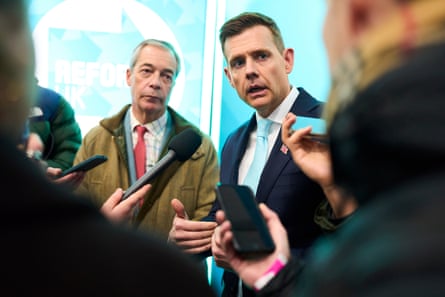
Farage has claimed that his party was “cheated”, citing what he said was the incidence of people deciding votes on behalf of family members, and what he called widespread corruption in postal voting, which he wants to greatly restrict.
Speaking in the Commons debate on Monday night, Danny Kruger, a Reform MP, claimed that large numbers of UK voters from Asian backgrounds were “taking their orders on how to vote from mosques and from clans – often direct from Pakistan”.
The Electoral Commission takes a different view. Its report into the 2024 general election concluded that confidence in the voting system was high, and that the main issue with postal voting was people not receiving their ballot papers in time.
Arron Banks, a Reform mayoral candidate and senior supporter of the party, has said that he would like to see the Electoral Commission abolished if Farage won power.
In November, a cross-party group of MPs and peers called on the government to fully restore the commission’s independence, saying failing to do so would see the UK lagging behind global standards when it comes to electoral integrity.
Some of the MPs who joined the call hailed Reed’s announcement in the Commons on Monday evening. Lisa Smart, the Liberal Democrats’ Cabinet Office spokesperson, said she welcomed the move, while calling for action to “further strengthen the Electoral Commission in the face of historic threats to our democracy”. Ellie Chowns, a Green MP, made a similar point.
The Labour MP Valerie Vaz said she was “delighted”, adding: “A government of any kind should not be interfering with the Electoral Commission. It should get no direction from a government.”
Tom Brake, chief executive of the Unlock Democracy campaign, said: “This power risked opening the door to political influence over the elections’ regulator. Scrapping it is a decisive step towards rebuilding public trust.”
The representation of the people bill includes a series of other changes, including votes for 16- and 17-year-olds, and moves to try out automatic voter registration.
It will also ease some of the rules introduced by the Conservatives about the types of ID voters need to show before voting. Speaking on Monday, Reed said that this could also now involve types of digital ID.