.png) 1 month ago
50
1 month ago
50
The film-maker Leslie Woodhead, who has died aged 88, helped to establish the hard-hitting ITV current affairs programme World in Action, and was a pioneer of drama-documentaries on British television. He invented the format as a way of telling the stories of those behind the iron curtain during the cold war between the Soviet Union and the west, when direct access for journalists and film crews was difficult. “For us, the dramatised documentary is an exercise in journalism, not dramatic art,” he explained.
The first was The Man Who Wouldn’t Keep Quiet (1970), which told the story of the Russian dissident and former Soviet army general Petro Grigorenko, who was being held in a psychiatric hospital, portrayed by actors.
The groundbreaking idea of presenting international affairs to the public in this way was partly the result of a bust-up between Granada Television, which made World in Action, and the Independent Television Authority, which was then ITV’s regulator. The programme’s editor, Jeremy Wallington, and Granada’s managing director, Denis Forman, had been given a carpeting by the ITA’s chair, Robert Fraser, following a World in Action film earlier the same year by the journalist John Pilger revealing a disintegration of morale among conscripted American troops in Vietnam – and claims that some were shooting their own officers. Fraser stormed: “What about Russia? What about China? Why don’t you do something about them?”
Woodhead went on to produce and direct the docudramas A Subject of Struggle (1972), about the Red Guard trials during the Cultural Revolution, Three Days in Szczecin (1976) and Strike: The Birth of Solidarity (1981), both reconstructing industrial action in Polish shipyards, and Invasion (1980), dramatising the Soviet Union’s crushing of opposition in Czechoslovakia.
At Granada, Woodhead also reflected the newly emerging pop culture by producing and directing The Stones in the Park (1969), a documentary about the Rolling Stones’ free open-air concert in front of up to 500,000 fans in Hyde Park, London.
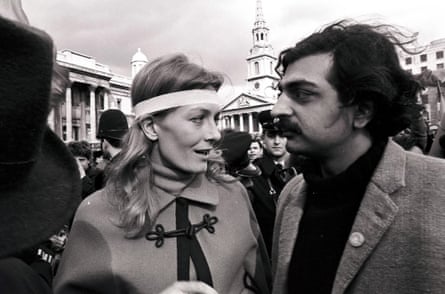
He was also one of the producer-directors, originally led by Brian Moser, who made the anthropological series Disappearing World, about tribal groups threatened with extinction. The first of Woodhead’s 11 contributions, broadcast in 1974, featured the Mursi cattle-herders of Ethiopia, who held public debates about how and where the animals should be moved. “It is a genuine democracy, a leaderless society,” he said. Woodhead returned to the Mursi several times to chart social changes in their society and their developing contact with the outside world.
He made Disappearing World films on Sherpas in the Himalayas, Basque shepherds in the French Pyrenees and fishermen in the South Pacific. “That sense of tapping into the exotic was overwhelming,” he said, “and I still count those as the most intriguing things I have ever been involved with as a documentary-maker.”
Leslie was born in Glasgow to Maud (nee Jagger) and Fred Woodhead, a dance-band saxophonist with Sid Seymour and His Mad Hatters. He came off the road after his son’s birth to open a music shop, which transferred to Halifax when the family moved to his parents’ native Yorkshire after the second world war.
During national service with the RAF (1956-58), Leslie learned Russian and was posted to West Berlin to monitor Soviet pilots’ communications, fuelling an interest in postwar eastern Europe that would serve him well in television – and which he recounted in his 2005 memoir My Life As a Spy.
On graduating in English from Selwyn College, Cambridge, in 1961, he joined Granada Television in Manchester as a production trainee. Working as a researcher on the news magazine People and Places, Woodhead – a modern jazz fan – was assigned to make four-minute films on interesting characters in the north of England. He was “dizzied by the raw energy” of the Beatles at the Cavern club in Liverpool, where Granada filmed them performing live, but the footage was deemed too grainy to broadcast. Woodhead then organised the group’s first TV appearance, on People and Places, on 17 October 1962.
He gained directing experience on the programme, as well as episodes of nationally screened productions such as What the Papers Say and All Our Yesterdays, and became a producer of the revamped news, Scene at 6.30, when it began in 1963.
In 1966, Woodhead directed Mr Lowry, a portrait of the Lancashire painter, for This England, Granada’s contemplative series reflecting regional culture.
He had started working on World in Action the year before. “It was everything that the BBC wasn’t,” he reflected in a 2013 programme to mark its 50th anniversary. “It majored on being far more in touch with its ITV audience. It was unashamedly tabloid and noisy, and focused on what it was doing … We called ourselves rock’n’roll journalists.”
The current affairs series took Woodhead around the world, from Rhodesia (now Zimbabwe) after its unilateral declaration of independence, to the US following the murder of Martin Luther King.
For the violent anti-Vietnam war demonstration outside the US embassy in London in 1968, Woodhead worked with his fellow producer John Sheppard for 14 hours to edit 20,000ft of film shot the previous day.
Although he was made co-executive producer of World in Action in 1968, with Wallington, he returned to programme-making the following year, frustrated at being studio-bound. He went back to the series occasionally while producing drama-documentaries.
After leaving Granada in 1989 to freelance, Woodhead made films for two BBC series: Arena, including a trilogy on Soviet themes (1992-94); and Storyville, most powerfully with A Cry from the Grave (1999), on the Srebrenica massacre. Another BBC documentary, Children of Beslan (2005), about the Russian school siege, won several international awards. He switched to Channel 4 for a catch-up film on the Mursi in 2001.
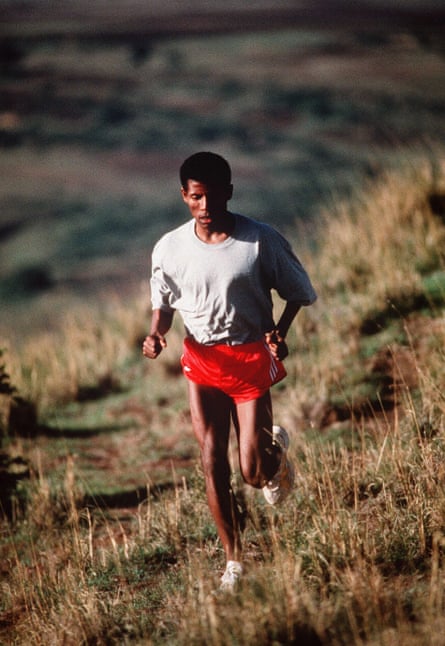
Woodhead ventured into feature films to direct the drama-documentary Endurance (1998), collaborating with the film-maker Terrence Malick on the story of the Ethiopian long-distance runner Haile Gebrselassie, who had set a new record at the 1996 Olympics.
How the Beatles Rocked the Kremlin, made for the BBC in 2009, took Woodhead full circle back to the Fab Four at Granada Television – and to mixing music with politics, as World in Action did. “This film was a real labour of love for me,” he said, “since it brought together passions from my entire life as a film-maker.”
Woodhead returned to ITV to make authoritative documentaries giving insider accounts of how events that shaped modern history unfolded. These included 9/11: Day That Changed the World (2011), The Hunt for Bin Laden (2012), The Day Kennedy Died (2013), The Day They Dropped the Bomb (2015) and Diana: The Day Britain Cried (2017).
His final documentary was another celebrating his love of music, Ella Fitzgerald: Just One of Those Things (2019).
Alongside many accolades for his documentaries, he won Bafta’s Desmond Davis award for outstanding creative contributions to television in 1986. He was made OBE in 1992.
In 1961, Woodhead married Yvonne Booth. She survives him, along with their son, James, and daughter, Alison, and two granddaughters, Lana and Rosie.