.png) 1 month ago
54
1 month ago
54
Iran says control of strait of Hormuz returns to 'previous state' due to US blockade
Iran announced control of the strait of Hormuz has “reverted to its previous state” over the continuing row with the US over its naval blockade of Iranian ports.
In a statement carried by Iranian media, the Iranian military’s operational command, Khatam Al-Anbiya, described the ongoing US blockade as “piracy”, saying: “For this reason, control of the strait of Hormuz has reverted to its previous state, and this strategic waterway is under the strict management and control of the armed forces.
“Until the US restores the complete freedom of navigation for vessels from an Iranian origin to a destination, and from a destination back to Iran, the situation in the strait of Hormuz will remain strictly controlled and in its previous state.”
This adds to the confusion over the status of the key waterway that carried a fifth of global oil supplies before the war. Yesterday Iran and Donald Trump announced the strait had reopened to shipping, but the US president said the US blockade “will remain in full force” until Tehran reaches a deal with Washington, including over its nuclear programme.
Key events Show key events only Please turn on JavaScript to use this feature
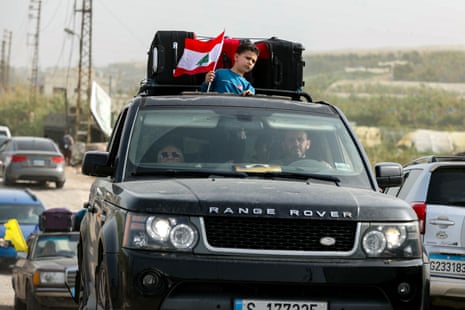
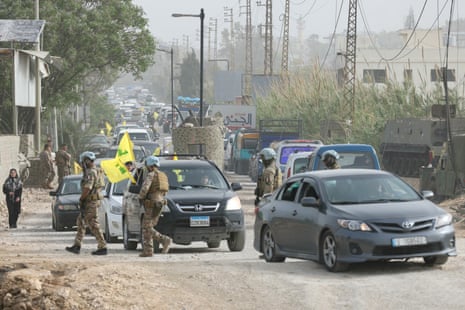
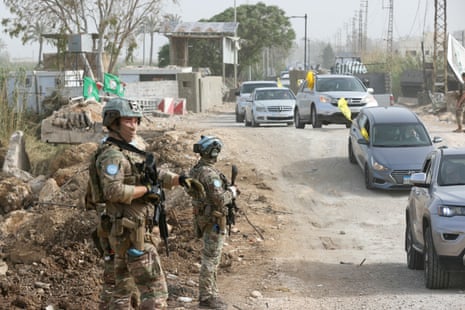
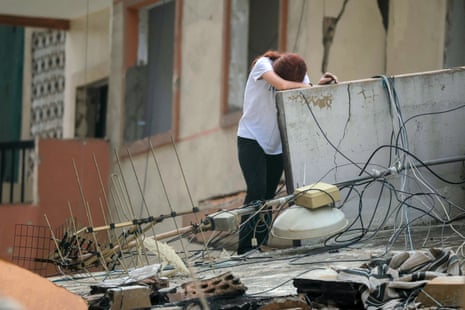
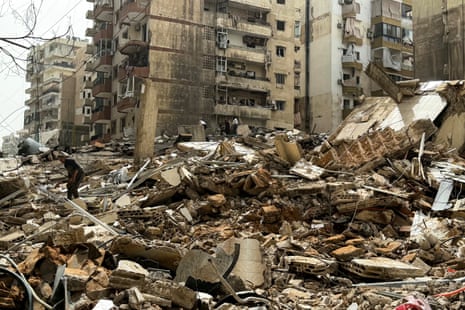
Meanwhile, a temporary ceasefire in Lebanon has continued to hold, with thousands more displaced families returning to their homes under the supervision of UN peacemakers. Here are some of latest images coming out of the country:
Iran says control of strait of Hormuz returns to 'previous state' due to US blockade
Iran announced control of the strait of Hormuz has “reverted to its previous state” over the continuing row with the US over its naval blockade of Iranian ports.
In a statement carried by Iranian media, the Iranian military’s operational command, Khatam Al-Anbiya, described the ongoing US blockade as “piracy”, saying: “For this reason, control of the strait of Hormuz has reverted to its previous state, and this strategic waterway is under the strict management and control of the armed forces.
“Until the US restores the complete freedom of navigation for vessels from an Iranian origin to a destination, and from a destination back to Iran, the situation in the strait of Hormuz will remain strictly controlled and in its previous state.”
This adds to the confusion over the status of the key waterway that carried a fifth of global oil supplies before the war. Yesterday Iran and Donald Trump announced the strait had reopened to shipping, but the US president said the US blockade “will remain in full force” until Tehran reaches a deal with Washington, including over its nuclear programme.
Turkey’s foreign minister, Hakan Fidan, has told the Antalya Diplomacy Forum that Israel was using security as a pretext to acquire “more land”.
“Israel is not after its own security, Israel is after more land,” he said at the annual conference on international diplomacy in the Turkish resort city of Antalya, AFP reported.
“Security is being used by the Netanyahu government as an excuse to occupy more land,” he added, referring to Israeli prime minister Benjamin Netanyahu.
“Israel has to know that the only way to live peacefully in the region … is to let the other countries enjoy their own security, and territorial integrity, and freedom, not to use power on those countries.”
Turkey, a Nato member bordering Iran, has positioned itself as a potential key mediator in the Middle East conflict, but its sometimes intense rhetoric against Israel has raised questions over its ability to remain neutral.
The Trump administration issued a waiver yesterday permitting countries to buy sanctioned Russian oil and petroleum products at sea for about a month.
The move was an extension of an earlier sanctions waiver that expired on 11 April.
Following turmoil in energy markets triggered by the Middle East conflict, the Trump administration has attempted to reduce global oil prices by allowing countries to purchase vast quantities of crude oil that had earlier been prohibited under US restrictions.
In a Telegram post this morning, the Russian presidential special envoy, Kirill Dmitriev, said the waiver “will affect over 100m barrels of oil currently in transit”. That brings the total volume affected by both waivers to 200m barrels, Reuters reported.
Separate to the Pakistani army chief’s trip to Iran (see post at 07:53), the Pakistani prime minister, Shehbaz Sharif, and foreign minister Ishaq Dar also concluded a trip to the Middle East after visiting Saudi Arabia, Qatar and Turkey for talks.
“We have just concluded the last leg of our engagements following productive and fruitful visits … where we held meaningful bilateral discussions aimed at strengthening cooperation across key areas,” Dar said on X.
Iran partially reopens airspace, aviation agency says
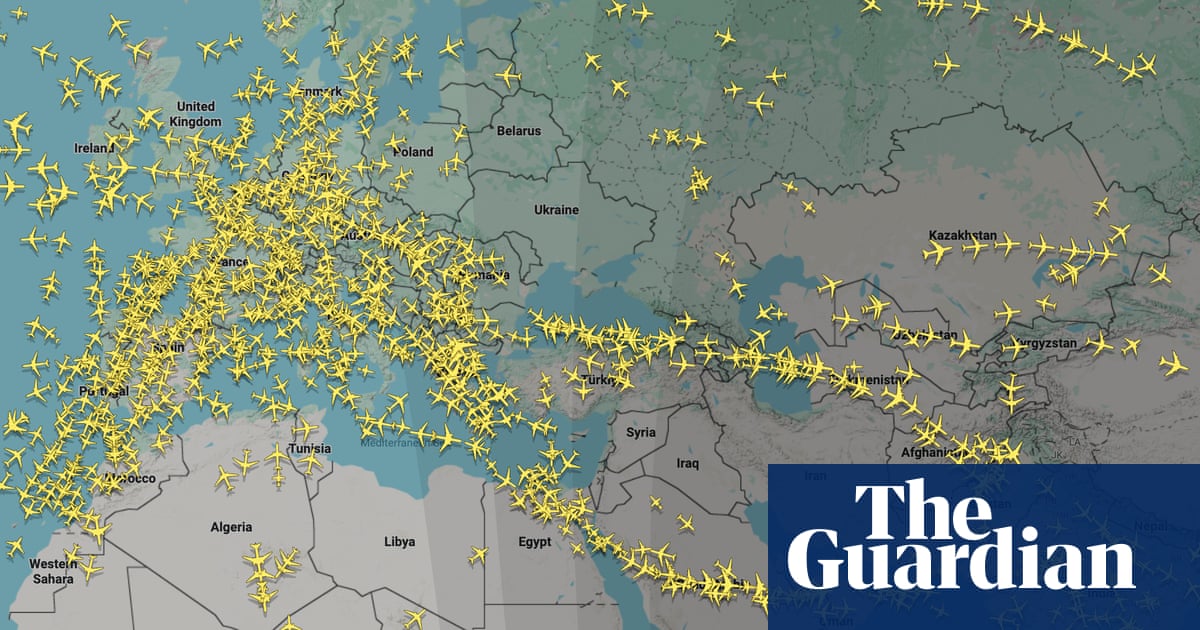
Iran reopened its airspace on Saturday to international flights crossing the eastern part of its territory, the country’s Civil Aviation Authority said.
“Air routes in the eastern section of the country’s airspace are open for international flights transiting through Iran,” it said, quoted by Agence France-Presse.
The aviation authority added that some airports had also reopened at 7am (0330 GMT).
More than three hours later, however, flight tracker websites still showed no international flights crossing Iran, and several avoiding its airspace by making long detours.
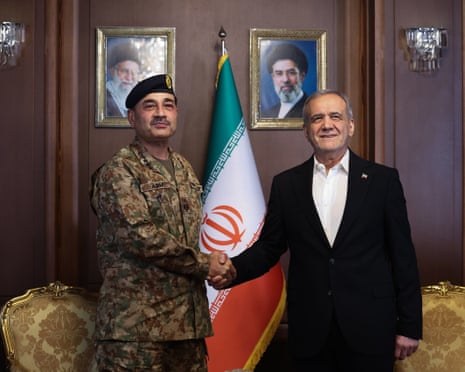
We have more now on the Pakistani military saying its army chief finished up a three-day visit to Iran on Saturday as part of efforts to end the Middle East war.
Field Marshal Asim Munir met Iran’s president, foreign minister, parliament speaker and the head of Iran’s military central command centre during the trip, the military statement said.
The visit showed Pakistan’s “unwavering resolve to facilitate a negotiated settlement ... and to promote peace, stability and prosperity”, the military said ahead of expected US-Iran talks in Islamabad in coming days, Agence France-Presse reports.
As mentioned earlier, Munir led the Pakistani delegation to Tehran on Wednesday while working to arrange a second round of US-Iranian ceasefire talks after last weekend’s negotiations in Islamabad ended without a deal, prompting the US to impose a naval blockade of Iranian ports.
Tankers crossing strait of Hormuz – report
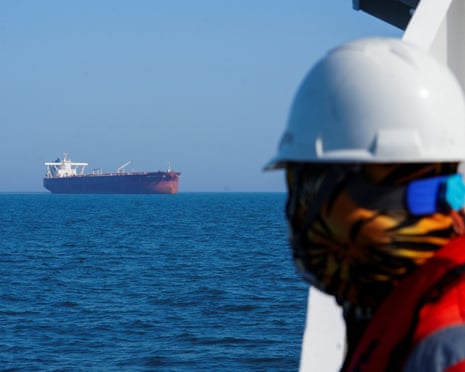
A convoy of tankers was seen departing the Gulf and transiting the strait of Hormuz on Saturday, vessel-tracking data showed.
The group comprised four liquefied petroleum gas carriers and several oil product and chemical tankers, with more tankers following from the Gulf, according to MarineTraffic data cited by Reuters.
Iran’s aviation agency reportedly says it has partially reopened the country’s air space.
Donald Trump also said there had been some positive news regarding Iran but declined to elaborate.
“We had some pretty good news 20 minutes ago, but it seems to be going very well in the Middle East with Iran,” he was quoted as telling reporters aboard Air Force One on Friday evening US time.
When asked what the good news was, the US president replied:
You’ll hear about. I just think it’s something that should happen. It’s something that only makes sense to happen. And I think it will. We’ll see what happens, but I think it will.”
Trump says US may ‘start dropping bombs again’ if Iran deal isn’t reached
Donald Trump said earlier in the day that he might end the ceasefire with Iran if a long-term deal to end the war wasn’t agreed by Wednesday.
Reuters quoted the US president as telling reporters aboard Air Force One:
Maybe I won’t extend it, but the blockade [on Iranian ports] is going to remain. So you have a blockade, and unfortunately we have to start dropping bombs again.”
The two-week US-Iran ceasefire expires on Wednesday and the two countries have been in indirect talks aimed at extending the truce.
The White House said midweek that the administration felt “good about the prospects of a deal”, just days after negotiations in Islamabad failed to reach a deal.
Pakistan army chief finishes Iranian visit – military
Pakistan’s army chief has concluded a three-day trip to Iran, a Pakistani military statement is being quoted as saying.
Asim Munir led a Pakistani delegation to Tehran on Wednesday while working to arrange a second round of US-Iranian ceasefire negotiations after last weekend’s in Islamabad failed to reach a deal.
Donald Trump’s “favourite field marshal” has been a key figure in mediation efforts and much rides for Munir on the success of talks, Hannah Ellis-Petersen writes here:
UK to make ‘wide-ranging’ contribution to Hormuz mission, says envoy
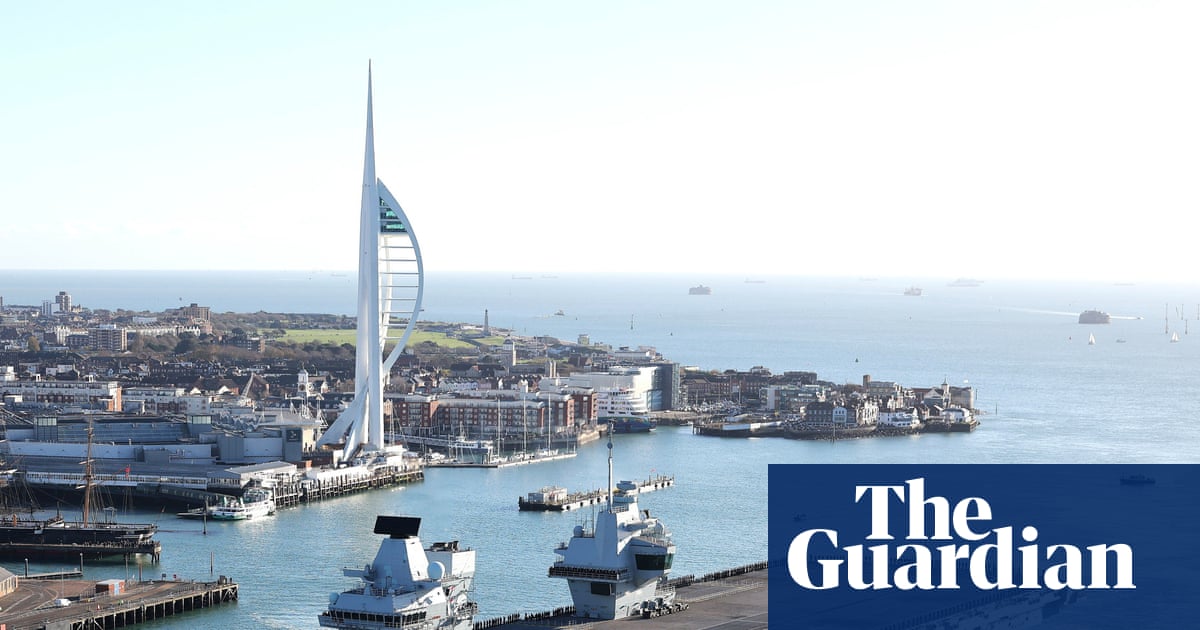
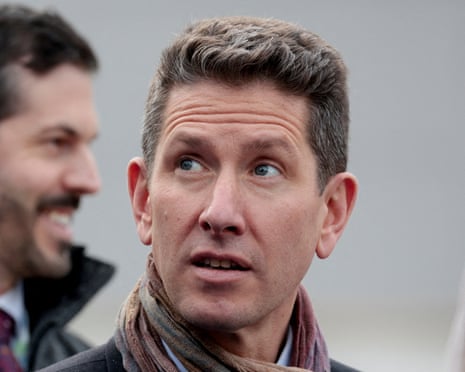
Britain will make “a wide-ranging military contribution” to an international mission to protect shipping in the strait of Hormuz trade waterway, the UK ambassador to the US has said.
Christian Turner’s commitment comes amid long-running concerns over the state of Britain’s armed forces and warnings of under-funding.
The multinational mission, led by the UK and France, aimed to provide reassurance to vessels using the critical waterway once the Iran conflict was over, Turner told an event in Washington.
PA Media also reports that the initiative was announced at talks in Paris involving nearly 50 countries, which Turner said signalled global resolve to prevent tolls or restrictions being imposed on the shipping route, normally used to move one fifth of the world’s oil and gas supplies.
So far about 12 nations have committed to take part in the mission.
The move has been derided by Donald Trump, who used it as a fresh opportunity to criticise Nato as “useless” after it refused to support his offensive against Iran.
Opening summary
Welcome to our live coverage of events in the Middle East.
Iran temporarily reopened the strait of Hormuz on Friday after a truce agreement between Israel and Lebanon, raising hopes for a broader peace, but Tehran warned that it would close the waterway again if the US naval blockade of Iranian ports continued.
Foreign minister Abbas Araqchi announced the global energy chokepoint was open for all commercial vessels for the remainder of the 10-day, US-brokered truce agreed on Thursday and Donald Trump said Iran’s move marked “a great and brilliant day for the world”.
But subsequent statements and clarifications from both sides left uncertainty over how quickly shipping might return to normal, and some vessels could be observed making unsuccessful attempts cross the strait on Friday before turning back.
Trump said a US blockade of ships sailing to Iranian ports would remain until “our transaction with Iran is 100% complete”.
Iran parliamentary speaker Mohammad Bagher Ghalibaf retorted by saying the Hormuz strait “will not remain open” if the US blockade continued and that Trump had made multiple false claims on Friday.
Trump later said he might end the ceasefire with Iran and “start dropping bombs again” if a long-term deal to end the war was not agreed by Wednesday, when their truce expires.
In other developments:
-
World leaders welcomed Iran’s announcement on reopening the waterway, with UN chief António Guterres calling the move “a step in the right direction” and urging “the full restoration of international navigational rights and freedoms in the Strait of Hormuz, respected by everyone.” British prime minister Keir Starmer and French president Emmanuel Macron – who on Friday co-chaired a virtual summit of about 50 countries on the issue – said the reopening must become permanent. Trump said Chinese leader Xi Jinping was “very happy” the Hormuz strait “is open and/or rapidly opening”.
-
Oil prices tumbled after Iran’s Hormuz announcement amid hopes that energy supplies could resume after nearly two months of disruption. Brent crude – the benchmark for oil traded globally – plunged below $90 a barrel, a 10% fall.
-
Trump said the US “prohibited” Israel from bombing Lebanon and that “Israel will not be bombing Lebanon any longer”. Minutes before Trump’s post on social media, Israeli prime minister Benjamin Netanyahu uploaded a video address declaring that Israel was not done yet with Hezbollah.
-
The Lebanese army claimed “a number of violations” by Israel of the ceasefire on Friday morning, as thousands of displaced families began making their way home to southern Lebanon. The fighting since 2 March has killed more than 2,100 people in Lebanon and displaced more than 1 million.
-
Trump said Iran’s enriched uranium would be brought to the US, also claiming the US and Tehran would work together to recover the uranium but denying reports that the US was considering a $20bn cash for uranium deal. “No money is changing hands,” he told Reuters.
-
A cruise ship successfully transited the strait of Hormuz on Friday, making it the first passenger vessel to make it through since the war began, according to ship tracking service MarineTraffic.
-
The Trump administration issued a waiver permitting countries to buy sanctioned Russian oil and petroleum products at sea for about a month, seeking to control soaring global energy prices.
-
The UN children’s agency said it was “outraged” after two truck drivers it contracted to deliver clean water to families in Gaza were killed by Israeli fire.
-
The world’s largest aircraft carrier, the USS Gerald R Ford, has again entered the waters of the Middle East, US defence officials said.