.png) 2 months ago
64
2 months ago
64
Interim summary
In case you’re just tuning in to today’s live coverage of the US-Israel war on Iran, here’s a recap of the latest developments. It’s just passed 11.30am in Tehran, 10am in Tel Aviv and Beirut and 4am in Washington DC.
-
Donald Trump has said he is considering “winding down” military operations against Iran. “We are getting very close to meeting our objectives,” the US president posted on Friday on his Truth Social platform in the strongest indication yet that he may be prepared to soon end the hostilities that began three weeks ago.
-
Israel launched military strikes on “regime targets” in Tehran, Iran, and Hezbollah targets in southern Beirut, Lebanon, early on Saturday. Iran earlier launched a new wave of drone and missile attacks on Israel.
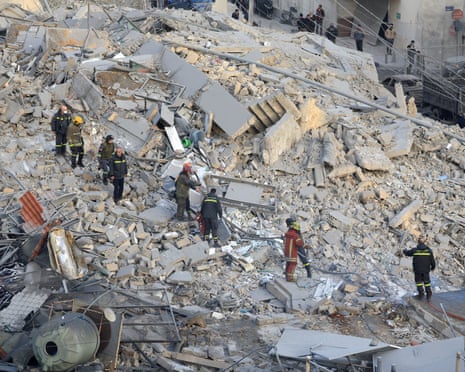
Photograph: Mohamed Azakir/Reuters
-
The US temporarily eased sanctions on Iranian oil shipments to stem the global supply crisis. The US Treasury’s authorisation allowing for the delivery and sale of Iranian crude oil and other petroleum products loaded on to ships before 20 March would last until 19 April, it said. It is the third time the US has temporarily waived sanctions in about two weeks.
-
Iran fired two intermediate-range ballistic missiles at Diego Garcia but neither of them hit the joint US-UK military base in the Indian Ocean, the Wall Street Journal and CNN reported, citing multiple US officials. One of the missiles failed in flight and a US warship fired an SM-3 interceptor at the other, the WSJ said. Neither outlet confirmed when Iran launched the missiles.
-
Iran’s military warned the United Arab Emirates on Saturday against allowing attacks from its territory on two disputed islands – Abu Musa and Greater Tunb – in the Persian Gulf near the strait of Hormuz.
-
Saudi Arabia said it was continuing to intercept and destroy drones – the defence ministry said it had intercepted dozens overnight in the east – while neighbouring Kuwait said it had also been intercepting air attacks.
-
Iran is willing to help Japanese ships sail through the strait of Hormuz, foreign minister Abbas Araghchi told Kyodo News in an interview published on Saturday, if it coordinates with Tehran.
-
Donald Trump said he was “very surprised” Australia had not sent warships to help open the strait of Hormuz amid the oil route’s effective shutdown. He has also lashed out at Nato, describing alliance members as “cowards” for not wanting to help unblock the strait.
-
The European Commission has urged EU states to lower natural-gas storage targets and start refilling reserves gradually to curb demand, the Financial Times reported on Saturday.
-
Iran’s military has threatened recreational and tourist sites worldwide, amid its retaliatory strikes in the Gulf region. The top military spokesperson, Gen Abolfazl Shekarchi, warned that “parks, recreational areas and tourist destinations” globally would not be safe for the country’s enemies.
-
One person was killed and two others wounded after an Israeli airstrike hit a house in a southern Lebanon town early on Saturday, state media said.
Key events Show key events only Please turn on JavaScript to use this feature
Iraqi government confirms drone strike on intelligence services
There’s an update on the reported drone attack on Iraq’s intelligence headquarters (see 8.34am).
General Saad Maan, head of Iraq’s government security media unit confirmed the attack in central Baghdad on Saturday morning.
In comments reported by AFP, he said: “A drone targeted the headquarters of the Iraqi National Intelligence Service in the Mansour district.” He said the attack took place at about 10am local time, 7am GMT.
An Iraqi security official has told the news agency the attack targeted a national intelligence service “telecommunications building”. It cooperates with US advisers in Iraq as part of an anti-jihadist coalition.
Iraq has been drawn into the conflict since the US and Israel attacked its neighbour Iran in late February.
Strikes have hit Iran-backed groups, which have in turn attacked US-linked buildings or facilities in the region, including Iraq.
At least three drone attacks overnight targeted a US diplomatic and logistics hub that houses US military personnel at Baghdad International Airport, according to two security officials speaking to AFP.
On Thursday, the Pentagon said combat helicopters had carried out strikes against pro-Iran armed groups in Iraq.
The Israel Defence Force killed four Hezbollah members in southern Lebanon overnight, the military has said.
The IDF posted on Telegram that a combination of ground troops and the Israeli air force killed one – and tanks killed three more.
The post on Saturday morning said jets also hit a series of Hezbollah buildings in Beirut it claimed were used by the group’s members.
Iraq's intelligence headquarters in the country’s capital Baghdad has been targeted by a drone strike, according to agency reports.
Reuters reported the strike, as security sources told the AFP news agency that a communications building in Baghdad had been hit by a drone strike.
The communications building, according to a security source referenced by AFP, housed an Iraqi security agency that works with the US in Iraq as part of the anti-jihadist coalition.
Interim summary
In case you’re just tuning in to today’s live coverage of the US-Israel war on Iran, here’s a recap of the latest developments. It’s just passed 11.30am in Tehran, 10am in Tel Aviv and Beirut and 4am in Washington DC.
-
Donald Trump has said he is considering “winding down” military operations against Iran. “We are getting very close to meeting our objectives,” the US president posted on Friday on his Truth Social platform in the strongest indication yet that he may be prepared to soon end the hostilities that began three weeks ago.
-
Israel launched military strikes on “regime targets” in Tehran, Iran, and Hezbollah targets in southern Beirut, Lebanon, early on Saturday. Iran earlier launched a new wave of drone and missile attacks on Israel.
Photograph: Mohamed Azakir/Reuters
-
The US temporarily eased sanctions on Iranian oil shipments to stem the global supply crisis. The US Treasury’s authorisation allowing for the delivery and sale of Iranian crude oil and other petroleum products loaded on to ships before 20 March would last until 19 April, it said. It is the third time the US has temporarily waived sanctions in about two weeks.
-
Iran fired two intermediate-range ballistic missiles at Diego Garcia but neither of them hit the joint US-UK military base in the Indian Ocean, the Wall Street Journal and CNN reported, citing multiple US officials. One of the missiles failed in flight and a US warship fired an SM-3 interceptor at the other, the WSJ said. Neither outlet confirmed when Iran launched the missiles.
-
Iran’s military warned the United Arab Emirates on Saturday against allowing attacks from its territory on two disputed islands – Abu Musa and Greater Tunb – in the Persian Gulf near the strait of Hormuz.
-
Saudi Arabia said it was continuing to intercept and destroy drones – the defence ministry said it had intercepted dozens overnight in the east – while neighbouring Kuwait said it had also been intercepting air attacks.
-
Iran is willing to help Japanese ships sail through the strait of Hormuz, foreign minister Abbas Araghchi told Kyodo News in an interview published on Saturday, if it coordinates with Tehran.
-
Donald Trump said he was “very surprised” Australia had not sent warships to help open the strait of Hormuz amid the oil route’s effective shutdown. He has also lashed out at Nato, describing alliance members as “cowards” for not wanting to help unblock the strait.
-
The European Commission has urged EU states to lower natural-gas storage targets and start refilling reserves gradually to curb demand, the Financial Times reported on Saturday.
-
Iran’s military has threatened recreational and tourist sites worldwide, amid its retaliatory strikes in the Gulf region. The top military spokesperson, Gen Abolfazl Shekarchi, warned that “parks, recreational areas and tourist destinations” globally would not be safe for the country’s enemies.
-
One person was killed and two others wounded after an Israeli airstrike hit a house in a southern Lebanon town early on Saturday, state media said.
Vladimir Putin has said Moscow remains a loyal friend and reliable partner of Tehran, the Kremlin was quoted as saying on Saturday.
The Russian president’s comment came as he congratulated Iranian supreme leader Mojtaba Khamenei and President Masoud Pezeshkian on Nowruz, the Persian new year.
Iran fired two missiles at US-UK Diego Garcia base but neither hit – reports
Circling back now to Diego Garcia, Iran fired two intermediate-range ballistic missiles at the joint US-UK military base in the Indian Ocean – but neither of them hit, according to news reports citing US officials.
The Wall Street Journal said one of the missiles failed in flight, and that a US warship fired an SM-3 interceptor at the other, citing two US officials. It could not be determined if an interception was made, one said.
CNN also reported the launches targeting Diego Garcia, citing a US official, while describing it as a crucial overseas US military staging post for operations far from home and a key airfield for the US military’s heavy bomber fleet.
The launches marked a significant attempt by Iran to reach far beyond the Middle East and threaten US interests, the WSJ said. And Iran’s targeting of Diego Garcia – about 4,000km from Iran – implied its missiles had a greater range than Tehran had previously acknowledged.
Foreign minister Abbas Araghchi said last month that Iran had deliberately limited the range of its missiles to 2,000km, the report said.
Reuters is saying the White House, the British embassy in Washington and the UK Ministry of Defence did not immediately respond to requests for comment.
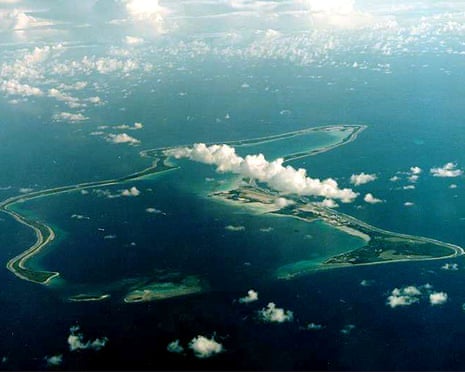
As the Guardian reported in March, Trump said he was “very disappointed” in British prime minister Keir Starmer over the UK government’s deal to hand sovereignty of the Chagos Islands to Mauritius as a means to preserve the status of the UK-US airbase on Diego Garcia, which is part of the Indian Ocean archipelago.
The Chagos deal, which Trump initially supported before changing his mind, was a “very woke thing”, the US president said.
The Israeli military said a short time ago that missiles had been launched towards Israel and that its defence systems were operating to intercept them.
Iran’s military warned the United Arab Emirates on Saturday against allowing attacks from its territory on two disputed islands near the strait of Hormuz.
“If any further aggression originates from its territory against the Iranian islands of Abu Musa and Greater Tunb in the Persian Gulf, Iran’s powerful armed forces will subject Ras Al Khaimah in the UAE to heavy strikes,” the military’s operational command, Khatam Al-Anbiya, said in a statement carried on the semi-official Tasnim news agency.
The two islands, which are controlled by Iran but claimed by the UAE, have long been a source of dispute between the two countries, Agence France-Presse repots.
The islands are located near the entrance to the strategic strait of Hormuz, which is now effectively blocked but through which about a fifth of the world’s oil normally passes.

Daisy Dumas
Donald Trump says he is surprised Australia has not sent warships to help open the strait of Hormuz amid the vital oil route’s effective shutdown triggering soaring fuel prices.
“I was very surprised,” the US president said in Washington on Friday when asked what he took issue with regarding Japan, South Korea and Australia.
“Well, they should get involved, and I was a little bit surprised that they said no, because we always say yes to them,” Trump told Sky News Australia.
He did not answer when asked what Australia had said no to.
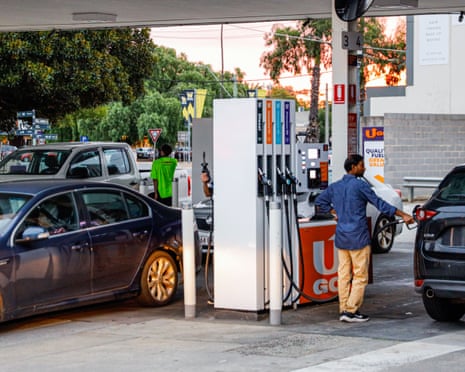
Earlier this week, the US president slammed Japan, Australia and South Korea for saying they would not send warships to the Persian Gulf amid the US-Israeli operation against Iran.
“We no longer ‘need’ or desire, the NATO Countries’ assistance – WE NEVER DID! Likewise, Japan, Australia, or South Korea,” Trump said on his Truth Social platform.
Also on Friday, Trump lashed out at Nato, describing alliance members as “cowards” for not wanting “to help open” the strait of Hormuz.
Australia’s prime minister, Anthony Albanese, said on Saturday that Australia had provided the support it had been asked to – and that it had not received a request from the president.
Analysis: Iran’s willingness to escalate high-stakes war is its greatest weapon

Patrick Wintour
Brinkmanship – the ability to take a country to the edge of war without plunging it into the abyss – was the cornerstone of cold war diplomacy. But in our different, more unstable times, the world this week finally tipped over the edge, and suddenly it is in freefall.
The first six days of the Iran war cost the US $12.7bn (£9.5bn), but now the Pentagon is seeking as much as $200bn in military funding. Oil at $125 a barrel is no longer an Iranian, or Russian, fantasy. The crown jewel of Qatar, Ras Laffan – the world’s largest liquefied natural gas plant – may not reopen fully for five years, at a cost of $20bn a year. Other combustible oil depots in the Gulf, from Bahrain to Abu Dhabi, are exposed to Iran’s low-cost drones.
Then add the human cost of 18,000 civilians injured and more than 3,000 killed in Iran alone.
The Iranian regime – fighting for its survival – has no compunction about escalating the war. Indeed, its willingness to do so is its greatest weapon. An Iranian official warned this week:
Other playing cards have been designed that will enter the fray at the right time.
This is probably a reference to the Gulf’s desalination plants, the centre of the region’s fragile ecosystem.
Iran’s leadership, with nothing to lose, benefits from an asymmetric advantage of fear.
To read the full analysis, click here:
The European Commission has urged EU states to lower natural-gas storage targets and start refilling reserves gradually to curb demand, the Financial Times reported on Saturday.
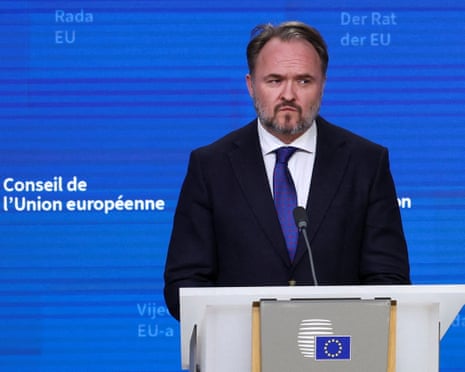
The EU energy commissioner, Dan Jorgensen, instructed member states to lower the filling target for their gas storage facilities to 80% of capacity – 10 percentage points below the EU’s official targets – “as early as possible in the filling season to provide certainty and reassurance to market participants”, the newspaper said, citing a letter.
The Iran war has disrupted key suppliers and prompted soaring energy prices.
Iranian military threatens tourist sites worldwide
Amid Iran’s retaliatory strikes in the Gulf region, the military has also threatened recreational and tourist sites worldwide.
Iran’s top military spokesperson, Gen Abolfazl Shekarchi, warned that “parks, recreational areas and tourist destinations” globally will not be safe for the country’s enemies.
The threat, quoted by the Associated Press, has renewed concerns that Tehran may revert to using militant attacks beyond the Middle East as a pressure tactic to halt US and Israeli strikes.
Saudi Arabia and Kuwait intercept air attacks
Saudi Arabia says it is continuing to intercept and destroy drones in recent hours while neighbouring Kuwait says it has also been intercepting air attacks.
The Saudi defence ministry, quoting a spokesperson, said on Saturday in the last of a series of social media posts that it had intercepted five drones in its eastern region.
Its previous posts said it had intercepted a total of seven drones, and shortly before that another 12, in the area.
Reports quoted the ministry as saying it had intercepted dozens of drones overnight in the east.
In Kuwait, the army said air defences were intercepting missile and drone attacks. The post on Saturday also said:
The General Staff of the Army notes that if explosion sounds are heard, they are the result of air defense systems intercepting the hostile attacks.
Saudi Arabia condemns Israeli attacks in Syria
The Saudi foreign ministry has condemned Israeli strikes on Syrian army camps as “aggression”, joining Turkey in calling on the international community to intervene.
Israel’s military said on Friday it had struck southern Syria in response to what it called attacks against the Druze community in Sweida province and that it “will continue to act for their protection”.
The Saudi ministry said in a statement on Saturday that the kingdom condemned “the blatant Israeli aggression ... in flagrant violation of international law and Syrian sovereignty”, Agence France-Presse is reporting.
The foreign ministry urged the international community “to put an end to Israel’s violations of international laws and norms”.
Turkey’s foreign ministry called the Israeli attack “a dangerous escalation” that the international community must stop.
Last year Israel launched airstrikes in Syria during a deadly bout of sectarian violence, saying it was acting to defend the minority group.
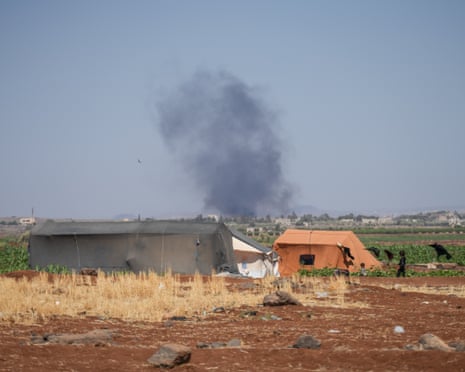
Syria has so far avoided being dragged into the regional conflict sparked by the US-Israeli attacks on Iran and Tehran’s retaliatory strikes.
The Syrian Observatory for Human Rights said on Thursday that clashes with government forces in Sweida province had left at least four Druze fighters dead. Israeli shelling later hit residential neighbourhoods in Sweida city, it said.
Syria’s foreign ministry denounced an “outrageous assault on Syria’s sovereignty and territorial integrity” and called the Israeli justification “flimsy pretexts and fabricated excuses”.
Welcome summary
Hello and welcome to our continuing live coverage of the US-Israel war on Iran and its repercussions for the Middle East, the world and the global economy.
President Donald Trump said on Friday he was considering “winding down” military operations against Iran, as the US temporarily eased sanctions on Iranian oil shipments to stem a global supply crisis.
Trump said on his Truth Social platform that the US was “getting very close to meeting our objectives as we consider winding down our great military efforts in the Middle East”. His post was the strongest indication yet that he may be prepared to soon end hostilities that began on 28 February.
The White House press secretary, Karoline Leavitt, said on X shortly after Trump’s message: “The President and the Pentagon predicted it would take approximately 4-6 weeks to achieve this mission.”
Amid growing concern over oil prices and global supply shortages, the US Treasury said it was temporarily lifting sanctions on Iranian oil already loaded onto vessels. The authorisation allowed for the delivery and sale of Iranian crude oil and other petroleum products loaded on to ships before 20 March and would last until 19 April, it said.
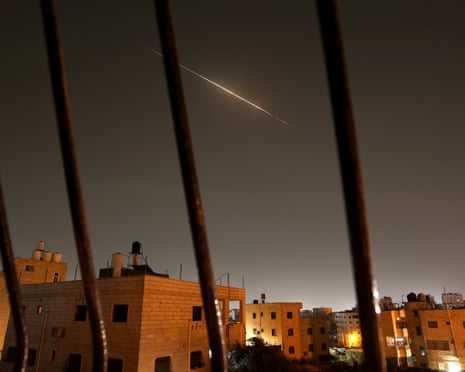
Iran launched a new wave of drone and missile attacks on Saudi Arabia and Israel, meanwhile, after supreme leader Mojtaba Khamenei claimed to have dealt a “dizzying blow” to his country’s enemies. In response, the Israeli military launched strikes on “regime targets” in Tehran early on Saturday.
Here’s a snapshot of other key developments:
-
Iran is willing to help Japanese ships sail a vital route for global fuel supplies, foreign minister Abbas Araghchi told Kyodo News in an interview published on Saturday. Japan depends on crude oil imports from the Middle East, most of which transits the strait of Hormuz.
-
Iran fired two intermediate-range ballistic missiles at Diego Garcia but neither of them hit the joint US-UK military base in the Indian Ocean, the Wall Street Journal and CNN reported, citing multiple US officials. The WSJ said one of the missiles failed in flight, and a US warship fired an SM-3 interceptor at the other. Neither outlet confirmed when Iran launched the missiles.
-
One person was killed and two others wounded after an Israeli airstrike hit a house in a town in southern Lebanon early on Saturday, state media said.
-
Trump continued to make his disappointment with the British government known, saying the UK “should have acted a lot faster” in allowing the US military to use its bases in the Middle East.
-
Earlier, Downing Street approved US use of its bases “for the collective self-defence of the region”, including “defensive operations” degrading Iranian missile sites targeting ships in the strait of Hormuz. Britain had previously only allowed US forces to use its bases for operations to prevent Iran firing missiles that put British interests or lives at risk.
-
Araghchi said Keir Starmer “is putting British lives in danger by allowing UK bases to be used for aggression against Iran”.