.png) 3 months ago
91
3 months ago
91
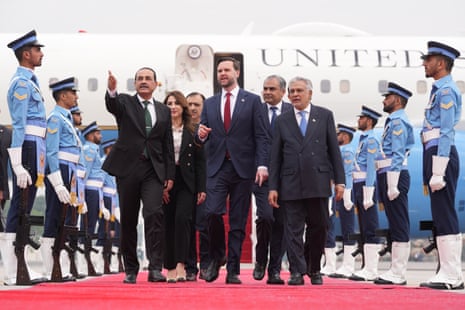
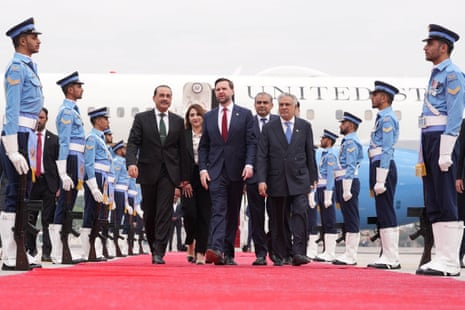
U.S. Vice President JD Vance, walks with Pakistan's Chief of Defence Forces and Chief of Army Staff Field Marshall Asim Munir, left, and Pakistani Deputy Prime Minister and Foreign Minister Mohammad Ishaq Dar after arriving for talks with Iranian officials in Islamabad, Pakistan, Saturday, April 11, 2026. Photograph: Jacquelyn Martin/AP
Show key events only Please turn on JavaScript to use this feature
Interim summary
For those of you just joining us, welcome to our live coverage of events in the Middle East with talks between Iranian and US officials scheduled to begin in Islamabad. Stay tuned here for all the updates – but first, a quick recap.
-
The US delegation has touched down ahead of high-stakes talks with the United States on Saturday, joining Iran’s delegation which had arrived earlier. The US side is led by the vice-president, JD Vance, alongside the special envoy, Steve Witkoff and Jared Kushner.
-
Iran’s delegation is headed by the powerful parliamentary speaker Mohammad Bagher Ghalibaf, reportedly accompanied by Abbas Araghchi, Iran’s foreign minister; Ali Akbar Ahmadian, secretary of Iran’s defence council; Abdolnaser Hemmati, governor of Iran’s central bank; and several members of the Iranian parliament. Ghalibaf said earlier on Friday that two previously agreed measures – a ceasefire in Lebanon and the release of Iran’s blocked assets – “must be fulfilled before negotiations begin”. Israel and the US have denied that the ceasefire extends to Lebanon.
-
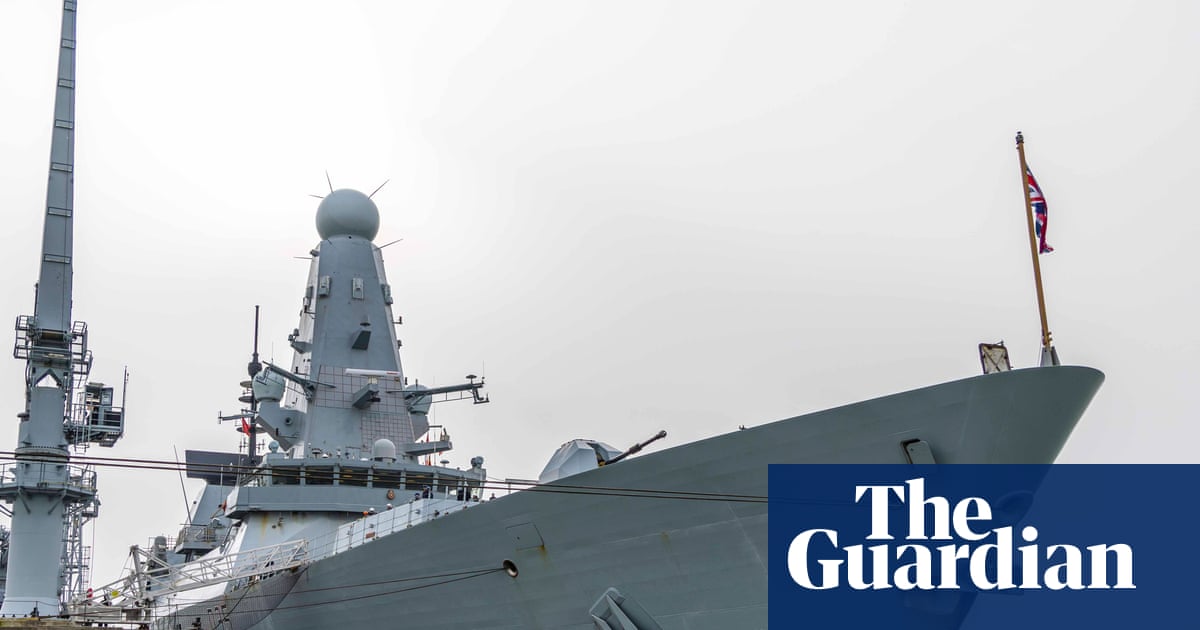
The planned talks come as Trump threatened fresh strikes if talks fail, adding that the Iranians “have no cards” and the only reason they are alive “is to negotiate”. Trump told the New York Post that the US is loading its warships with the “best weapons” in case talks with Tehran fail. “And if we don’t have a deal, we will be using them and we will be using them very effectively,” he said.
-
Meanwhile, Lebanon and Israel have agreed to meet in Washington on Tuesday to discuss a ceasefire and to set a date to begin talks. The conversation on Tuesday will be mediated by the US and take place at the state
-
Lebanon’s health ministry has updated the death toll from Israel’s most brutal strikes on the country in years on Wednesday to 357 killed. It brings the total killed in Lebanon since Israel renewed its offensive on 2 March to more than 1,953 people. The number of people wounded stands at 6,303, the health ministry added.
-
US intelligence reports that China is preparing to send new air defence systems to Iran over the new few weeks, CNN reports, citing anonymous sources. The US state department, White House and Chinese embassy in Washington did not immediately respond to requests for comment from Reuters.
Key events Show key events only Please turn on JavaScript to use this feature
Iranian negotiators meet Pakistan PM in Islamabad - report
The Iranian delegation led by parliament speaker Mohammad Baqer Qalibaf and foreign minister Abbas Araghchi has met and held talks with the Pakistani prime minister, Shehbaz Sharif, Iran’s semi-official Tasnim news agency reported in a brief update.
What are the key issues the US and Iran are expected to discuss?
Sanctions, the strait of Hormuz, nuclear enrichment and Israel’s attacks on Lebanon are some of the key issues on the agenda in today’s Islamabad talks.
-
The US has demanded Iran to reopen the strait of Hormuz, the key shipping route that has been effectively shut since the start of the war on 28 February. Iran wants acknowledgment of its authority over the narrow waterway, and has suggested charging transit fees for ships seeking passage, a demand the US has rejected. Donald Trump, however, has floated the idea of a “joint venture” between the US and Iran to set tolls.
-
Iran, while claiming it is not seeking a nuclear weapon, wants recognition of its right to enrich uranium. The US has ruled this out and Trump has insisted “there will be no enrichment of uranium”. Iran’s nuclear programme has been at the centre of tensions between the two countries for decades, with the US imposing sanctions and other restrictive measures to end it.
-
Iran wants the ceasefire to include Lebanon, where the Israeli military’s attacks have killed more than 2,000 people since the start of the fighting on 2 March, according to Lebanese authorities. Israel claims the ceasefire does not cover its military operations against Hezbollah in Lebanon, and it continues to launch attacks in the country.
-
Iran has also demanded sanctions relief and a guarantee that the US will not attack Iran again, suggesting a permanent end to hostilities beyond the two-week ceasefire.
Al Jazeera spotted the Pakistani army chief, Asim Munir, wore a suit to greet the US vice-president today in Islamabad, but wore a military uniform to receive the Iranian delegation last night.
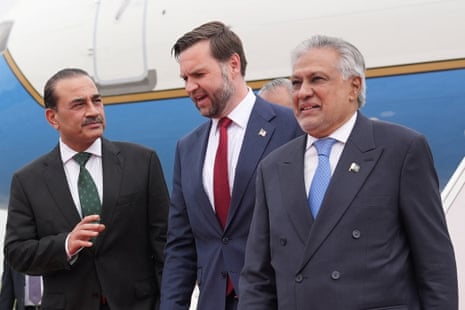
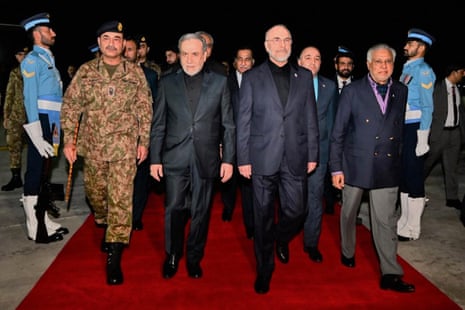
The news organisation spoke to a former general who served under Pakistan’s last military ruler Pervez Musharraf about the wardrobe change.
The general said there is no protocol on what an army chief wears on such occasions, adding: “Usually, their staff suggests what they should wear, or other times it is the desire of the chief himself, what influence he wants to project.
“Under the Musharraf era, when I was in service, he would meet delegations sometimes in uniform and other times in a suit.”
Elsewhere, South Korea’s president, Lee Jae Myung, has accused Israel of failing to “reflect” on rights abuse allegations after the Israeli foreign ministry criticised him over sharing a social media video which purported to show Israeli soldiers torturing and pushing an apparently dead Palestinian off a roof, AFP reports.
Lee reshared the video, saying “I need to look into whether this is true, and if so, what measures have been taken”.
A social media statement by the Israeli foreign ministry said the Korean president “for some strange reason, chose to dig up a story from 2024 and to cite a fake account that falsely presented it as a current event”.
South Korea’s foreign ministry attempted to defuse the tensions, saying Lee’s post – which drew parallels between alleged Israeli abuses and historical atrocities against Jews and Koreans – was a call for “universal human rights,” rather than an opinion on any specific issue.
But in a news article detailing Israeli backlashes against his remarks, Lee commented: “It’s disappointing that you don’t even once reflect on the criticisms from people around the world who are suffering and struggling due to relentless anti-human rights and anti-international law actions.”
South Korea has generally maintained a balanced stance on strife in the Middle East, welcoming a ceasefire earlier this week.
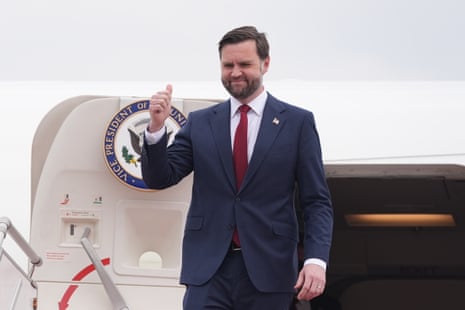
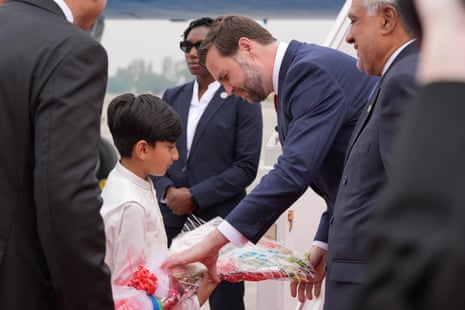
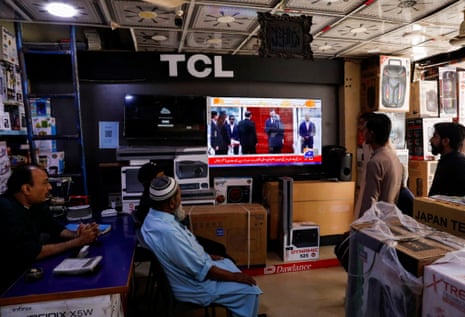
Photos: US vice-president JD Vance arrives in Islamabad for Iran talks
Iran’s new supreme leader, Mojtaba Khamenei, is still recovering from severe facial and leg injuries, sources have told Reuters, but remains mentally sharp and is engaged in decision-making on major issues, including ceasefire negotiations with Washington.
Khamenei, 56, has not been seen in public and has not appeared in videos or photographs since the US-Israeli air attack in the opening days of the war which killed his father, the previous supreme ruler Ayatollah Ali Khamenei, who had ruled since 1989. Mojtaba was subsequently chosen as supreme ruler days after the strikes.
All three sources told Reuters that Khamenei’s face was disfigured and he had injured one or both legs in the attack which killed his father and members of his family, including his wife, his brother-in-law and his sister-in-law. Reuters was unable to independently verify the description given by the sources.
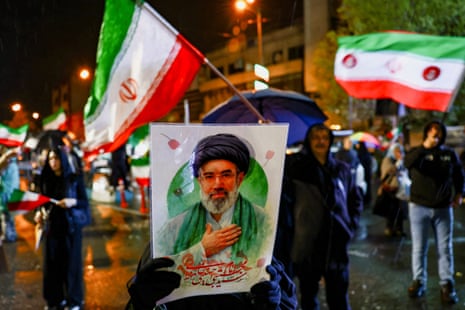
There has been no official Iranian statement on the extent of any injuries, though a newsreader on state television described him as “janbaz” – a term used for those badly wounded in war – shortly after he was named supreme leader.
US accounts, including that of the secretary of defence, Pete Hegseth, and a source familiar with intelligence assessments, agree that Khamenei was “wounded and likely disfigured” and had possibly lost a leg. The CIA declined to comment.
Experts say that Khamenei is seen as likely to continue his father’s hardline views, especially given his extensive links to the Islamic Revolutionary Guard Corps (IRGC), a powerful political and military force within Iran.
How did Pakistan emerge as a key mediator between the US and Iran? In this video, the Guardian’s south Asia correspondent, Hannah Ellis-Petersen, explains how the south Asian country secured what has been called its ‘biggest diplomatic win’ in years:
Interim summary
For those of you just joining us, welcome to our live coverage of events in the Middle East with talks between Iranian and US officials scheduled to begin in Islamabad. Stay tuned here for all the updates – but first, a quick recap.
-
The US delegation has touched down ahead of high-stakes talks with the United States on Saturday, joining Iran’s delegation which had arrived earlier. The US side is led by the vice-president, JD Vance, alongside the special envoy, Steve Witkoff and Jared Kushner.
-
Iran’s delegation is headed by the powerful parliamentary speaker Mohammad Bagher Ghalibaf, reportedly accompanied by Abbas Araghchi, Iran’s foreign minister; Ali Akbar Ahmadian, secretary of Iran’s defence council; Abdolnaser Hemmati, governor of Iran’s central bank; and several members of the Iranian parliament. Ghalibaf said earlier on Friday that two previously agreed measures – a ceasefire in Lebanon and the release of Iran’s blocked assets – “must be fulfilled before negotiations begin”. Israel and the US have denied that the ceasefire extends to Lebanon.
-
The planned talks come as Trump threatened fresh strikes if talks fail, adding that the Iranians “have no cards” and the only reason they are alive “is to negotiate”. Trump told the New York Post that the US is loading its warships with the “best weapons” in case talks with Tehran fail. “And if we don’t have a deal, we will be using them and we will be using them very effectively,” he said.
-
Meanwhile, Lebanon and Israel have agreed to meet in Washington on Tuesday to discuss a ceasefire and to set a date to begin talks. The conversation on Tuesday will be mediated by the US and take place at the state
-
Lebanon’s health ministry has updated the death toll from Israel’s most brutal strikes on the country in years on Wednesday to 357 killed. It brings the total killed in Lebanon since Israel renewed its offensive on 2 March to more than 1,953 people. The number of people wounded stands at 6,303, the health ministry added.
-
US intelligence reports that China is preparing to send new air defence systems to Iran over the new few weeks, CNN reports, citing anonymous sources. The US state department, White House and Chinese embassy in Washington did not immediately respond to requests for comment from Reuters.
Shah Meer Baloch
In an address to the nation before the talks, Pakistani prime minister Shehbaz Sharif said the upcoming US-Iran talks in Islamabad were “make or break,” warning the next phase will determine whether a lasting ceasefire can be secured.
An Iranian delegation led by speaker Mohammad-Bagher Ghalibaf landed in Islamabad on Friday night, with Pakistani jets escorting the Iranian planes as they entered the country’s airspace. Pakistan’s army chief, Asim Munir, and foreign minister, Ishaq Dar, received the Iranian delegation led by Ghalibaf.
Ghalibaf said in a statement after reaching Islamabad: “Iran has come in good faith, but doesn’t trust the US. Iran is ready for an agreement if the US presents a genuine deal and recognises Iran’s rights.”
A statement by the foreign minister, Dar, expressed hope for constructive talks. Dar said Pakistan would continue to facilitate sustainable and long-lasting solution between the parties. He said he hoped the both parties would engage in constructive talks.

Hannah Ellis-Petersen
Here’s the full list of members of the Iranian delegation.
-
Mohammad Bagher Ghalibaf, the head of the delegation and the Iranian parliamentary speaker;
-
Seyed Abbas Araghchi, the foreign minister;
-
Reza Amiri Moghadam, the ambassador to Pakistan;
-
Ali Akbar Ahmadian, a member of the Supreme National Security Council of Iran;
-
Ali Bagheri Kani, the deputy to the Supreme National Security Council and former acting foreign minister;
-
Esmael Ahmadi Moghadam, the president of the National Defense university;
-
Mohammad Jafari, the assistant to the secretary of the Supreme National Security Council;
-
Naser Hemati, the governor of Iran’s central bank;
-
Kazim Gharibabadi, a deputy foreign minister;
-
Majid Takht e Ravanchi, a deputy foreign minister;
-
Valiollah Nouri, a deputy foreign minister;
-
Esmail Baghaei, a deputy foreign minister and spokesperson for the Iranian ministry of foreign affairs;
-
Abolfazl Amouei, an Iranian MP;
-
and Mohammad Nabavian, an Iranian MP.
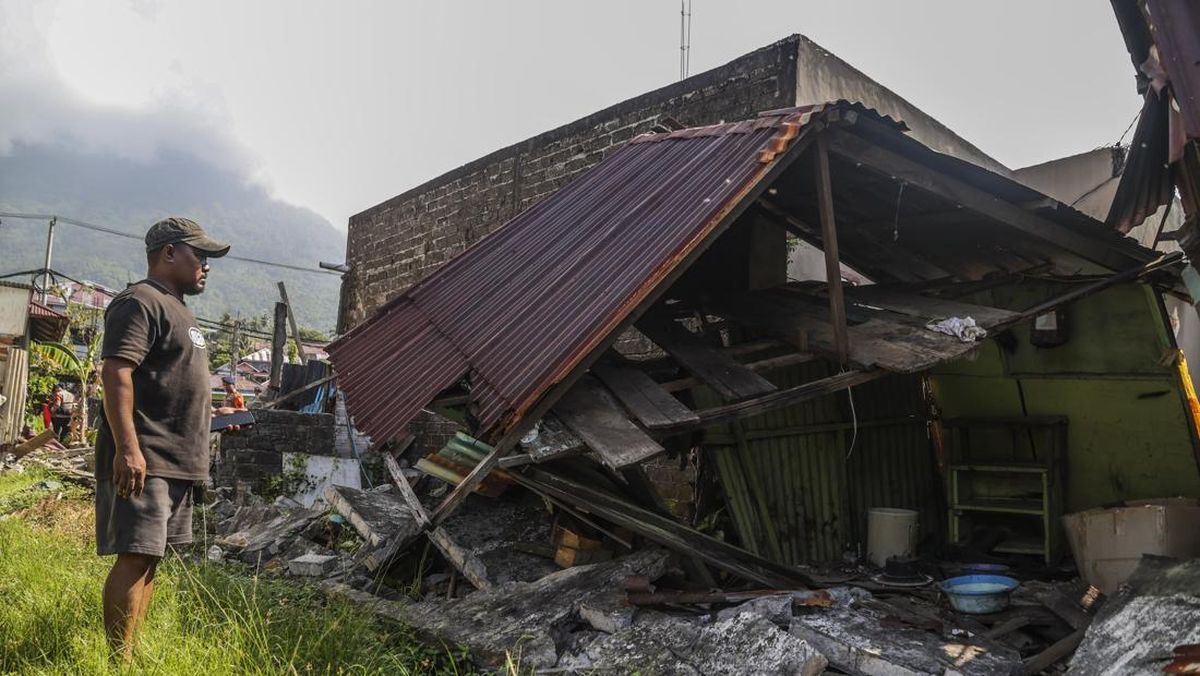
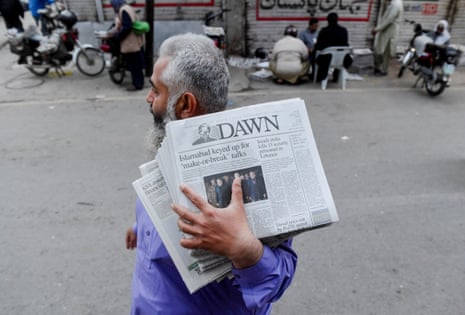
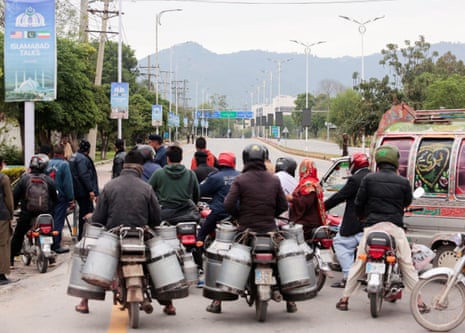
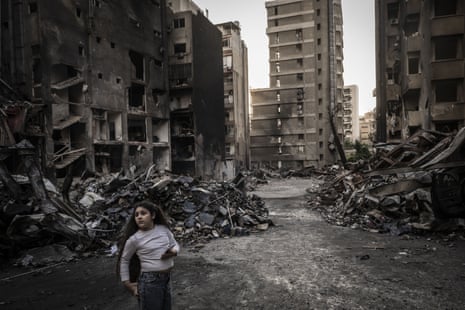
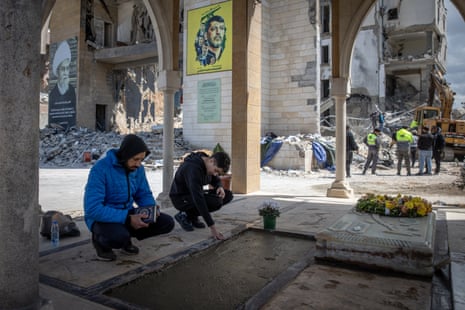
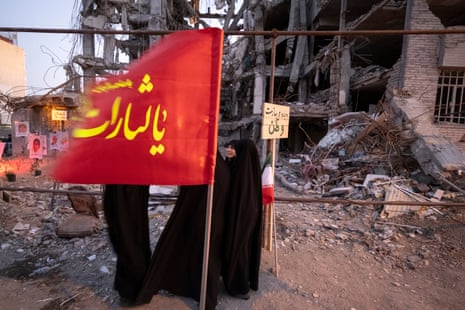
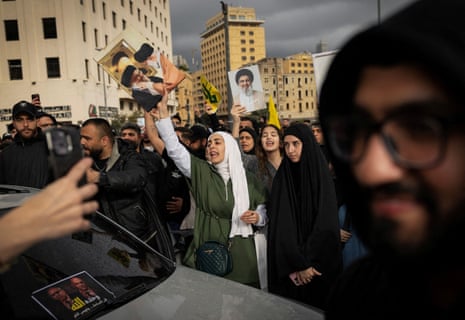
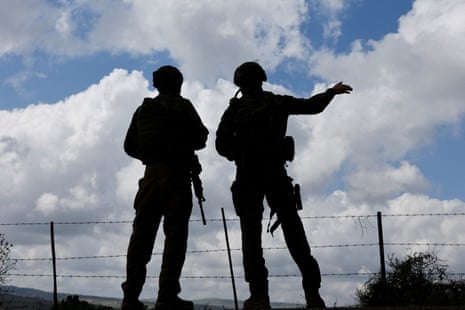
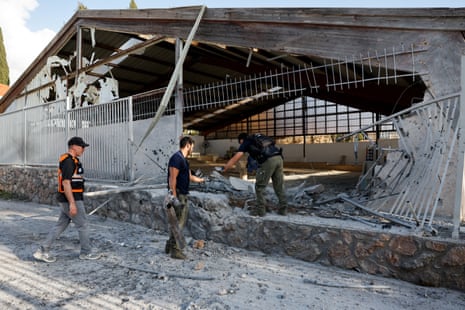
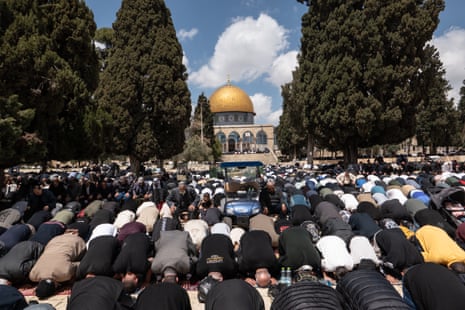
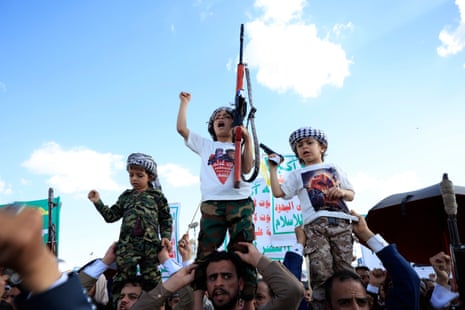
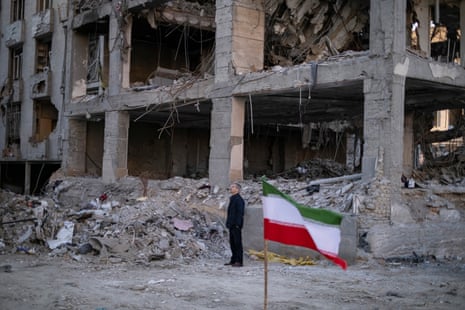
As we wait for the Islamabad talks to commence, the conflict in the Middle East continues as we see in these images from the last 24 hours.
Explore more on these topics