.png) 3 months ago
49
3 months ago
49
Minister says police and crime commissioners will be abolished in 2028 because PCC system has failed
Jones says Yvette Cooper promised a white paper on police reforms when she was home secretary.
Ahead of the publication of the white paper, the government is today announcing the abolition of police and crime commissioner (PCCs), she says.
She says PCCs have been in place since November 2012.
She says accountability is important in public services.
But she says the PCC system has failed.
Whilst the role of PCCs has evolved over time to include responsibility for commissioning services for victims, driving local partnerships and in some areas, responsibilities for firefighters, the model has failed to live up to expectations.
It has not delivered what it was set up to achieve.
Public understanding or engagement with crime commissioners remains low.
Despite efforts to raise that profile, less than a quarter of voters turned out to vote for them in the 2024 elections, and two in five people are unaware that PCCs even exist …
The reality is that the PCC model has weakened local police accountability and has had perverse impacts on the recruitment of chief constables.
They have failed to inspire confidence in local people, in stark contrast to the mayoral model, which has clearly been ultimately more successful.
Referring to the former PM who was home secretary in 2012 when PCCs were introduced, Jones says:
The Theresa may model has not worked.
She says the government wants to transfer policing functions to mayors in England. This was set out in the English devolution white paper, she says.
She says the government has decided to scrap PCCs when their current term of office in 2028.
Key events Show key events only Please turn on JavaScript to use this feature
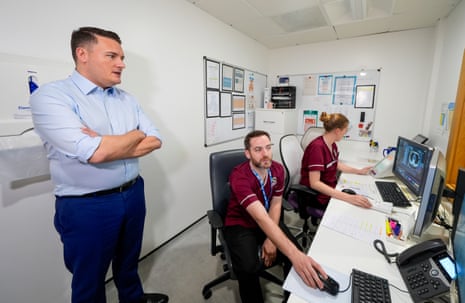
'No idea, don't care' - Streeting not bothered if No 10 briefer gets found, saying he wants to 'leave silly soap opera behind'
Wes Streeting, the health secretary, has said that he doesn’t know and doesn’t care whether Keir Starmer is trying to identify the No 10 figure briefing against him.
Speaking to PA Media on a visit in Liverpool, Streeting made it clear that he no longer wanted to talk about the No 10 briefing yesterday, that dominated the discussion at PMQs yesterday.
He said he wanted to focus on the news that NHS waiting lists are falling. (See 10.01am.)
Asked about the row, Streeting said:
I have no intention of revisiting yesterday’s events. That’s yesterday’s news and it’s Westminster bubble stuff that doesn’t mean anything to anyone.
I don’t think voters give two monkeys about what on earth is going on in the sort of Westminster village soap opera. What they do care about is, if they’re on an NHS waiting list, are we getting them down?
Asked about the apology he received from Keir Starmer, Streeting said:
One of the great things about being here in the North West today is you can leave all that silly Westminster soap opera stuff behind.
Asked if Starmer was investigating who was responsible for the No 10 briefing against him, Streeting said: “No idea, don’t care.”
And asked about the future of Morgan McSweeney, Starmer’s chief of staff, whom some ministers want to see sacked as a result of the briefing, Streeting said:
I’m sure that Morgan McSweeney, Keir Starmer and everyone else is absolutely delighted with the news today that NHS waiting lists are falling.
Police Federation welcomes abolition of PCCs, saying they are 'expensive experiment which has failed'
The Police Federation of England and Wales, which represents police officers up to the rank of chief inspector, has welcomed the abolition of PCCs.
In a statement, its national chair Tiff Lynch said:
We welcome this announcement and look forward to helping shape whatever accountability structures replace directly-elected police and crime commissioners.
PCCs were an expensive experiment which has failed. The tens of millions of pounds they cost should instead be a down-payment for the sort of policing service this country and its police officers deserve.
Tories describe abolition of PCCs as 'minor tinkering around edges'
Chris Philp, the shadow home secretary, responded to Jones on behalf of the Conservative party. He claimed that the government was failing on police and crime and he said this measure was just “minor tinkering around the edges”.
He said he did not accept that mayors were more effective than PCCs. He said that Sadiq Khan, who has London mayor is the PCC for the capital, was “the worst PCC in the country” because of the way knife crime has been rising.
In response, Jones said she could not work out whether the Tories were in favour of the announcement or against it.
UPDATE: Philp said:
The minister mentioned at the beginning the government’s plans to bring forward a police reform white paper, announced, from memory, about a year ago.
But there hasn’t been a single sniff of that white paper since then. Perhaps she can tell us when we can expect it and why the government is so bereft of ideas, it has taken a year or more to publish that white paper.
Now, today’s statement about police and crime commissioners represents, in my view, a tinkering around the edges from a government which is failing on crime and policing.
If you like, it is simply rearranging the deckchairs on the Titanic, because this government is failing, police numbers are falling – they fell by 1,300 during Labour’s first year in office on a like-for-like March-to-March comparison – and not only are police numbers falling, they are continuing to fall and will drop even more this year.
Home Office minister Sarah Jones claims gettting rid of PCCs will save £100m this parliament
Jones said that getting rid of PCCs would save £100m this parliament by moving to the new system.
And, once delivered, the change would save the Home Office around £20m a year, she said. She said that would pay for an extra 320 extra police constables.
Jones ended her statement by saying that, although she was criticising the PCC system, she was not criticising the PCCs themselves.
She said they had done, and continue to do, important work.
Jones said that, where possible, the goverment would transfer the responsibilities of PCCs in England to mayors.
Where that was not possible, it would create policing and crime boards to oversee police forces until other measures are in place, she said.
She acknowledged there are no metro mayors in Wales. She said the government would work with the government in Wales to find alternative arrangements for PCCs there.
Minister says police and crime commissioners will be abolished in 2028 because PCC system has failed
Jones says Yvette Cooper promised a white paper on police reforms when she was home secretary.
Ahead of the publication of the white paper, the government is today announcing the abolition of police and crime commissioner (PCCs), she says.
She says PCCs have been in place since November 2012.
She says accountability is important in public services.
But she says the PCC system has failed.
Whilst the role of PCCs has evolved over time to include responsibility for commissioning services for victims, driving local partnerships and in some areas, responsibilities for firefighters, the model has failed to live up to expectations.
It has not delivered what it was set up to achieve.
Public understanding or engagement with crime commissioners remains low.
Despite efforts to raise that profile, less than a quarter of voters turned out to vote for them in the 2024 elections, and two in five people are unaware that PCCs even exist …
The reality is that the PCC model has weakened local police accountability and has had perverse impacts on the recruitment of chief constables.
They have failed to inspire confidence in local people, in stark contrast to the mayoral model, which has clearly been ultimately more successful.
Referring to the former PM who was home secretary in 2012 when PCCs were introduced, Jones says:
The Theresa may model has not worked.
She says the government wants to transfer policing functions to mayors in England. This was set out in the English devolution white paper, she says.
She says the government has decided to scrap PCCs when their current term of office in 2028.
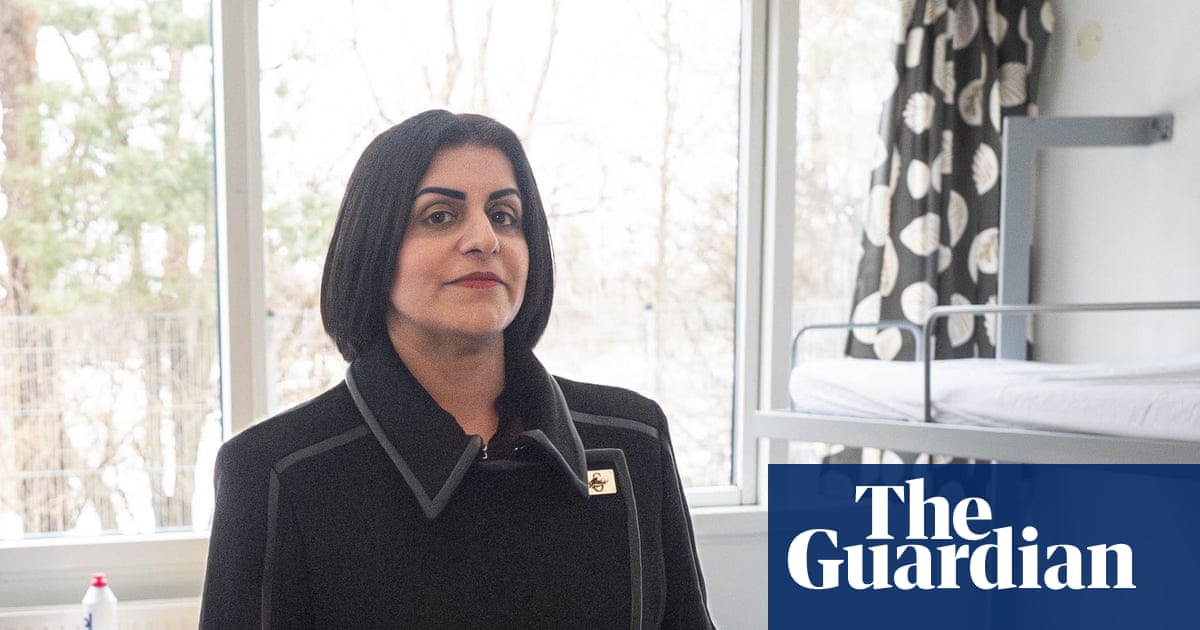
Sarah Jones, the policing minister, is making a statement to MPs.
She starts by expressing her sadness at the death of Helen Newlove, the victims commissioner.
Can you trust anonymous briefings?
A reader asks:
Hi Andrew. I’m interested in how these anonymous briefings from No 10 work? Are they to a group, to an individual, in person, or via email or social media? What’s in place to prevent a journalist or media organisation from just making something up? Thanks…
That is a reasonable question. People are understandably suspicious when they read/watch that are just attributed to “sources”, not official spokespeople, or actual individuals.
At Westminster most of what gets reported is based on what gets said on the record. No 10 has daily, group briefings by an on-the-record spokesperson.
But – as in other areas of reporting – there are people happy to talk to journalists, on the basis that what they say will be reported, but that they won’t be identified. The reporter will either quote a source without naming them (sometimes referred to as getting information ‘on background’) or just use the information without any attribution at all, ‘it is understood etc’ (sometime referred to as getting information ‘on deep background’).
A lot of people dislike this system because it removes accountability. To a large extent, it does. But without this sort of reporting, a lot of information would never come to light. Boris Johnson might still be prime minister if it had not been for the Partygate scandal that only emerged t because people spoke to journalists on background or deep background.
Responsible journalists writing stories like this put a lot of effort into a) making sure that their sources are credible (so they are not presenting a junior dogsbody as a ‘senior source’) and b) taking care not misrepresent people (so that a casual remark does not get written up a serious statement of intent).
These briefings tend to happen one-to-one, in person, on the phone, or on WhatsApp. They are not group briefings. But, if senior people are putting out a message, they will be saying the same or similar things to reporters from different news organisations, as was happening in Downing Street earlier this week.
You ask what is in place to stop journalists just making it up. Nothing, I’m afraid. But journalists care about their reputations, and stories that are false, or exaggerated, normally get exposed as such very quickly. They also don’t get followed up.
Ultimately, you have to decide who you can trust. The Guardian No 10 briefing story on Tuesday was written by Pippa Crerar (who also broke the original Boris Johnson Partygate story), it has been followed up by everyone, and it has not been denied. If you don’t trust her reporting, you’d be very foolish.
Police and crime commissioners to be abolished, government to announce
The controversial system of police and crime commissioners is to be abolished by the government, Vikram Dodd reports.
Sarah Jones, the policing minister, is due to make a ministerial statement in the Commons on “police reform” and so presumably the formal announcement will come then.
EU confirms talks will start next week on improved post-Brexit SPS deal with UK
The UK and the EU will next week will begin formal talks on two issues that would deepen post-Brexit relations.
Ursula von der Leyen, the European Commission president, confirmed the move in a statement last night issued after she had what she called “a good call” with Keir Starmer.
The negotiations, which will build on an outline reset deal agreed at a summit in May, will cover two issues: a proposed sanitary and phytosanitary (SPS) deal, and an emissions trading systems (ETS) linking agreement.
According to the Cabinet Office, an SPS deal with the EU “could add up to £5.1bn a year to our economy in the long run, increase the volume of UK exports of major agricultural commodities to the EU by 16%, and increase imports from the EU by 8%”.
It would save agri-food exporters from having to pay for expensive certificates and checks when they export to the EU.
And an ETS linking agreement would “save UK industry from paying the EU’s carbon border tax (CBAM) on £7bn worth of UK exports, remove regulatory barriers in sectors like CO2 storage, and provide a cheaper path to net zero - with a larger and more stable carbon market”, the Cabinet Office says. It says this could add almost £4bn a year to the economy in the long run.
Nick Thomas-Symonds, the Cabinet Office minister, said:
This is welcome progress - we can now start formal talks on deals that will help keep food costs down and slash red tape.