.png) 3 months ago
83
3 months ago
83
How should the UK deal with the increasing fracturing of multiculturalism right now, and how we are all being pitted against each other? This idea was on the mind of a man named Steve, who featured on BBC Radio 4’s Any Questions on Friday in the aftermath of the Gorton and Denton byelection. Steve asked if the Green victory was an indication that Labour needed to “get back to its roots”, adding, to great applause, that “we’re a relatively wealthy country, we should not be demonising minority groups to square the balance”.
Listening, I was struck by the response of one of the panellists, New Labour minister David Blunkett, who criticised Labour’s current technocratism, but did not reflect on what Steve said about demonisation. It was especially striking considering Blunkett’s earlier comments, that when listening to the victorious Green MP Hannah Spencer’s speech, he thought: “I could have delivered that speech back in 1987 … What is it that has driven this young woman … to join the Greens rather than the Labour party?”
But for all that Spencer said of community and the dignity of work, Blunkett could not have delivered such a speech, because Spencer spent considerable time addressing rising Islamophobia: “I can’t and won’t accept this tonight without calling out the politicians and divisive figures who constantly scapegoat and blame our communities for all the problems in society. My Muslim friends and neighbours are just like me, human.”
In 2002, as home secretary, Blunkett described local schools as “swamped” by non-English speaking immigrants, and in 2003 was named winner of an annual Islamophobia award. He is hardly the kind of figure one would associate with the open tolerance and solidarity that Spencer has espoused.
But this is not about relitigating the New Labour years; the current Labour leadership is also not associated with fostering a sense of tolerance. This is significant, because it speaks to a void that has been left at the top of our politics – where there is no real moral authority to speak on hate and division, and thus any authority to heal or rectify it.
The gravity of this void could not be more apparent, with tolerance having so plainly broken down in Britain. At the weekend, during a football match at Elland Road stadium in Leeds between Leeds United and Manchester City, Muslim players were openly jeered as they broke their Ramadan fast to eat. As the ipaper’s chief football writer, Daniel Storey, says, these breaks were “introduced in 2021” and “for most of the last five years, it has barely merited a mention because, well, it just happened”. This follows on from the police just last week opening an investigation into racist abuse aimed at four Premier League players.
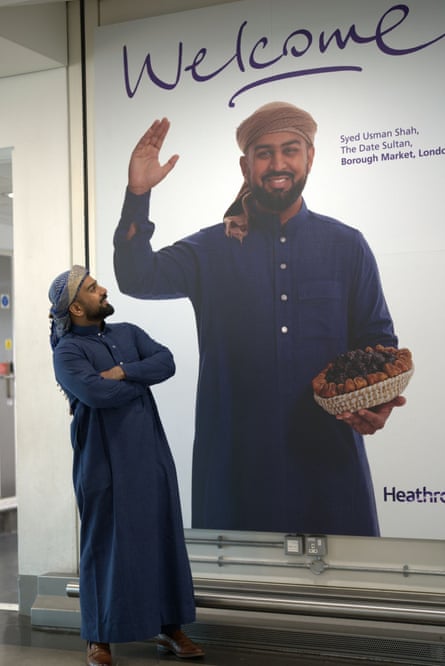
It’s not just our football pitches. Last year, Syed Usman Shah became one of eight people from an ethnic minority background to feature on a “welcome to Heathrow” poster, writing at the time that this was “probably one of the highlights of my life”. But this quickly descended into a nightmare for him, as he revealed for a Radio 4 documentary, A Place in Politics for British Muslims. He faced a barrage of racist abuse, with comments including claims that the UK “is under siege” and particular aim taken at his choice to wear traditional dress. A Muslim sportswoman who took part in the campaign endured so much abuse that she asked for her posters to be taken down.
You can see this playing out on so many different fronts – on social media, it is now commonplace to see a picture of a primary school class lifted from the school’s social media pages and spread around hateful accounts who remark on the number of ethnic minority pupils. And this all spills into real danger, too. As Spencer referenced in her speech, on Tuesday last week, a white British man allegedly entered a mosque during Ramadan prayers wielding an axe and carrying zip ties and a balaclava. Criminal proceedings are under way and any motivation has yet to be established – yet this incident speaks to the climate of terror and fear that presides over Muslim people, and other minorities, as they go about their ordinary lives.
Keir Starmer addressed the incident, saying that “I know this will be worrying for Muslim communities, especially during Ramadan, a time of peace and reflection”. How does he square this with his claim that the Greens, in their Gorton and Denton victory, had welcomed a “divisive, sectarian politics” – tacitly endorsed and voted in by the Muslim demographic who, just 20 months ago, were part of the voting coalition that took Labour to a 50.8% vote share in that seat? And, in presenting Spencer as a candidate who was “more interested in dividing people than uniting them”, how does he think he credibly presents a distinction to the kind of far-right rhetoric that accuses Spencer of being part of some “coalition of Islamists and woke progressives”?
When the billionaire businessman Jim Ratcliffe stated that the UK had been “colonised” by immigrants (he later apologised if his language “offended some people”), Starmer responded that this was “offensive and wrong. Britain is a proud, tolerant and diverse country.” Nobody can trust such rebukes, or attempts to comfort minority communities, when the Labour party continues attempting to ape the very cruellest rhetoric espoused by Nigel Farage’s Reform project – with the home secretary, Shabana Mahmood, recommitting to her pursuit of hardline immigration policies in light of pressure to move leftwards after the byelection.
So, where has this all left us as a country? We are a nation in which intolerance is increasingly in vogue, and where there is little political heft behind attempts to relieve such tensions. There is no official political role focused on alleviating these tensions and bringing communities together, unlike in Australia, where there is a minister for multicultural affairs. This leaves us only with crisis management after tensions escalate. No one is moved by our prime minister when he speaks of tolerance. And even if Green politicians such as Zack Polanski and Spencer are more convincing in their sincerity on this turf, they do not yet have the political cachet or power to do much more than preach to the already converted, rather than present an authoritative, and uniting, vision of what values Britain should hold.
With all indications that the country is plunging deeper and deeper into parochialism and open bigotry, you are left to wonder what, or who, could reasonably bring the country together; to ask us if this is really the path that we want to go down.
As a republican, I’m surprised to find that perhaps the most authoritative figure, in this light, has been King Charles, who used his Christmas speech to talk about the importance of unity in a divided world, and the importance of “simply getting to know our neighbours”. But it is sobering that Charles is the only figure I could conjure up – at a time when our politics is so depleted of moral authority and doing what is right for its own sake, that royals begin to sound like radicals for coming out with simple and elegant calls for compassion.
Who’d have thunk it? But in our moral vacuum, far worse figures are threatening to emerge.
-
Jason Okundaye is an assistant Opinion editor at the Guardian
-
Do you have an opinion on the issues raised in this article? If you would like to submit a response of up to 300 words by email to be considered for publication in our letters section, please click here.