.png) 2 months ago
66
2 months ago
66
More than 100 Labour MPs have called on Keir Starmer to stop the House of Lords from blocking the assisted dying bill and give it more time to return to the Commons, with the legislation now certain to fall owing to lack of time.
The private member’s bill, sponsored by Labour’s Kim Leadbeater, will fall when the parliamentary session comes to an end in May because peers have used multiple amendments and lengthy debates to prevent it from being put to a vote.
A number of ministerial aides – parliamentary private secretaries – are also believed to have written to the prime minister separately. Ministers have told the Guardian they have also made the case to Starmer, saying it would be a moment to show some leadership on an issue popular with the public as well as a way to demonstrate he will not allow the Lords to block the will of the elected House of Commons.
Opponents of the bill, who have submitted more than 1,200 amendments, say they are not deliberately filibustering and that it is unfit for purpose. In a private letter to Starmer, the Labour MPs wrote that he should ensure it returns to the Commons in the next session after the king’s speech.
If it passes the Commons again, it would mean supporters could use the Parliament Act to bypass any further blocking by the Lords. It would be the first time the 1911 Parliament Act has been invoked for a private member’s bill.
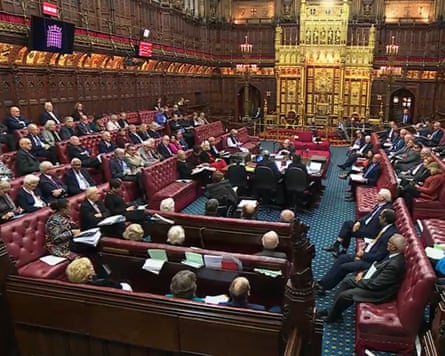
The letter said Starmer would not need to sacrifice government neutrality on the issue itself and said it was a fundamental democratic principle that the Lords should not block the will of the Commons. The bill was passed by MPs in June last year with a majority of 23.
To use the Parliament Act, supporters would either need to win the ballot for a new private member’s bill or Starmer could agree to give the bill government time to allow it to be voted on again in the Commons.
The Lords has had more than 100 hours of debate but only half of the amendments have been covered after 11 days. There are only three more days allocated to the bill before the end of the session, where it would need to complete the report stage and third reading, as well as any amendments returned back from the Commons. Supporters of the bill said this was “effectively impossible”.
Starmer is also understood to have received letters urging him to give time to the bill from Conservative, Liberal Democrat, Green, Plaid Cymru and Reform MPs, bringing the total number to about 150.
They argue that only a small number of peers opposed to the bill have laid the vast majority of amendments, which are being debated at a glacial pace.
Lord Falconer, the bill’s sponsor in the second chamber, said there was “absolutely no hope” that it would make it on to the statute book in this session without a “fundamental change” in the tactics being employed by its opponents.
The letter was coordinated by Peter Prinsley, a consultant doctor and the MP for Bury St Edmunds and Stowmarket. “A small number of peers have been using procedural tactics to block the bill in the House of Lords and it now appears very likely that they will prevent it returning to the Commons before the end of this session,” he wrote in the covering letter to the prime minister.
“While we fully respect the government’s neutrality on the principle of assisted dying, we are confident that you would agree with us that we cannot be neutral on the fundamental democratic principle that it is for the elected House of Commons to decide on this matter.
“Our constituents, in every part of the country, strongly support a change in the law and it is clear to us that the issue must be resolved sooner rather than later. Our ask is simple. That, whether or not the bill returns through the private member’s bill ballot after the king’s speech, time will be found for parliament to come to a decision in the next session. It would remain a conscience issue for MPs, the government’s neutrality would be maintained and it need not take up time reserved for government business.”
MPs opposed to the bill said bringing it back would entrench its flaws. Labour MP Jess Asato said: “The sponsor of the bill has rejected 99% of suggested improvements and amendments in the House of Lords and so it still contains all the same faults and issues. We know this is true because the experts, such as the Royal Colleges and professionals, have told the Lords this.
“Any MP that voted to push this Bill through would do so knowing that it is unsafe and would harm vulnerable people.”
Starmer, who is a supporter of assisted dying, has thus far seemed disinclined to interfere to help the bill’s progress. The Lib Dem MP Vikki Slade said it would be a “travesty for democracy and, more importantly, a tragedy for all those who are relying on the legislation and have waited so long, not least my own dad”.
Starmer said he would not interfere further in the parliamentary process. “It is a matter of conscience,” the prime minister said last week. “It is for parliament to decide the passage of the legislation and any changes. Scrutiny is a matter for the other place. We have a responsibility to make sure any legislation is workable, effective and enforceable.”